






































































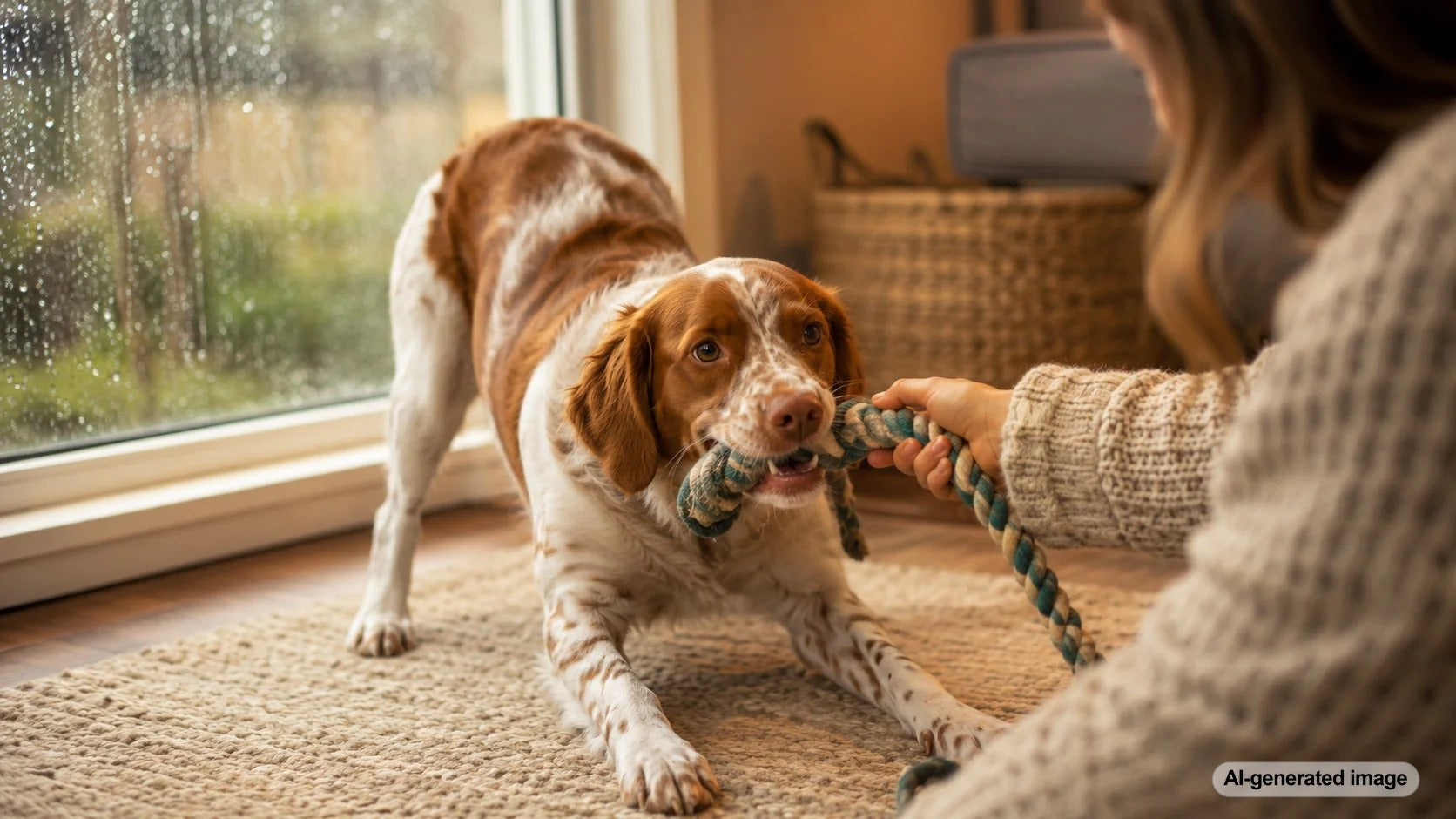
Rainy days can turn even the sweetest dog into a sock thief, couch wrestler, or hallway zoomie expert. The best indoor games for dogs on rainy days give your pup healthy ways to move, sniff, lick, chew, think, and settle without turning your home into a chaos arena. The goal is not to exhaust your dog at all costs. It is to give them the right kind of enrichment so they feel satisfied instead of restless.
Most dogs do best with a mix of short activities. A puppy may need two minutes of training and a nap. A senior dog may prefer gentle sniffing or licking. A power chewer may need a safe chew outlet before they decide your furniture looks interesting.
Start With Sniffing Games
Sniffing is one of the easiest ways to tire out your dog's brain indoors. Start with a treat hunt: ask your dog to wait, place a few treats around the room in easy spots, then say "find it." Once your dog understands the game, tuck treats near chair legs, under the edge of a towel, or inside an open cardboard box.
Hide-and-seek works the same search muscles. Step behind a door or around a corner, call your dog, and reward them when they find you. Keep it easy for puppies, shy dogs, or dogs who get frustrated. The point is confidence, not confusion.
Use Puzzle Feeding to Make Meals More Fun
If your dog inhales dinner in two minutes, rainy weather is a great excuse to turn mealtime into a brain game. Puzzle feeding asks your dog to nudge, roll, sniff, lick, or paw for food, which can make a normal meal feel more satisfying.
For dogs who enjoy movement, the Walkabout can turn kibble or treats into a rolling slow-feeder game. It is a practical choice when the backyard is soaked and your dog needs an indoor job that is more interesting than pacing from window to window.
Play Indoor Movement Games Carefully
Hallway fetch can be a winner for dogs who need to move, but keep it controlled. Choose a carpeted hallway or a room with good traction, clear away breakables, and use a soft toy. Make low, short tosses instead of big throws that send your dog skidding.
Tug is another great indoor option when it has rules. Teach cues like "take it," "drop," and "all done." Pull side to side rather than up and down, and stop if teeth touch skin. For puppies, keep tug gentle and brief. For big dogs, use a longer toy so your hands stay safely away from the action.
Add Calming Lick Time
Many dogs need help shifting from busy mode to settled mode. Licking can support a calmer routine because it gives dogs a repetitive, focused activity. It can be especially useful after an exciting game, during stormy weather, or when you need your dog occupied while you cook or work.
A tool like FlipMat can turn a small amount of dog-safe spread or soft food into a longer-lasting enrichment session. Use the easier side for beginners or dogs who get frustrated quickly, and save the more challenging side for dogs who already enjoy food puzzles.
Teach a Rainy Day Trick
Short training games are perfect for bad weather. Pick one simple skill, such as touch, spin, place, paws up, crawl, or putting toys in a basket. Keep sessions to just a few minutes and end while your dog is still interested.
You can also teach the toy name game. Hold up a favorite toy and say its name, such as "ball." Reward your dog for touching or taking it. Later, place it beside another toy and ask for the named one. Some dogs learn quickly, while others need many easy repetitions, and both versions still count as good mental exercise.
Build a Gentle Obstacle Course
You do not need agility equipment. A towel can become a pause mat, pillows can create a slow stepping path, and a broom placed low between two stable objects can become a careful step-over. Keep everything low, sturdy, and non-slip.
Small dogs may enjoy weaving around pillows. Large dogs often do better with slow body-awareness exercises, like stepping over low objects or backing up a few steps. Avoid jumping on slick floors, and do not push senior dogs, puppies, or dogs with sore joints into repetitive impact. If your dog limps, seems painful, or suddenly resists movement, check with your veterinarian.
Offer a Supervised Chew Session
Some rainy day dogs do not need another game. They need to gnaw. Chewing is a natural behavior, and boredom can make it show up in all the wrong places, like shoes, rugs, or chair legs.
Choose chews that match your dog's size and chewing style, and supervise closely. If your dog tries to swallow large pieces, breaks toys, guards chews, or has dental pain, pause and ask your veterinarian or a qualified trainer for guidance.
Choose the Right Game for Your Dog
| Dog type | Best starting point | Watch for |
|---|---|---|
| Puppies | Easy treat hunts, gentle tug, short training | Overtired biting and skipped naps |
| Senior dogs | Sniff games, licking, slow feeding | Slipping, stiffness, or fatigue |
| Power chewers | Supervised chew time and structured puzzles | Swallowing pieces or guarding |
| High-energy dogs | Hide-and-seek, tricks, controlled fetch | Getting more wired instead of calmer |
Common Rainy Day Mistakes
Doing only physical games: Running is not the same as enrichment. Many dogs need sniffing, chewing, licking, or training to feel truly satisfied.
Making games too hard: If your dog barks at the puzzle, paws wildly, or gives up, make the game easier.
Forgetting traction: Slippery floors can turn fun into a strain risk. Use rugs, mats, or carpeted spaces.
Skipping the off switch: End with a calm activity so your dog does not finish the session more excited than when they started.
A Simple Rainy Day Routine
Try this plan: 5 minutes of treat hunting, 3 minutes of tug or controlled fetch, 3 minutes of trick training, then a lick mat, puzzle feeder, or supervised chew. You can repeat a shorter version later if your dog still needs something to do.
If your dog seems unusually anxious, destructive, painful, or impossible to settle even with enrichment, check in with your veterinarian or a qualified professional. Sometimes rainy day boredom is just boredom. Sometimes a sudden behavior change needs extra support.
Dog Parent FAQs
How long should indoor games last on a rainy day?
Most dogs do well with several short sessions instead of one long one. Try 5 to 15 minutes at a time, then give your dog a chance to rest.
Can indoor games replace a walk?
For a day or two, indoor games can help fill the gap when weather is rough. Dogs still benefit from outdoor sniffing, bathroom breaks, and fresh air when it is safe.
What indoor games are best for dogs who get overexcited?
Start with sniffing games, puzzle feeding, licking, and simple training. Avoid fast fetch or wild chase games if they make your dog harder to settle.
Are rainy day games good for puppies?
Yes, but keep them short, easy, and positive. Puppies need enrichment, but they also need plenty of sleep and should not do repetitive jumping.
The Bottom Line
The best rainy day routine gives your dog a little movement, a little problem-solving, and a clear path back to calm. You do not need a huge house or hours of free time. A few smart indoor games can help your dog stay happier, busier, and better behaved until the sun comes back out.


