Some dogs do not simply flop down when the house gets quiet. They pace, paw at you, patrol the windows, grab forbidden laundry, demand another round of fetch, or stare at you like you personally canceled fun forever. The best enrichment ideas for dogs who need help settling are the ones that give their brain and body a calm job, not more frantic excitement.
Settling is a skill. Many dogs need help learning that downtime can feel safe, satisfying, and predictable. Enrichment can support that by giving dogs healthy outlets for natural behaviors like sniffing, licking, chewing, problem-solving, and foraging. The trick is choosing activities that lower the energy in the room instead of turning your living room into a tiny canine sports arena.
Why Some Dogs Have a Hard Time Settling
A dog who cannot settle is not always being stubborn. Puppies may be overtired and still learning how to switch off. Adolescent dogs often have big feelings, big energy, and very little patience. Senior dogs may need gentler activities because stiffness, discomfort, vision changes, or hearing changes can make rest more complicated. Some dogs are also naturally more alert, especially breeds developed to work, watch, herd, retrieve, or problem-solve.
What owners often misunderstand is that more exercise is not always the answer. A long run or wild game of fetch can help some dogs, but it can also leave others more amped up. For dogs who struggle to settle, the goal is not exhaustion. The goal is decompression. Think slower rhythms, lower arousal, and activities that invite your dog to focus without getting frustrated.
1. Start With Sniffing Before You Ask for Stillness
Sniffing is one of the easiest ways to help a dog shift from busy-body mode into thinking mode. Try a slow sniff walk where the goal is not distance, speed, or perfect heel position. Let your dog investigate safe patches of grass, tree trunks, and sidewalk edges. Ten minutes of thoughtful sniffing can feel more satisfying than a rushed walk around the block.
Indoors, scatter a portion of kibble in a towel, snuffle mat, or safe patch of floor and let your dog hunt for it. For beginners, make the pieces easy to find. For confident sniffers, tuck treats into a few folded towel layers or around a single room. Keep it calm, quiet, and low-pressure.
2. Use Licking as a Wind-Down Ritual
Licking can be soothing for many dogs because it is repetitive, focused, and naturally slower than chasing or wrestling. A lick routine works especially well after a walk, during your evening reset, before grooming, or when guests are arriving and your dog needs a job away from the doorway.
A tool like the FlipMat can fit beautifully here because it works as both a lick mat and slow feeder, with two challenge levels for different days. Spread a dog-safe topper thinly so your pup has to work gradually instead of gulping. For small dogs or travel days, keep the portion modest and make the session short enough that your dog finishes relaxed, not frustrated.
3. Offer Chewing That Matches Your Dog
Chewing gives dogs a legal outlet for jaw work, stress, boredom, and the very real urge to gnaw on things that are not yours to donate. The key is matching the chew to your dog. A gentle senior may need something softer and shorter-lasting. A power chewer needs tougher options and close supervision. A puppy needs age-appropriate choices that protect developing teeth.
Always supervise new chews, remove pieces that become small enough to swallow, and ask your veterinarian if you are unsure what is safe for your dog's teeth, stomach, age, or chewing style. If chewing suddenly becomes intense, obsessive, or paired with drooling, mouth sensitivity, appetite changes, or behavior shifts, check with your vet.
4. Try Long-Lasting Treat Toys for Predictable Quiet Time
Some dogs settle better when the routine feels familiar: go outside, come in, get a calm enrichment toy, then rest. A long-lasting treat toy can be useful because it gives your dog something structured to do while you answer emails, cook dinner, or sit down for the evening.
The Pupsicle is a natural fit for this kind of routine because it is designed for longer-lasting licking and treat play. Use it when your dog is already a little decompressed, not when they are at peak chaos. For dogs who need extra help winding down, pairing it with a calm location, soft background noise, and a consistent cue can make the habit easier to repeat.
5. Make Dinner Do Double Duty
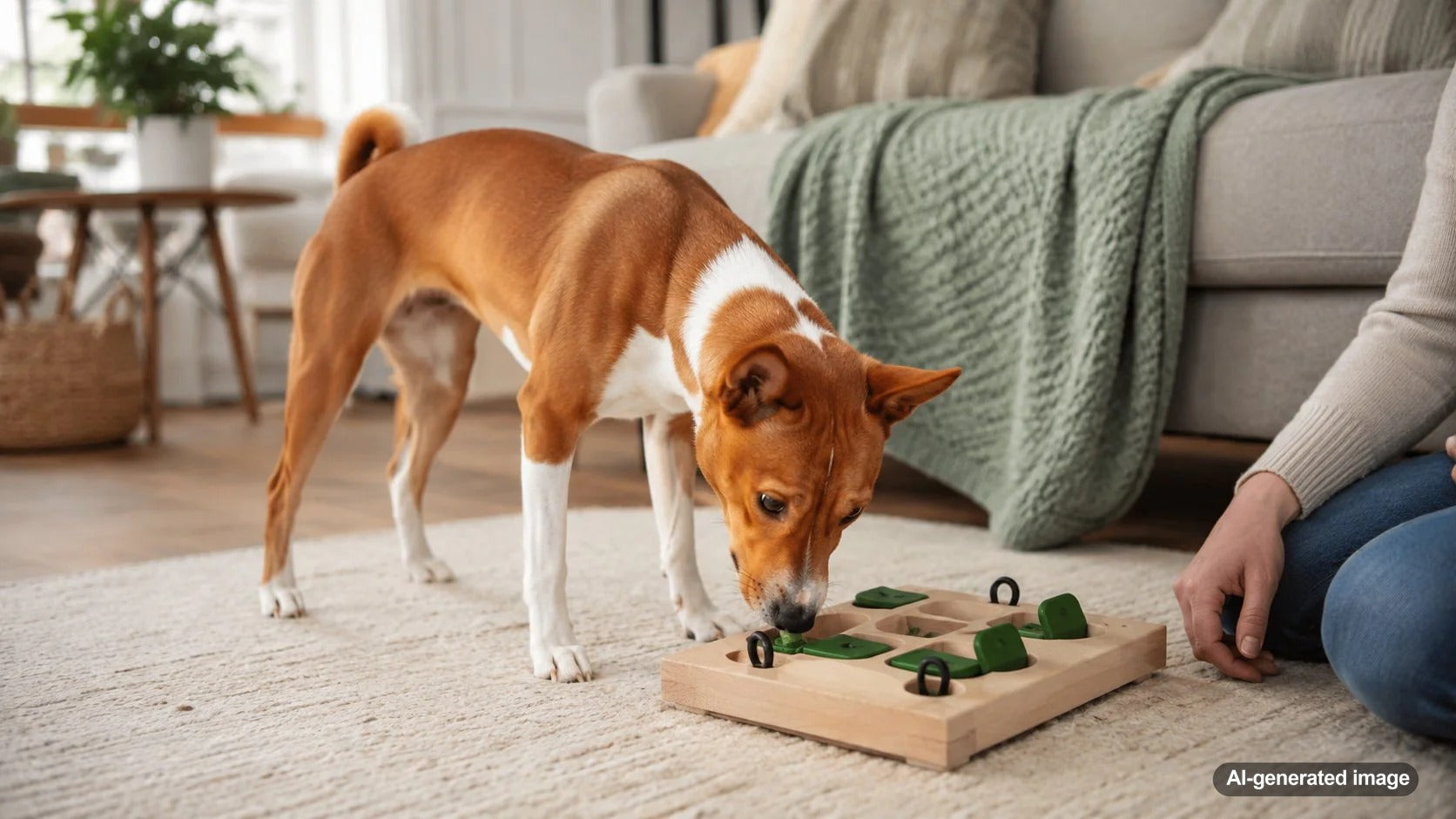
If your dog inhales dinner and then immediately looks for trouble, turn part of the meal into enrichment. Slow feeding can stretch mealtime, encourage problem-solving, and add a satisfying mental job to the day. Start simple: scatter feeding, a towel roll, a slow feeder, or a beginner puzzle. If your dog gives up, barks at the puzzle, or flips it in frustration, the setup is too hard.
For settling, avoid making food puzzles wildly exciting. Calm praise, easy success, and a quiet location usually work better than cheering like your dog just won a championship. The best enrichment for relaxation should leave your dog looking softer, slower, and more satisfied.
6. Build a Mini Settle Routine You Can Repeat
Dogs often relax faster when they can predict what comes next. Try a simple sequence: potty break, five minutes of sniffing, water, a lick mat or treat toy, then a bed or mat in a calm spot. Repeat it at the same time of day for a week and watch which part helps your dog downshift.
- Choose a time before your dog is overtired or frantic.
- Keep the room calm and reduce window, door, or guest excitement.
- Offer one enrichment activity, not five at once.
- End before your dog becomes frustrated or overstimulated.
- Reward quiet choices with calm attention, not big hype.
If your dog panics when left alone, destroys exit points, cannot eat when you leave, hurts themselves, or has sudden behavior changes, enrichment alone is not enough. Contact your veterinarian or a qualified trainer or behavior professional. Enrichment can support a plan, but it should not replace professional help for significant anxiety or medical concerns.
Best Enrichment Ideas by Dog Personality
For busy puppies, keep activities short and easy: scatter feeding, soft licking sessions, and puppy-safe chewing. For high-drive dogs, add sniff walks and puzzle feeders before asking for couch time. For seniors, choose low-impact activities that do not require lots of standing, jumping, or twisting. For power chewers, prioritize durable options, supervision, and calm chew stations away from household traffic.
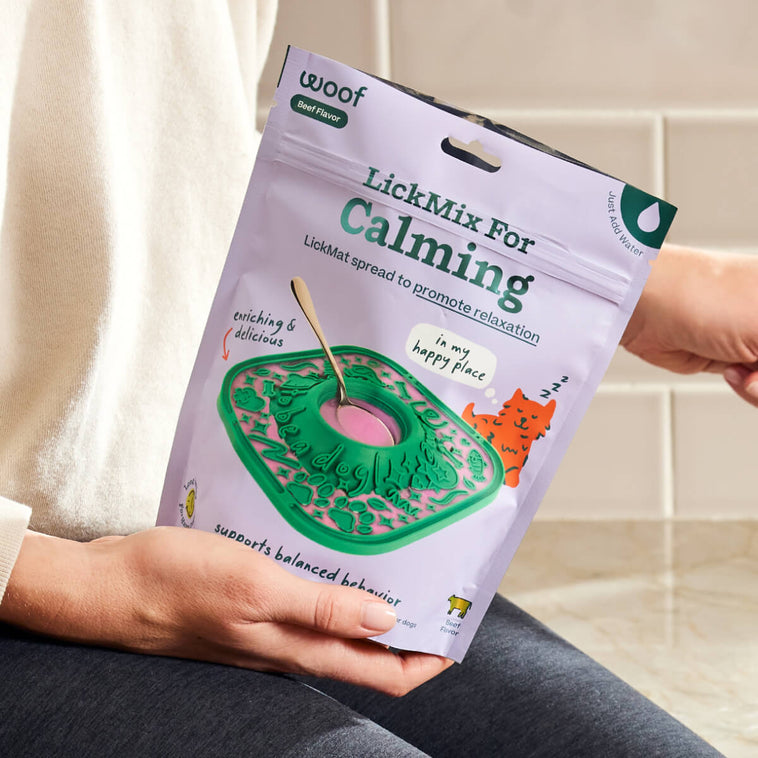
If your dog loves licking but needs a calming routine, Calming LickMix can be part of a soothing lick mat setup. Use it as a routine support, not a magic off switch. The most successful enrichment plans are boring in the best way: simple, safe, repeatable, and easy for you to actually keep doing.
Dog Parent FAQs
What enrichment helps dogs calm down fastest?
Many dogs respond well to sniffing, licking, and chewing because these activities are slower and more focused than high-energy play. The best choice depends on your dog's age, chewing style, food motivation, and stress level.
Should I use enrichment when my dog is already overstimulated?
It is better to start before your dog reaches peak excitement. Once a dog is frantic, barking, jumping, or unable to focus, they may need distance, quiet, or help settling before they can enjoy enrichment safely.
Can enrichment fix separation anxiety?
Enrichment may support a broader routine, but it does not cure separation anxiety. If your dog panics when alone, refuses food, tries to escape, or injures themselves, contact your veterinarian or a qualified behavior professional.
How often should I offer calming enrichment?
Start with one short daily session and adjust based on your dog's response. Quality matters more than quantity. A calm 10-minute routine that your dog can repeat successfully is often more useful than constant stimulation.
The Bottom Line on Helping Dogs Settle
The best enrichment ideas for dogs who need help settling are not about doing more and more. They are about choosing the right kind of activity at the right time. Give your dog a calm job, make it easy to succeed, supervise thoughtfully, and repeat the routine until downtime starts to feel familiar. With patience, your dog's busy brain can learn that settling is not the end of fun. It is part of feeling safe, satisfied, and deeply loved.