






































































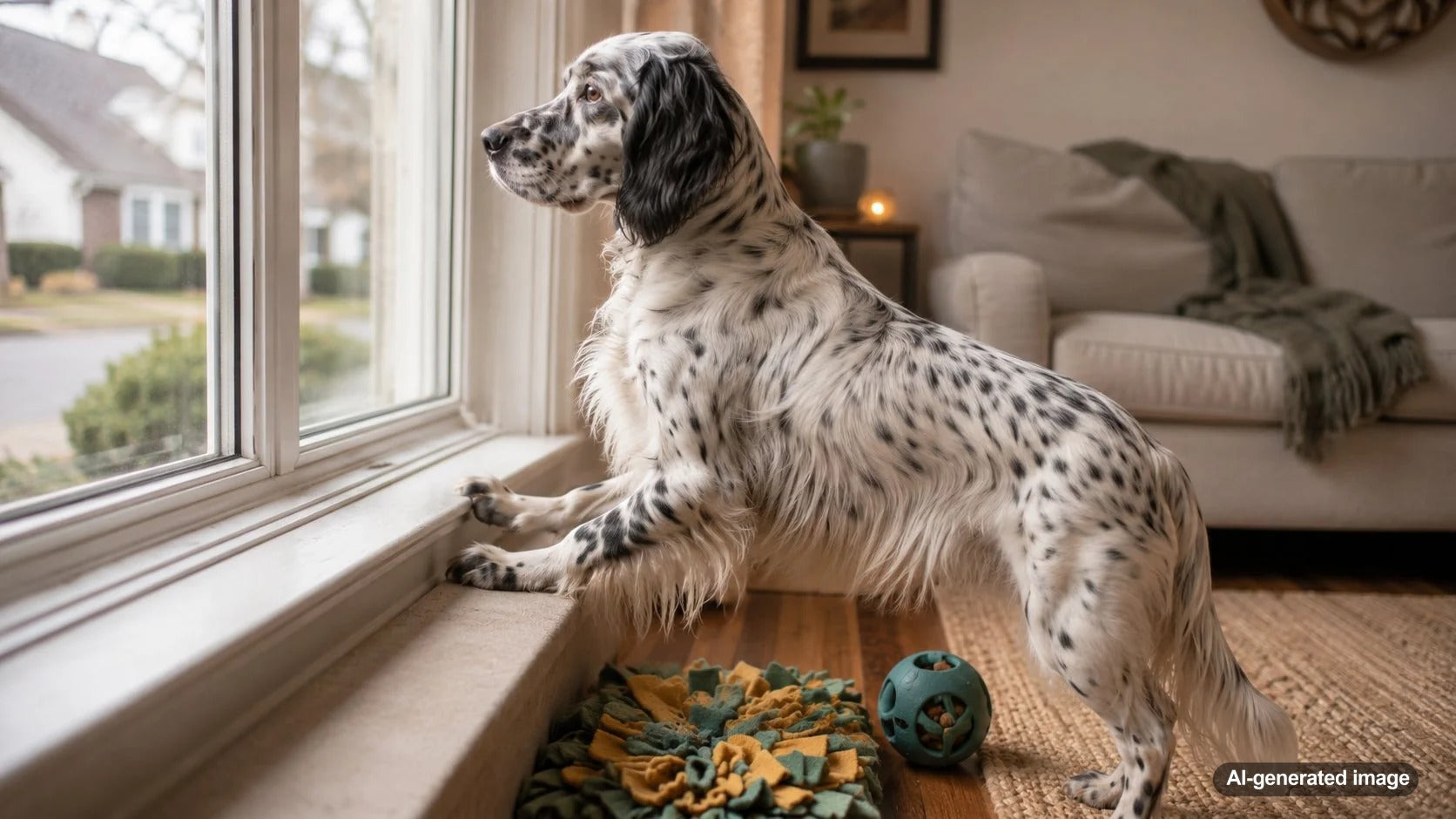
Some dogs can spend what feels like an entire afternoon watching pedestrians, squirrels, delivery trucks, and neighborhood dogs pass by. That quiet observation can be enjoyable, but staring through a window is not automatically enriching, especially when it turns into frantic barking, pacing, or constant vigilance. A better routine balances observation with sniffing, licking, problem-solving, movement, and downtime.
Build a Calm Observation Station
Choose one window rather than giving your dog access to every street-facing view. Place a bed or mat several feet back from the glass so your dog can observe without feeling pressed against the barrier. Reward relaxed behaviors such as a soft body, quiet breathing, looking away from the window, or choosing to lie down.
Start with sessions of just two to five minutes. Quietly offer a small treat when a person, dog, or vehicle appears and your dog remains calm. The goal is not to keep your dog staring longer. It is to teach a pattern: notice, stay relaxed, check in with you, and settle again.
Turn Watching Into a Scent-and-Search Game
Dogs gather far more information through scent than people do, so visual entertainment works best when balanced with nose work. After a short viewing session, scatter a few pieces of kibble around the room or hide treats in easy locations. This encourages your dog to disengage from the window and use a different sensory system.
For beginners, let your dog watch you place the food. Puppies need easy wins, while seniors may appreciate treats placed at nose height on nonslip flooring.
Offer a Licking Activity During Busy Times
If your street becomes active around school dismissal, deliveries, or evening dog walks, prepare a licking activity before the excitement begins. Repetitive licking can support a calm routine for many dogs and gives them something appropriate to do while the outside world keeps moving.
A FlipMat can work well beside a settle area because it combines licking and slow feeding with two challenge levels. Use a dog-safe spread or part of your dog's regular meal, and supervise until you know how your dog interacts with it. Count the food toward the day's calories, especially for small dogs or dogs on a weight-management plan.
Create a Window-to-Puzzle Rotation
Rotate between a few minutes at the window and a simple puzzle that requires nudging, rolling, or searching. This keeps the window from becoming the only interesting feature in the home.
Five minutes of calm viewing, followed by breakfast scattered in a snuffle mat or across a clean rug.
A short sniff walk, then a food puzzle or hidden-toy search indoors.
Supervised window time, a few easy training cues, and a relaxing licking activity.
The Walkabout is one option for dogs who like movement-based problem-solving. Its rolling, adjustable design turns kibble or treats into an indoor search-and-chase activity. Use it on a clear, floor-safe area, and adjust the difficulty so your dog succeeds without becoming frustrated.
Teach a Reliable Break From the Window
A cue such as "this way" or "find it" can help your dog leave the window before arousal builds. Practice when nothing exciting is happening, then use it around mild distractions.
Avoid shouting over barking or repeatedly calling a dog who is already overwhelmed. Close the curtain, use privacy film on the lower part of the glass, or move your dog to another room. Management is not failure. It prevents rehearsal of a habit that can become stronger every time the dog charges the window.
Know When Watching Is No Longer Enrichment
Healthy observation usually includes loose muscles, normal breathing, the ability to take food, and easy disengagement. Warning signs include a hard stare, raised hackles, nonstop scanning, trembling, panting when the room is cool, repeated barking, or redirected nipping at another pet.
If the behavior is sudden, intense, or paired with appetite changes, pain, confusion, excessive drooling, or other physical symptoms, contact your veterinarian. For ongoing reactivity, fear, or barrier frustration, a qualified reward-based trainer or veterinary behavior professional can help you build a safer plan.
Dog Parent FAQs
Is looking out the window good enrichment for dogs?
It can be for dogs who remain relaxed and can easily disengage. It is not helpful when it repeatedly causes fear, frustration, or intense barking.
How long should I let my dog watch outside?
Begin with two to five supervised minutes and stop while your dog is calm. Some dogs can handle longer sessions, while others do better with very limited access.
Should I cover the window if my dog barks?
Yes, reducing the view can be a practical management step. Pair it with training and alternative enrichment rather than relying on correction or punishment.
Make Observation Part of a Bigger Routine
A dog who loves watching the world does not need to lose that favorite pastime. The key is to keep it calm, limited, and balanced with activities that engage the nose, mouth, body, and brain. When your dog can observe, disengage, and settle, window time becomes one useful piece of a richer day instead of a source of constant alertness.


