






































































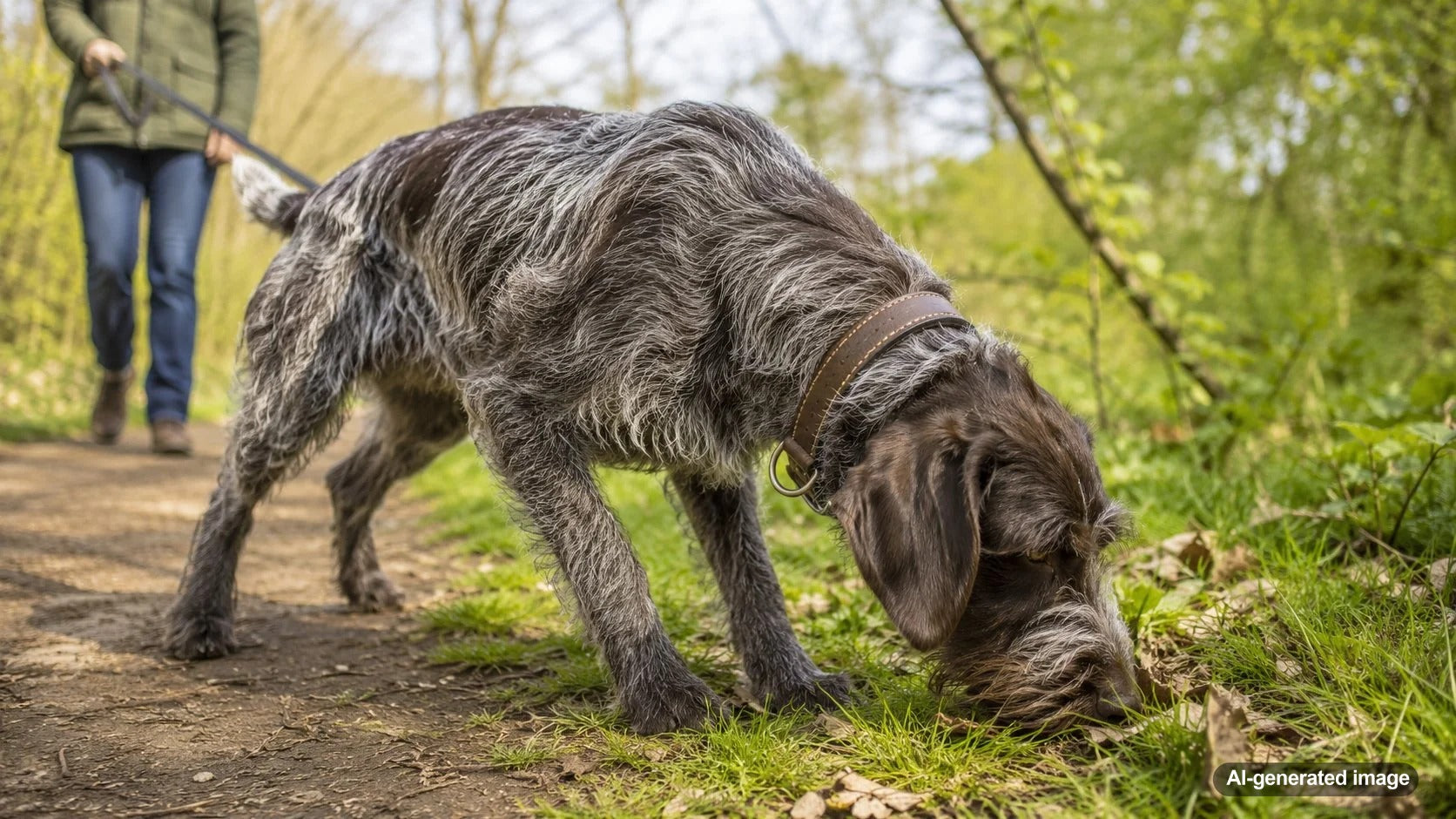
Some dogs notice every squirrel, leaf pile, mailbox, grocery bag, and mysterious blade of grass with their nose. A short walk can become a slow-motion investigation, while a rainy afternoon may leave them searching the house for something interesting to smell. Rather than treating this curiosity as a distraction, you can turn it into enrichment that exercises your dog's natural abilities and makes everyday routines more satisfying.
Sniffing games do not have to be complicated or expensive. A few treats, cardboard boxes, towels, household containers, and food-dispensing toys can create engaging activities for puppies, adults, seniors, and dogs with limited mobility.
Quick answer: The best enrichment ideas for sniff-loving dogs include decompression walks, scatter feeding, treat searches, cardboard box games, hide-and-seek, scent trails, food puzzles, and beginner nose work. Start with easy searches, let your dog solve the problem independently, and increase the challenge gradually.
Why Sniffing Is Valuable Enrichment
Dogs gather a remarkable amount of information through scent. When your dog pauses at a tree or circles a patch of grass, they may be investigating which animals passed through, how recently they were there, and what direction they traveled.
Sniffing enrichment gives this natural behavior a safe outlet. It may help mentally engage dogs who become bored with repetitive fetch sessions, support confidence in cautious dogs, and provide a lower-impact activity for seniors or dogs who cannot handle strenuous exercise. It can also encourage a busy dog to slow down and concentrate.
Sniffing is not a replacement for physical activity, training, social interaction, or veterinary care. It is one useful part of a balanced routine.
1. Take a Sniff-First Decompression Walk
Not every walk needs to focus on distance, speed, or perfect heel position. Choose a safe, relatively quiet route and allow your dog to investigate interesting smells at a comfortable pace.
Use a standard leash or an appropriately handled long line in permitted areas. Avoid retractable or long lines near traffic, crowded sidewalks, wildlife, or other dogs. Let your dog choose some of the direction while maintaining reasonable boundaries for safety.
A sniff-first walk can be especially useful after a busy day, before a long period at home, or when high-impact exercise is not appropriate. Even familiar routes can become more interesting when you reverse direction or visit them at a different time of day.
2. Turn Meals Into a Scatter Search
Instead of placing every meal in a bowl, scatter a portion of your dog's kibble across a clean rug, snuffle mat, or safe patch of untreated grass. Spread the pieces widely enough that your dog must search rather than simply vacuuming up a pile.
Begin in a small area so the game is easy to understand. As your dog improves, increase the search zone or place food near safe obstacles such as chair legs. Count the scattered food as part of the dog's normal daily intake.
For dogs who gulp meals, a rolling slow-feeder puzzle such as the Walkabout can add movement and problem-solving while releasing kibble or appropriately sized treats. Adjust the difficulty so your dog experiences success instead of frustration.
3. Build a Cardboard Box Search
Place several clean, empty boxes on the floor and hide a treat in one or two of them. Leave the boxes open for a beginner. Once your dog understands the game, loosely fold some flaps or place crumpled packing paper around the treats.
Remove tape, staples, plastic, labels, and anything your dog could swallow. Supervise closely, especially if your dog tends to shred and eat cardboard rather than simply searching it.
Change the box positions between rounds. This encourages your dog to follow scent instead of memorizing where the reward appeared last time.
4. Play the Cup Game
Place a treat under one sturdy cup while your dog watches. Encourage them to sniff, then lift the cup when they correctly investigate it. Add a second empty cup after several successful repetitions.
Gradually move the cups farther apart or rearrange them before giving your search cue. Lightweight cups may frustrate large, enthusiastic dogs, so use stable containers that cannot splinter or trap a muzzle.
Reward calm investigation. If your dog knocks everything over immediately, return to one cup and make the correct choice easier.
5. Create a Treat Trail
Drag a strong-smelling, dog-safe treat along the floor or ground to create a short scent path, then leave the reward at the end. Start with a straight trail that is only a few feet long. Later, add gentle turns or pass around furniture.
Keep the dog in another room while setting up more advanced trails so they cannot solve the game visually. Use washable surfaces indoors and avoid dragging food across areas treated with cleaners, pesticides, lawn chemicals, or fertilizers.
6. Hide Treats Around One Room
Ask your dog to wait outside a room while you place several treats in easy, accessible spots. Early hides might sit beside a table leg, near the edge of a rug, or inside an open toy.
Release your dog with a consistent cue such as "find it." Avoid pointing directly at every reward. The purpose is to let the nose do the work.
Increase difficulty one variable at a time. You might make the search area larger, use less aromatic treats, or position rewards slightly above nose level. Do not hide food where your dog must climb furniture, knock over objects, or reach into unsafe spaces.
7. Play Hide-and-Seek With People
Have one person hold the dog while another hides nearby. The hidden person can call the dog's name once, then reward the dog warmly when found.
Begin with obvious locations, such as standing behind an open door. Progress to quiet hiding without repeated calling. This game combines scenting, recall practice, movement, and social connection.
Outdoor versions should take place in a securely fenced area or with the dog safely leashed. Never hide where the dog must cross a road, leave the property, or enter an unsafe area.
8. Add Sniffing to Interactive Treat Play
Food toys can provide a useful transition from active searching to calmer licking or chewing. Hide a prepared toy behind a box or in an easy corner, then ask your dog to find it before settling down to enjoy the reward.
The Pupsicle can be used as the final discovery in a supervised search. The dog first follows their nose to locate it, then receives a longer-lasting treat activity. Select the correct toy size, use an appropriate filling, and include all treats in the dog's daily food allowance.
9. Make a Rolled-Towel Puzzle
Lay an old towel flat, sprinkle a few treats across it, and roll it loosely. Let your dog unroll the towel with their nose and paws.
For a more experienced dog, fold the towel into layers or create several loose rolls. Do not tie tight knots that could trap a jaw or tempt the dog to swallow fabric. Skip this activity for dogs who tear and consume towels.
10. Introduce Beginner Nose Work
Once your dog confidently finds food, you can explore structured scent work with a qualified positive-reinforcement trainer. Formal nose work teaches dogs to locate a specific target odor and communicate that they have found it.
Do not casually apply concentrated essential oils to toys, bedding, skin, or food. Some substances can be irritating or unsafe for dogs, and proper scent-work setups use controlled handling methods. A knowledgeable instructor can help you introduce target odors safely.
Helpful tip: End each search while your dog is still interested. Three successful two-minute rounds are often more productive than one long session that ends in frustration.
How to Match the Game to Your Dog
- Puppies: Use very easy searches, soft surfaces, and short sessions. Prevent access to cardboard, fabric, or containers they may swallow.
- Senior dogs: Keep hides at nose level, provide secure footing, and avoid stairs or awkward reaching. Ask your veterinarian about activity adjustments if mobility or cognitive changes are present.
- Small dogs: Use lightweight but stable containers and place rewards within comfortable reach.
- Large or powerful dogs: Choose sturdy equipment and create extra space around the search area.
- Easily frustrated dogs: Use more aromatic rewards, fewer hiding places, and visible starter hides.
- Food-sensitive dogs: Use part of the dog's regular meal or veterinarian-approved treats.
Common Mistakes That Make Scent Games Less Fun
Making the first search too difficult is the most common problem. If your dog wanders away, scratches frantically, barks at you, or starts chewing the equipment, simplify the setup.
Owners also tend to help too quickly. Give your dog time to investigate before pointing, repeating cues, or moving the reward. Quiet observation builds independence.
Finally, check every activity for safety. Supervise food puzzles, use properly sized toys, prevent resource guarding conflicts between multiple dogs, and remove damaged equipment. Contact your veterinarian or a qualified behavior professional if sniffing becomes suddenly obsessive, is paired with appetite changes or distress, or represents a major change in behavior.
Dog Parent FAQs
How long should a sniffing enrichment session last?
Start with two to five minutes. Stop while your dog is engaged and successful, then offer another short session later.
Can sniffing games tire a dog out?
Mental work may help many dogs feel more satisfied, but it should complement appropriate exercise, rest, training, and social interaction.
Should I let my dog sniff everything on walks?
Allow plenty of safe sniffing while redirecting your dog away from trash, chemicals, wildlife waste, unknown food, sharp objects, and unsafe areas.
What should I do if my dog cannot find the treats?
Make the hide easier, shorten the search area, or let part of the treat remain visible. Build difficulty only after repeated success.
Let Your Dog Follow Their Nose
A dog who loves to sniff is already telling you which kind of enrichment feels rewarding. By turning meals, walks, household objects, and playtime into safe scent-based challenges, you can create a routine that feels fresh without reinventing your entire day.
Begin with one simple game, repeat it until your dog understands the rules, and then add small changes. The best enrichment is not necessarily the hardest activity. It is the one your dog enjoys, can complete safely, and looks forward to doing again.


