






































































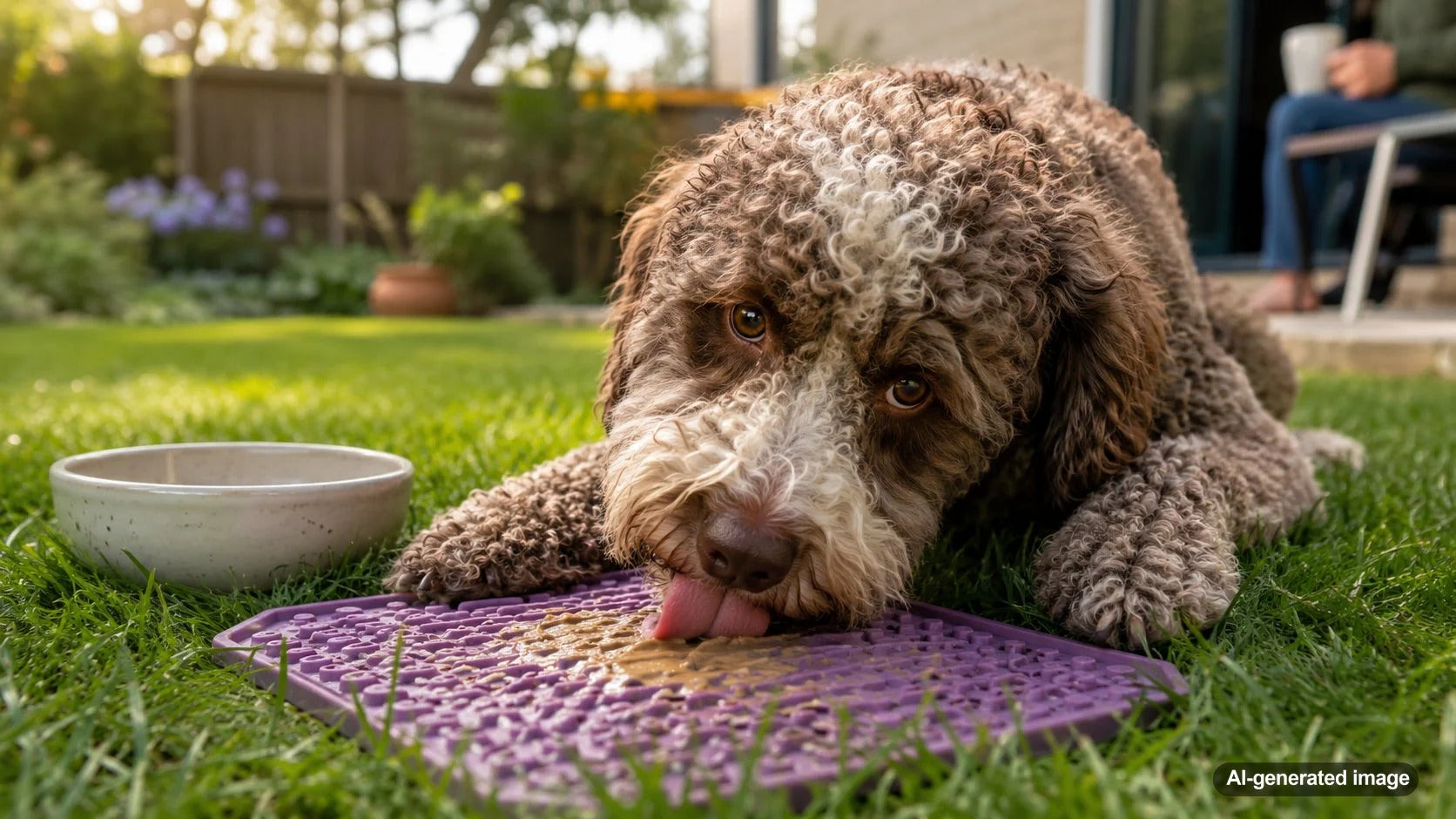
Some dogs do not just like licking. They treat it like a full-time hobby, a self-soothing ritual, and a puzzle to solve all at once. If your pup melts into a calmer state with a textured mat, works patiently at a frozen treat, or licks every last bit of flavor from a toy, the right enrichment routine can turn that natural behavior into something useful, satisfying, and much easier to repeat.
Licking can be especially helpful for dogs who need a slower activity than fetch, a quieter option during busy household moments, or a gentle distraction during grooming, crate time, rainy days, or pre-bedtime routines. The best enrichment ideas for dogs who love to lick are safe, supervised activities that stretch treat time, encourage focus, and give your dog an appropriate outlet for that busy tongue.
Quick answer: The best licking enrichment ideas include textured lick mats, frozen spreads, slow feeder mats, stuffed treat toys, layered recipes, bath-time distractions, travel-friendly lick routines, and simple homemade freezer treats. Start easy, use dog-safe ingredients, supervise your dog, and choose the setup based on your dog's size, chewing style, and energy level.
Why Dogs Love Licking Enrichment
Licking is repetitive, focused, and naturally rewarding for many dogs. For some pups, it looks like gentle concentration. For others, it looks like a mission: paws planted, nose down, tail still, and total commitment to getting every bit of flavor from the surface.
That is what makes licking enrichment so useful. It can slow down snack time, add mental stimulation without requiring a big space, and give dogs something appropriate to do when they are bored or overstimulated. A young puppy may use licking as a quieter alternative to mouthing your sleeves. A senior dog may enjoy it because it feels easier than high-impact play. A high-energy adult dog may need it after a walk to help transition from excitement to rest.
It is not a cure-all, and it should not replace exercise, training, veterinary care, or behavior support. But as part of a balanced routine, licking enrichment can be a practical everyday tool.
1. Start With a Lick Mat for Everyday Calm
A lick mat is one of the easiest ways to turn a small amount of spreadable food into a longer, more engaging activity. The grooves and textures make your dog work slowly instead of gulping everything from a bowl in seconds.
For dogs who are new to lick mats, start with a thin layer of something simple and familiar. Too much food can overwhelm a beginner, while too little may not hold attention. A light spread in the textured sections is often enough to teach the idea.
Woof's FlipMat is a helpful option for this kind of routine because it works as both a lick mat and a slow feeder, with two challenge levels. That makes it useful for dogs who need an easy side some days and a more involved enrichment session on others.
2. Freeze the Fun for a Longer Licking Session
Freezing is one of the simplest ways to make licking enrichment last longer. Spread a dog-safe topping into a mat or toy, freeze it, and offer it when your dog needs a more focused activity. This can be especially helpful before a Zoom call, during a rainy afternoon, or after a stimulating walk when your dog needs help settling.
Good freezer-friendly ideas include plain canned pumpkin, soaked kibble, dog-safe broth, mashed banana in small amounts, plain yogurt if your dog tolerates dairy, or your dog's regular wet food. Always avoid ingredients that are unsafe for dogs, including xylitol, chocolate, grapes, raisins, onions, garlic-heavy foods, and heavily seasoned leftovers.
Helpful tip: Freeze in layers. Add one thin layer, freeze it, then add a second texture on top. This creates a longer challenge without needing to add a huge amount of food.
3. Match the Texture to Your Dog's Personality
Not every dog needs the same level of challenge. A cautious dog may give up if the grooves are too deep or the food is frozen too hard. A confident licker may need ridges, pockets, or a frozen layer to stay interested.
| Dog Type | What to Try First | What to Watch |
|---|---|---|
| Puppies | Soft spreads, shallow textures, short sessions | Chewing the mat, frustration, too many rich treats |
| Senior dogs | Soft foods, easy access, non-slip surfaces | Dental pain, appetite changes, fatigue |
| Power chewers | Supervised licking only, sturdier enrichment tools | Trying to chew or tear the mat |
| Small dogs | Smaller portions and portable mats | Overfeeding from rich toppings |
| Large dogs | Bigger surfaces and frozen layers | Finishing too fast without enough challenge |
If your dog seems uncomfortable, suddenly stops eating, drools excessively, paws at the mouth, or seems painful while licking or chewing, pause the routine and ask your veterinarian for guidance.
4. Use Licking During Stressful Moments
Licking enrichment can be useful during moments when your dog needs a job that does not add more excitement. Think bath time, nail trims, brushing, visitors arriving, thunderstorms, fireworks, car rides, or settling into a hotel room.
The key is to practice before the stressful event. If the first time your dog sees a lick mat is during a nail trim, the routine may feel suspicious. Instead, offer it during calm moments first so your dog builds a positive association.
For small dogs, travel, or on-the-go calm, the FlipMat Mini can fit nicely into a portable enrichment routine. It is especially useful when you want a smaller licking setup for a crate, car break, grooming station, or weekend trip.
5. Turn Meals Into Licking Enrichment
If your dog inhales meals, licking enrichment can make food feel more satisfying. Instead of adding extra treats, use part of your dog's regular meal. Soak kibble until soft, mash it lightly, and spread it into a mat or slow feeder surface.
This works well for dogs who seem bored after eating from a bowl or who need more mental work without a calorie-heavy snack. It also helps dog parents make enrichment easier to repeat because it becomes part of something they already do every day: feeding the dog.
For best results, keep portions realistic. Enrichment should support your dog's routine, not quietly double the snack budget. If your dog is on a weight plan, has a sensitive stomach, or needs a special diet, check with your vet before changing meal routines or adding rich toppings.
6. Build a Lick, Sniff, Chew Routine
Many dogs settle best when enrichment includes more than one natural behavior. Licking is wonderful, but pairing it with sniffing and appropriate chewing can create a more complete routine.
Try this 20-minute calm routine:
Start with a slow sniff walk or a few minutes of scatter feeding in the yard. Follow with a licking activity, such as a frozen mat or spreadable enrichment toy. Finish with a safe, supervised chew or a quiet resting spot so your dog has a natural transition into downtime.
This kind of sequence can be especially helpful for dogs who struggle to go from wild to relaxed. Instead of expecting an instant off switch, you give your pup a step-down routine.
7. Keep Licking Enrichment Safe and Clean
Supervision matters, especially for dogs who like to chew the tool after the food is gone. Remove the mat or toy when the licking session is over, and inspect it regularly for damage. If your dog is determined to shred soft materials, choose sturdier options and redirect to appropriate chew enrichment.
Clean lick mats and toys after each use, especially when using wet food, dairy, meat-based treats, or frozen recipes. Start with short sessions and simple ingredients, then add variety slowly so you can spot tummy sensitivity before it becomes a bigger mess.
Also pay attention to behavior changes. Licking enrichment is different from compulsive licking of paws, floors, furniture, or the air. If licking seems sudden, intense, painful, obsessive, or paired with vomiting, diarrhea, skin irritation, appetite changes, or anxiety, it is time to contact your veterinarian or a qualified trainer.
Dog Parent FAQs
Are lick mats good for dogs?
Lick mats can be a helpful enrichment tool for many dogs. They may encourage slower eating, focused licking, and calmer downtime when used safely and supervised.
What can I put on a lick mat?
Try dog-safe options like plain pumpkin, soaked kibble, wet dog food, plain yogurt if tolerated, dog-safe broth, or spreadable dog treats. Avoid unsafe ingredients like xylitol, chocolate, grapes, raisins, onions, and heavily seasoned foods.
Can puppies use licking enrichment?
Yes, many puppies enjoy licking enrichment, but sessions should be short, easy, and supervised. Remove the mat if your puppy starts chewing it instead of licking.
How often can my dog use a lick mat?
Many dogs can enjoy licking enrichment regularly, especially when you use part of their normal meal. Adjust portions so extra toppings do not lead to unwanted weight gain or stomach upset.
Is licking enrichment enough exercise?
No. Licking enrichment supports mental stimulation and settling, but dogs still need appropriate physical exercise, sniffing, training, play, rest, and social connection.
The Bottom Line on Licking Enrichment
The best enrichment ideas for dogs who love to lick are the ones that fit your real life. A frozen mat during grooming, a slow feeder meal on a busy morning, a travel-size licking activity for hotel stays, or a calming evening routine can all give your dog a satisfying outlet without making your day harder.
Start simple, watch your dog's body language, keep ingredients safe, and build from there. When licking enrichment is easy to prepare and enjoyable for your dog, it becomes more than a treat. It becomes a small daily ritual that helps your pup feel busy, focused, and cared for.


