






































































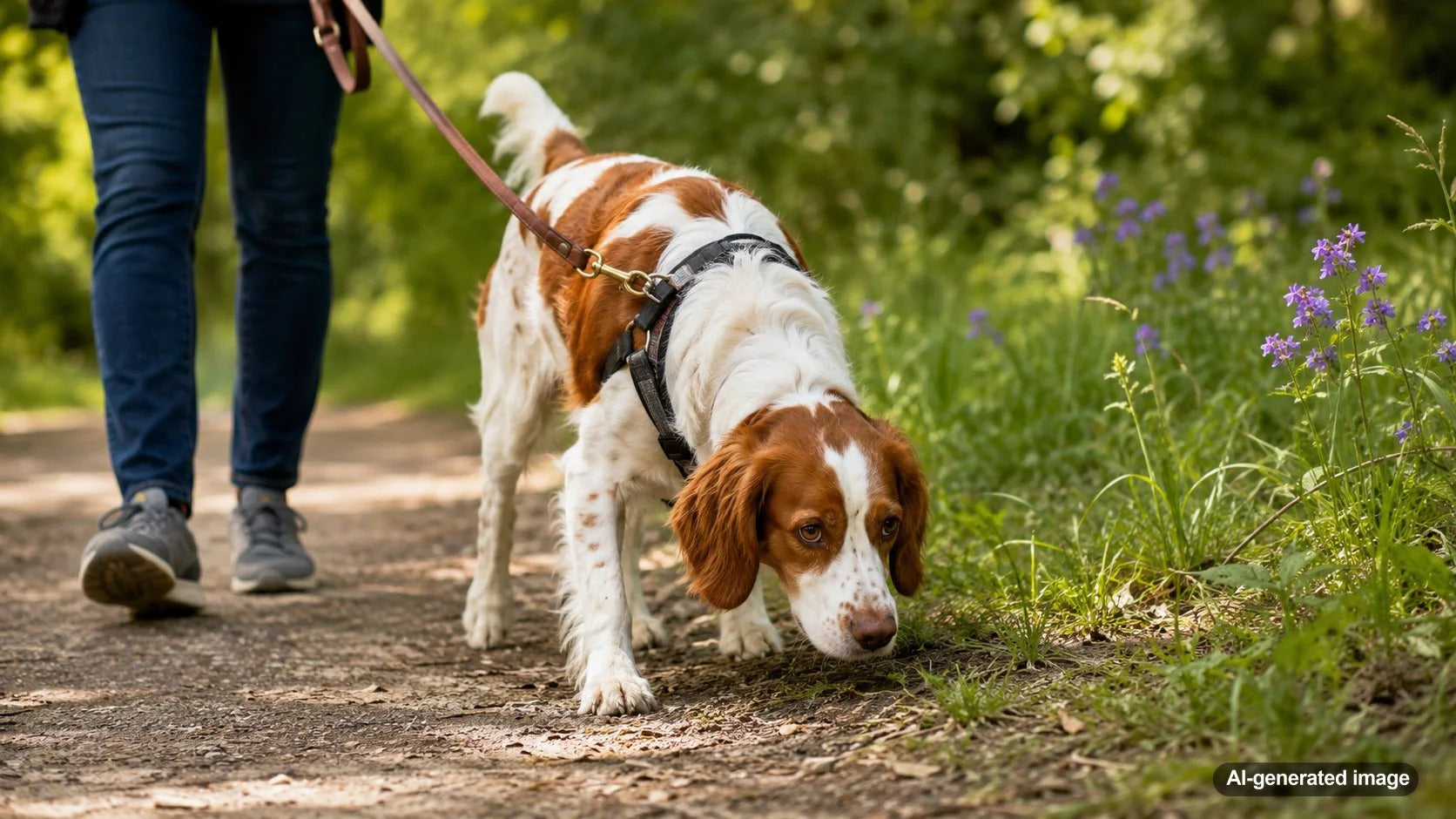
Dogs who love routine do not necessarily want every day to be identical. They often feel safest when meals, walks, rest, and family time happen in a familiar order, but they can still benefit from small challenges within that dependable schedule. The best enrichment ideas preserve the structure your dog trusts while changing the activity, scent, texture, location, or difficulty just enough to keep the brain engaged.
A routine-loving dog may wait beside the leash before the usual walk, stare at the kitchen when dinner approaches, or carry the same toy to the same spot each evening. Predictability can be comforting. The goal is not to disrupt that comfort, but to build enjoyable variety into moments your dog already understands.
Why Routine-Loving Dogs Still Need Enrichment
Enrichment gives dogs opportunities to perform natural behaviors such as sniffing, searching, licking, chewing, problem-solving, and interacting with people. A predictable schedule meets a dog's need for security, while enrichment helps meet the need for mental and sensory activity.
Without enough appropriate outlets, some dogs invent their own entertainment. That may look like repeatedly stealing socks, shredding paper, barking at minor sounds, chewing furniture, pestering family members, or pacing before a familiar event. These behaviors are not always caused by boredom, but adding suitable mental and physical activity is often a useful place to start.
Sudden behavior changes deserve closer attention. Contact your veterinarian if your dog becomes unusually restless, withdrawn, destructive, confused, painful, aggressive, or difficult to distract, especially if appetite, sleep, mobility, or bathroom habits also change.
Turn a Familiar Meal Into a Search Game
Food enrichment is one of the easiest ways to add variety without changing the daily schedule. Instead of serving every meal in a bowl, reserve part of your dog's measured food for a simple search activity.
Begin by placing several small piles of kibble in obvious locations within one dog-safe room. Once your dog understands the game, hide the food behind a chair leg, beside a dog bed, or under lightweight cups your dog can safely investigate. Avoid hiding food near household chemicals, electrical cords, breakable objects, or places where your dog could become trapped.
Keep the first searches easy. A dog who repeatedly fails may become frustrated and walk away, bark, paw wildly, or start chewing the containers. Success should come quickly enough to keep the activity enjoyable.
Use a Puzzle at the Same Time Each Day
Routine-oriented dogs often enjoy knowing when an activity will happen. A puzzle can become the predictable bridge between breakfast and a nap, your departure and quiet time, or dinner and evening relaxation.
A rolling feeder, treat-dispensing toy, or food puzzle encourages a dog to manipulate an object to reach a reward. The Walkabout, for example, turns a portion of a meal into a rolling slow-feeder game with an adjustable opening for different kibble or treat sizes.
Start on the easiest setting and supervise the first sessions. Puppies, seniors, small dogs, and dogs with limited mobility may need a puzzle that moves slowly and releases food readily. Confident problem-solvers can gradually work up to a greater challenge.
Create a Predictable Licking Routine
Licking can provide a focused, repetitive activity during naturally quiet parts of the day. Try offering a lick mat while you prepare dinner, during family movie time, after a walk, or when your dog needs to settle in a safe resting area.
Spread a thin layer of dog-safe food across the textured surface instead of creating a thick mound. You can use part of your dog's regular wet food or another veterinarian-approved option. Freezing the prepared mat may extend the activity, although dogs with sensitive teeth may prefer it chilled or served at room temperature.
The dual-sided FlipMat can provide two levels of licking or slow-feeding difficulty, making it easy to keep the time of the routine consistent while changing the challenge.
Make Familiar Walks More Interesting
You do not need a completely new route every day. For many dogs, changing the purpose of one part of a familiar walk is enough.
Choose a safe stretch and allow your dog extra time to sniff. On another day, practice a few easy cues at known landmarks. You might ask for a hand target near the mailbox, reward a check-in at the corner, or pause for a short treat search in clean grass.
Letting a dog investigate scents is enrichment, not wasted walking time. However, avoid forcing social interactions with unfamiliar dogs or people. A routine-loving dog may appreciate calmly observing something new from a comfortable distance more than greeting it.
Rotate Toys Without Changing the Toy-Time Ritual
Leaving every toy available all the time can make the collection less interesting. Instead, keep a small group accessible and place the rest out of sight. Rotate a few toys every several days while preserving your usual playtime.
The rotation can include different activity types: a tug toy, a fetch toy, a food puzzle, a chew, and a soft toy for carrying. Inspect each item during the swap. Discard toys that are splitting, unraveling, developing sharp edges, or breaking into pieces your dog could swallow.
Practice Five-Minute Training Games
Training is enrichment because it asks a dog to notice cues, make choices, and earn reinforcement. Short sessions usually work better than one long lesson, especially for puppies, seniors, and dogs who become frustrated easily.
Practice practical skills such as touching your palm with the nose, going to a mat, waiting at a doorway, dropping an object, or finding a named toy. End while your dog is still engaged. A session can be successful after only three or four good repetitions.
For a dog who relies heavily on predictability, use the same starting cue and location at first. Add one new element only after the dog appears comfortable.
Build a Weekly Enrichment Rhythm
Serve part of breakfast in a beginner puzzle.
Add a five-minute scent search after the usual walk.
Offer a supervised chew during evening quiet time.
Practice two familiar cues and one easy new behavior.
Use a lick mat while the household settles down.
Explore a slightly different route or play a family hide-and-seek game.
This approach keeps the overall week recognizable while preventing enrichment from becoming another identical task. Pay attention to which activities leave your dog calmly satisfied and which create frustration or overexcitement.
Adjust Enrichment for Your Individual Dog
Puppies need easy activities, close supervision, and frequent breaks. Senior dogs may enjoy scent work and gentle food puzzles even when vigorous exercise is no longer comfortable. Power chewers need durable, appropriately sized options, while small dogs may struggle with toys that are too heavy or difficult to move.
Watch your dog's body language. Relaxed movement, curious sniffing, steady engagement, and the ability to pause are encouraging signs. Frantic biting, repeated barking, guarding, trying to swallow toy pieces, or refusing to continue suggests that the activity should be simplified or stopped.
Dogs with food allergies, dental problems, swallowing concerns, digestive conditions, or prescribed diets may need customized enrichment choices. Ask your veterinarian before introducing unfamiliar foods or activities if you are unsure.
Dog Parent FAQs
Should I change my dog's routine to prevent boredom?
You usually do not need to replace a routine your dog enjoys. Keep important events predictable and vary the enrichment offered within those events.
How long should an enrichment activity last?
Quality matters more than duration. Five to fifteen minutes can be plenty for a scent game or training session, while a food toy may last longer depending on the dog and difficulty.
Can dogs have too much enrichment?
Yes. Constant activity can make it harder for some dogs to rest. Balance active enrichment with naps, quiet time, and opportunities to disengage.
What should I do if my dog gives up on puzzles?
Make the puzzle easier, use a more motivating reward, and demonstrate how it works. Stop before frustration builds and try again later.
A Reliable Routine Can Still Feel Fresh
The strongest enrichment plan is not the one with the most toys or the most complicated schedule. It is the one you can repeat safely and your dog genuinely enjoys. Keep the dependable rhythm your dog loves, add small moments of novelty, and adjust based on your dog's age, abilities, preferences, and body language.
With thoughtful rotation, the same breakfast hour, afternoon walk, and evening wind-down can offer something interesting every day without making life feel unpredictable.


