






































































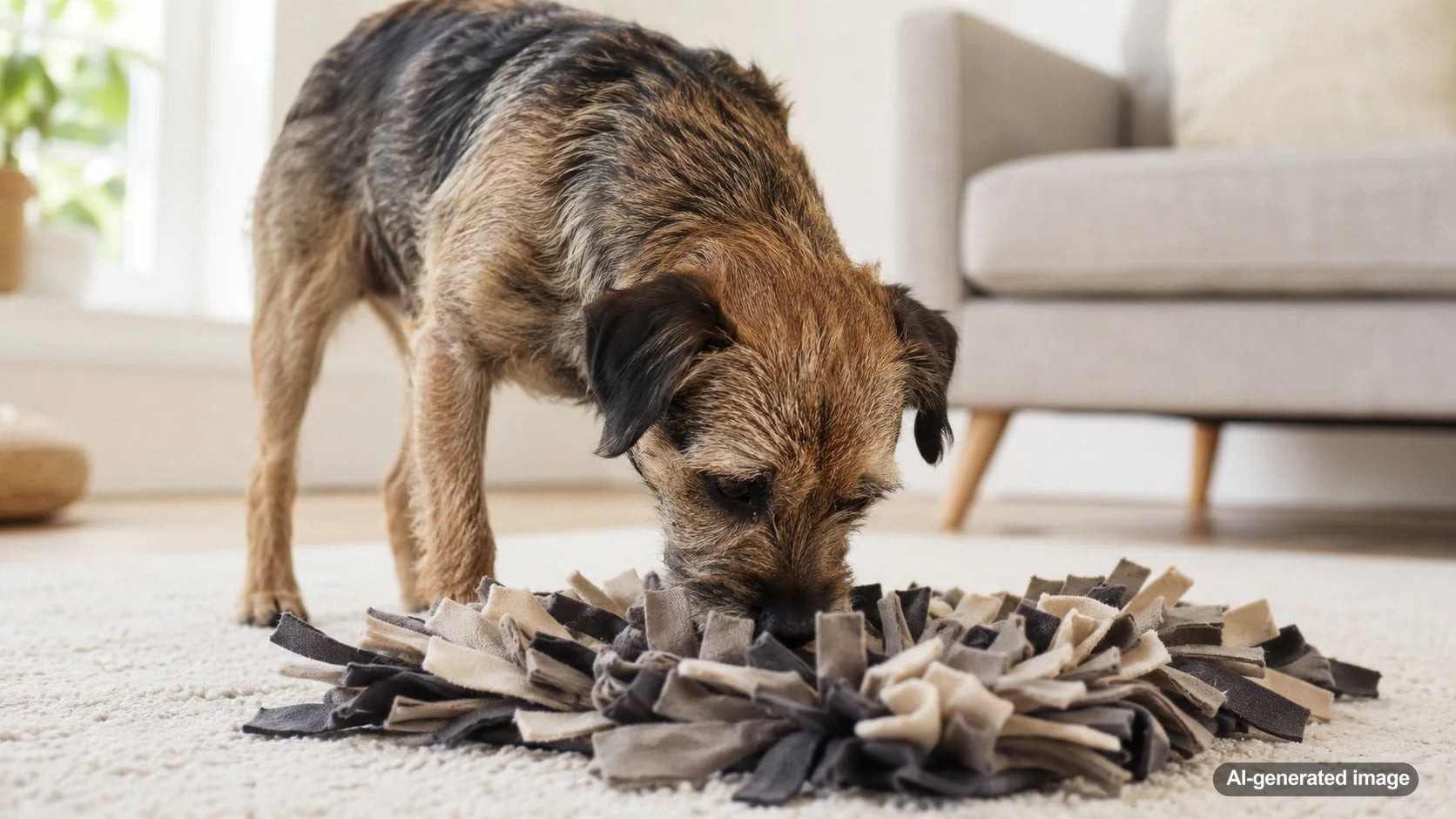
Not every dog feels better after a fast game of fetch, a crowded dog park visit, or an exciting puzzle that sends treats flying across the room. Some dogs become frantic, barky, mouthy, restless, or unable to settle when an activity raises their energy too quickly. The best enrichment ideas for dogs who cannot handle too much excitement focus on slow sniffing, steady licking, gentle problem-solving, predictable routines, and activities the dog can leave whenever they need a break.
Low-arousal enrichment is especially useful for dogs who are reactive, easily frustrated, recovering from an injury, adjusting to a new home, entering their senior years, or simply sensitive to noise and movement. The goal is not to exhaust your dog. It is to give their brain and body something satisfying to do without pushing them into an overwhelmed state.
How to Tell When Enrichment Is Too Exciting
A dog can enjoy an activity and still become overstimulated by it. Watch the whole dog rather than judging success by how eagerly they participate.
Signs that an activity may be raising arousal too far include rapid grabbing, hard staring, repeated barking, frantic scratching, spinning, jumping on people, biting at the toy, ignoring familiar cues, or continuing to search after the activity has ended. Some dogs also pant heavily, pace, or struggle to lie down afterward.
A calmer response usually looks different. The dog's movements stay deliberate, their body remains loose, and they can pause, look away, take a drink, or walk off. They may settle down for a nap after the activity instead of demanding more.
1. Slow Sniffing Walks
A sniffing walk is less about distance and more about information. Choose a quiet route, use a comfortable leash, and let your dog investigate grass, tree trunks, fences, and safe patches of ground at their own pace.
For dogs who react to people, traffic, or other animals, begin in a familiar yard, an empty parking area, or a quiet street during an off-peak hour. Ten peaceful minutes of sniffing may be more useful than a long walk filled with triggers.
2. Easy Treat Searches
Scatter a few small treats or pieces of kibble across a towel, rug, or patch of grass and invite your dog to find them. Start with treats that are clearly visible. Hiding every piece immediately can cause frustration in dogs who are new to scent games.
As your dog becomes comfortable, place treats beside furniture legs, under the edge of a towel, or inside open cardboard boxes. Keep the search area small so the game feels achievable rather than endless.
3. Gentle Licking Activities
Licking gives many dogs a repetitive activity that can support a calmer routine. Spread a thin layer of dog-safe food across a textured surface rather than piling on a large serving. A thinner layer encourages slower licking and helps you manage calories.
The dual-sided FlipMat can provide two levels of challenge, making it easier to begin with the simpler side. Use it during quiet periods, such as after a walk, while guests settle into the house, or before your dog's usual rest time.
Always account for enrichment food in your dog's daily intake. Check with your veterinarian before introducing new ingredients if your dog has allergies, digestive concerns, or a prescription diet.
4. Simple Food Toys With an Easy Starting Level
Food toys do not need to be difficult to be enriching. For a sensitive or easily frustrated dog, pack the toy loosely so food comes out with gentle licking or nudging. Avoid freezing the filling solid during the first few sessions, since making the task too hard can lead to biting, barking, or giving up.
The Pupsicle can be introduced as a supervised, stationary licking activity. Choose a quiet location with good footing, and remove it when your dog begins chewing the toy aggressively instead of calmly working on the treat.
5. Calm Mat Training
Place a mat or blanket in a low-traffic part of the room. Quietly reward your dog for looking at it, stepping onto it, sitting, or lying down. Drop each reward between their paws so they do not need to jump up or chase food.
Keep the first sessions extremely short. Thirty to sixty seconds may be enough. Over time, the mat can become a predictable place for resting while you cook, answer the door, or sit with visitors.
6. Low-Pressure Choice Games
Offer two safe objects and allow your dog to choose which one to investigate. You might present a cardboard box and a folded towel, or two familiar toys placed several feet apart. There is no correct answer and no need to direct the dog repeatedly.
Choice can be especially valuable for dogs who feel pressured by constant cues. Let your dog approach, sniff, walk away, or rest. The freedom to disengage is part of the enrichment.
7. Quiet Chewing With Supervision
Chewing can provide an appropriate outlet for dogs who like using their mouths, but the chew must suit the dog's size, chewing style, dental condition, and experience. Supervise every session, inspect reusable chews for damage, and remove edible chews before they become small enough to swallow.
Power chewers may need a different setup than puppies, seniors, or dogs with worn or sensitive teeth. Ask your veterinarian which chew textures are appropriate if your dog has dental disease, broken teeth, mouth pain, or difficulty eating.
Adjust the Activity to the Dog in Front of You
- Puppies: Use very short sessions and prevent them from shredding or swallowing enrichment materials.
- Senior dogs: Choose nonslip surfaces, easy-to-reach food, and activities that do not require repeated bending or fast movement.
- Small dogs: Use appropriately sized toys and smaller food portions rather than making the task harder.
- Large dogs and power chewers: Select durable, correctly sized tools and supervise for forceful biting or material damage.
- Reactive dogs: Enrich in a quiet area away from windows, doorways, visitors, and other triggers.
Common Mistakes to Avoid
Making every activity harder: Enrichment should be satisfying, not a constant test. Easy wins are valuable.
Using excitement as the only measure of success: Wild enthusiasm does not always mean the activity is helping your dog regulate.
Offering too much food: Use part of your dog's normal meal when possible and keep rich treats small.
Ignoring the recovery period: Notice how your dog behaves for the next 20 to 30 minutes. That may tell you more than the activity itself.
When to Ask for Professional Help
Contact your veterinarian if your dog's restlessness, panting, pacing, appetite changes, destructive behavior, sensitivity, or inability to settle appears suddenly or becomes more intense. Pain, digestive discomfort, medication effects, and other health concerns can influence behavior.
A qualified reward-based trainer or veterinary behavior professional can also help when your dog regularly becomes distressed, aggressive, panicked, or impossible to redirect. Enrichment can support a behavior plan, but it is not a replacement for veterinary care or individualized training.
Dog Parent FAQs
Can a dog have too much enrichment?
Yes. Too many activities, difficult puzzles, or constant novelty can leave some dogs overstimulated. Offer one activity at a time and include real rest between sessions.
How long should calm enrichment last?
Start with about five minutes, or even less for a sensitive dog. End the session while your dog is still relaxed rather than waiting for frustration to appear.
Is fetch a bad activity for an excitable dog?
Not always, but repetitive high-speed chasing can make some dogs more aroused. Try fewer throws, longer pauses, or replace fetch with sniffing and searching games.
What should I do if my dog gets frustrated with a puzzle?
Make it easier immediately. Expose more of the food, loosen the filling, reduce the search area, or switch to an activity your dog already understands.
Calm Enrichment Is Still Real Enrichment
Your dog does not need a complicated puzzle or an exhausting workout to have a meaningful day. Slow sniffing, gentle licking, easy foraging, safe chewing, and predictable rest can meet important needs while respecting a dog who becomes overwhelmed easily.
Pay attention to what happens before, during, and after each activity. The best enrichment is not the one that looks most impressive. It is the one your dog can enjoy and recover from comfortably.


