






































































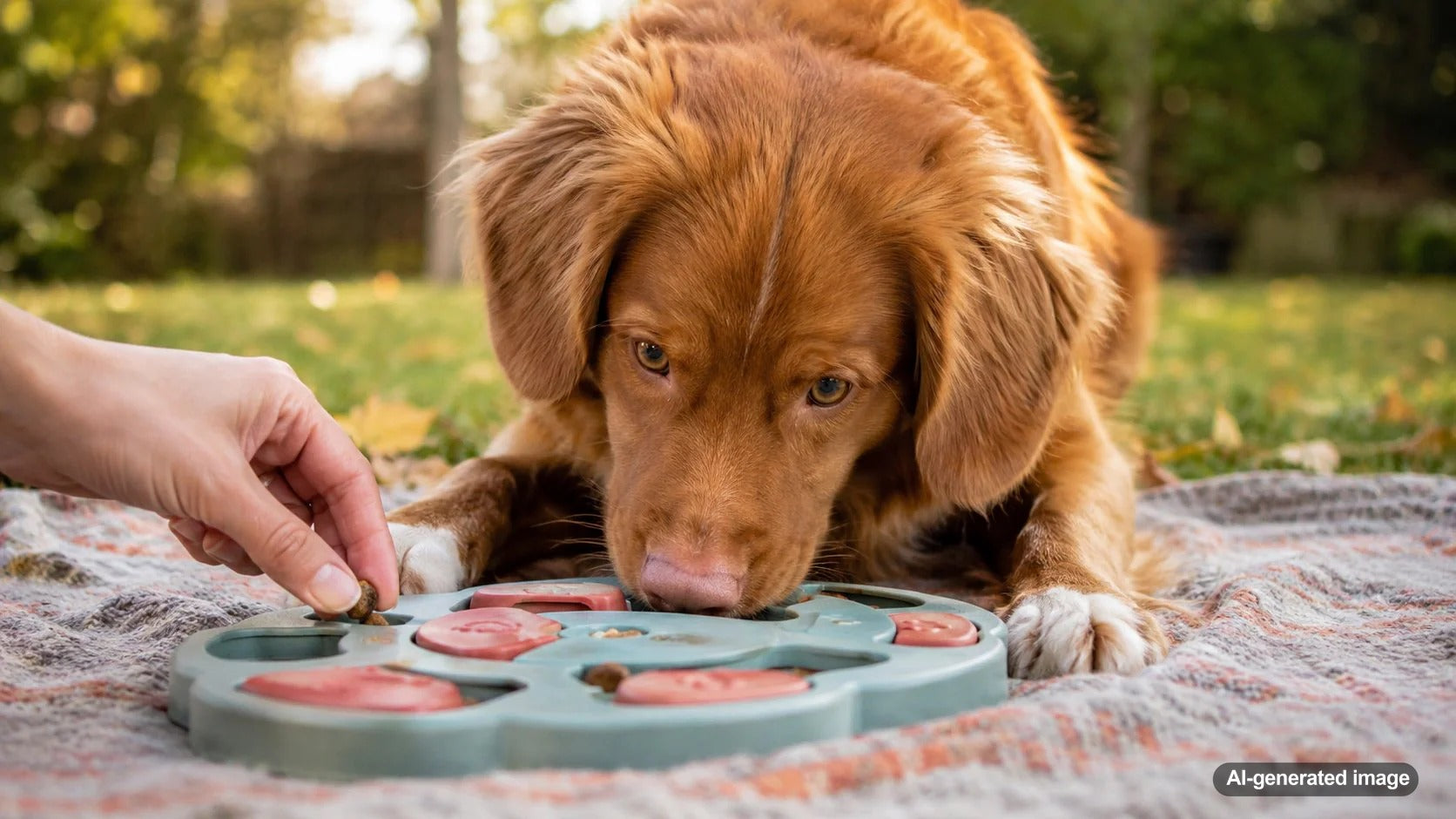
Some dogs hear a treat bag crinkle from three rooms away. If your pup is deeply food motivated, that is not just a cute personality trait. It is also one of the easiest ways to build better daily routines, because food can turn mealtime, training, quiet time, and rainy afternoons into satisfying brain work.
The best enrichment ideas for dogs that love food are the ones that make your dog slow down, sniff, lick, chew, solve, and think before the reward appears. Instead of simply handing over a snack, you can use food to encourage natural behaviors in a safer, more structured way. The goal is not to make meals complicated. It is to make everyday moments more fulfilling.
Why Food Enrichment Works So Well
Dogs are wired to search, sniff, lick, chew, and work for food. A bowl of kibble may be convenient, but it can be over in less than a minute for a highly motivated eater. Food enrichment stretches that moment into something more mentally satisfying.
This can be especially helpful for dogs who get bored after walks, puppies who need safe activities, senior dogs who still enjoy low-impact stimulation, and dogs who seem to get into trouble at the same time every day. A dog who counter-surfs at 5 p.m. may not be trying to be naughty. They may be hungry, under-stimulated, or very aware that dinner is coming.
1. Turn Meals Into a Slow-Feeding Game
If your dog inhales meals, slow feeding is a great first step. Try spreading wet food, soaked kibble, or a dog-safe topper across a textured surface so your pup has to lick and work gradually. Licking can be a calming, repetitive activity for many dogs, and it is easy to fit into a morning or evening routine.
For dogs who love a mix of licking and problem-solving, the FlipMat is a useful option because it works as both a lick mat and a slow feeder with two challenge levels. Start with the easier side, then increase difficulty once your dog understands the game.
2. Freeze Treats for Longer-Lasting Focus
Freezing is one of the simplest ways to make enrichment last longer. Try plain dog-safe yogurt, mashed banana, pumpkin, soaked kibble, or a familiar treat mix, then freeze it inside a food toy or tray. Always introduce rich foods slowly, especially for dogs with sensitive stomachs.
For a no-fuss frozen routine, The Pupsicle is designed for long-lasting treat play and can be especially handy during work calls, post-walk settling, or those busy evening hours when your dog wants attention and you need five quiet minutes.
3. Use Scatter Feeding to Wake Up the Nose
Scatter feeding is beautifully simple: toss part of your dog's meal across a clean floor, snuffle mat, or patch of safe grass and let your dog hunt for it. This is a great option for dogs who love sniffing, dogs who need a low-cost enrichment idea, and puppies who are learning to use their nose instead of their teeth for entertainment.
Keep the area small at first so your dog does not miss food. For tiny dogs, use small pieces. For large dogs, spread the food farther apart. For seniors, choose a surface that is easy to stand on and avoid making them bend or twist uncomfortably.
4. Build a Treat Treasure Hunt
A food-loving dog can turn into a joyful detective with a few hidden treats. Ask your dog to wait in another room, hide treats in easy spots, then release them with a cue like "find it." Start with visible treats near chair legs, dog beds, or low boxes. As your dog improves, hide them behind objects or inside open containers.
This is especially helpful on rainy days because it uses your dog's nose and brain without requiring a huge amount of space. Just avoid hiding food anywhere you do not want your dog searching later, such as on counters, tables, or inside shoes.
5. Try Puzzle Toys, but Match the Difficulty to Your Dog
Food puzzles are wonderful for some dogs and confusing for others at first. The trick is to choose the right level. A puppy may need a puzzle that releases treats easily. A seasoned problem-solver may enjoy something that rolls, wobbles, or requires a few steps. A power chewer needs durable materials and close supervision.
| Dog type | Try first | Watch for |
|---|---|---|
| Fast eater | Slow feeder, lick mat, scatter feeding | Gulping, frustration, stomach sensitivity |
| Busy puppy | Easy treat puzzles, frozen licking, short sniff games | Chewing pieces, overstimulation, too many treats |
| Senior dog | Soft licking, easy scent games, low-movement puzzles | Dental discomfort, stiff movement, fatigue |
| High-energy adult | Rolling feeders, treasure hunts, training games | Difficulty that is too easy or too hard |
If your dog loves movement with their snacks, Walkabout can turn kibble or treats into a rolling slow-feeder game that adds a little indoor activity to mealtime.
6. Make Training Part of Snack Time
Food-loving dogs often make eager students. Instead of giving treats for free, use a handful of your dog's daily food or small training treats to practice simple cues. Try sit, touch, down, place, leave it, or recall. Keep sessions short and upbeat, around two to five minutes.
This is a smart way to avoid overfeeding while still giving your dog the joy of earning rewards. It also helps dogs who get pushy around food learn that calm behavior makes good things happen.
7. Create a Repeatable Food Enrichment Routine
The best enrichment plan is one you can actually repeat. You do not need a perfect setup or a complicated schedule. Pick one easy idea for each part of the day and rotate from there.
Serve breakfast in a slow feeder or scatter part of it for sniffing.
Offer a frozen licking activity during quiet time or crate rest.
Use a few treats for a quick training session or find-it game.
Try a puzzle toy after dinner to help your dog settle.
Adjust based on your dog's age, size, chewing style, and health needs. Supervise new toys, inspect them regularly, wash food toys after use, and remove anything your dog tries to swallow in unsafe pieces.
Common Mistakes With Food Enrichment
The biggest mistake is making the activity too hard too soon. If your dog gives up, barks at the toy, paws wildly, or starts chewing the wrong parts, simplify it. Another common issue is forgetting to count enrichment food as part of the day's total intake. Food enrichment should support your dog's routine, not quietly double their snacks.
Also, watch for dogs who guard high-value food toys. If your dog freezes, growls, snaps, or becomes tense around food, pause those activities and speak with a qualified trainer or behavior professional.
Dog Parent FAQs
What is the easiest food enrichment idea for beginners?
Scatter feeding is often the easiest place to start. Use part of your dog's regular meal, spread it over a clean safe area, and let your dog sniff it out.
Can I use food enrichment every day?
Yes, many dogs can enjoy daily food enrichment as long as you balance portions, supervise new activities, and choose options that fit your dog's chewing style and health needs.
What should I do if my dog gets frustrated with puzzle toys?
Make the puzzle easier. Use higher-scent treats, fewer steps, or a simpler toy, then build difficulty slowly once your dog understands how to win.
Are frozen enrichment treats safe for all dogs?
Frozen treats can be a great option for many dogs, but they are not perfect for every pup. Check with your veterinarian if your dog has dental pain, stomach sensitivity, allergies, or a medical condition.
The Bottom Line on Food-Loving Dogs
A dog who loves food is not being difficult. They are giving you a powerful training, calming, and enrichment tool. By turning meals and treats into sniffing, licking, chewing, and problem-solving activities, you can make daily life more satisfying for your pup and a lot easier for yourself.
Start small, keep it safe, and notice what your dog enjoys most. The best enrichment idea is the one your dog understands, loves, and can repeat happily without stress.


