






































































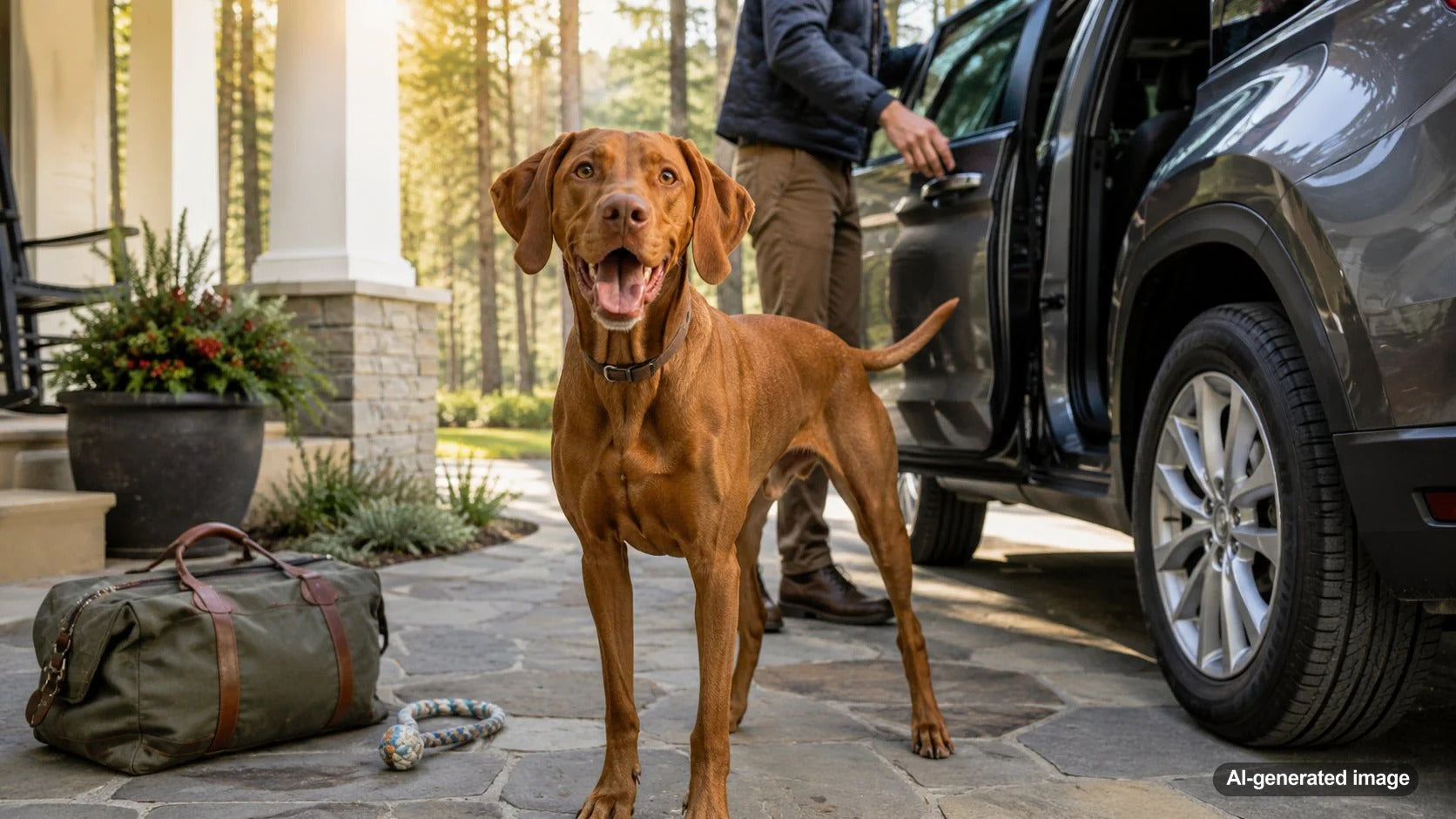
Some dogs hear the jingle of car keys and immediately race toward the garage, ready for whatever adventure comes next. Labrador Retrievers, Golden Retrievers, Poodles, Brittanys, Vizslas, and several other people-focused breeds often make enthusiastic travel companions. Breed tendencies are only a starting point, however, because a dog's early experiences, individual temperament, health, training, and comfort in the vehicle matter more than the name on the pedigree.
A naturally confident dog may settle into road trips quickly, while an equally lovable dog of the same breed may struggle with motion sickness or anxiety. The best car-riding companion is ultimately a dog whose size, energy level, personality, and exercise needs fit both your vehicle and your travel style.
1. Labrador Retriever
Labrador Retrievers are outgoing, active, and strongly connected to their people. Many Labs are happy anywhere the family happens to be, whether that means a quick trip to the park or a weekend at the lake.
Their enthusiasm can create one practical challenge: an excited young Lab may treat the back seat like a playground. Consistent cues for entering, waiting, and settling can make rides safer. A sturdy crash-tested restraint or secured travel crate is especially important for this powerful breed.
2. Golden Retriever
Golden Retrievers are friendly, trainable, and usually eager to join family activities. Their adaptable nature can make them wonderful companions for vacations, camping trips, and visits with relatives.
Goldens are medium-large dogs with feathered coats, so plan for enough room to lie down comfortably and expect some fur in the vehicle. A washable seat cover, water, a brush, and a towel for muddy adventures can make travel easier.
3. Standard Poodle
Standard Poodles combine athleticism, intelligence, and close engagement with their owners. They often learn travel routines quickly, including where to sit, when to wait at an open door, and how to settle between stops.
Poodles still need exercise and mental stimulation. A long drive is easier after a sniff walk or active play session, particularly for adolescents that might otherwise become restless.
4. Brittany
Brittanys were developed as energetic sporting dogs, making them a natural match for owners who drive to hiking trails, fields, parks, or outdoor events. Many are alert, cheerful, and excited by new destinations.
This is not usually a low-maintenance road-trip breed. A Brittany may ride calmly after meeting its exercise needs, but a bored dog can become vocal or fidgety. Build movement breaks into long routes.
5. Vizsla
Vizslas are athletic dogs known for forming close bonds with their families. For an active owner, that desire to stay near their person can translate into an enthusiastic attitude toward shared travel.
They can also be sensitive. Gentle car training is often more effective than forcing a nervous Vizsla into a long trip. Begin with the engine off, reward calm behavior, and increase the duration gradually.
6. Beagle
Beagles are curious, social, and powered by an exceptional nose. Car rides can lead to everything they enjoy: new trails, fresh smells, and time with their family.
Because Beagles may follow an interesting scent without hesitation, secure them before any door opens. Do not rely on recall at a busy rest area. A leash should be attached before the dog exits the vehicle.
7. Cavalier King Charles Spaniel
Cavaliers are affectionate companion dogs that often enjoy being included in everyday errands and relaxed weekend getaways. Their smaller size can also make it easier to arrange a secured carrier or comfortable designated seat.
Keep temperature in mind. Small dogs can become chilled near strong air-conditioning, while no dog should ever be left inside a parked vehicle during warm weather, even for a brief stop.
8. Australian Shepherd
Australian Shepherds tend to be intelligent, energetic, and highly engaged with their owners. They can thrive with people who travel to agility classes, farms, campgrounds, and active outdoor destinations.
The same awareness that makes an Aussie responsive can make some individuals sensitive to passing trucks, windshield wipers, or movement outside the window. Visual barriers, distance from the glass, and calm-reward training may help.
9. Portuguese Water Dog
Portuguese Water Dogs are energetic working dogs that often enjoy active family routines. They may be an especially appealing match for people whose car trips regularly end near a beach, dock, trail, or other place to move.
Pack towels and fresh drinking water after swimming. Dogs should not be encouraged to drink from oceans, lakes, puddles, or unfamiliar water sources.
10. English Springer Spaniel
English Springer Spaniels are active, sociable sporting dogs that often appreciate having a job and accompanying their people. With enough exercise, many can transition nicely from energetic outdoor exploration to resting in the car.
Their feathered coat can collect burrs, mud, and moisture, so a quick check before reentering the vehicle helps keep both your dog and your seats more comfortable.
What Actually Makes a Dog Good in the Car?
A breed's reputation cannot tell you whether an individual dog will love traveling. Look for confidence in unfamiliar settings, the ability to recover after a surprise, comfort with handling, and a willingness to settle after activity.
Age matters too. Puppies may need frequent bathroom breaks and can become carsick. Senior dogs may appreciate rides but need a ramp, supportive bedding, shorter travel periods, and extra time getting in and out.
- Approaches the vehicle willingly
- Can take treats without frantic grabbing
- Lies down or relaxes after departure
- Shows normal breathing without excessive drooling
- Recovers quickly after stops, turns, and traffic noise
How to Help Any Dog Enjoy Car Rides
Start with short sessions in a parked vehicle. Let your dog explore its secured travel area, offer a few rewards, and leave before stress appears. Progress to starting the engine, driving around the block, and visiting a nearby enjoyable destination.
Avoid making every ride end at the veterinarian or groomer. Mix necessary trips with walks, playdates, sniffing adventures, and other positive experiences.
For longer outings, the On the Go Travel Kit offers portable enrichment that can help occupy dogs during appropriate breaks or while settling at a destination. The FlipMat Mini is another compact option for supervised licking enrichment at hotels, vacation rentals, or quiet rest stops. Use enrichment only when the vehicle is safely parked, not while your dog is moving around unrestrained.
When Car Trouble Is More Than a Training Issue
Excessive drooling, repeated lip licking, whining, trembling, vomiting, diarrhea, or refusing to approach the vehicle may indicate motion sickness, fear, pain, or another problem. Stop before the dog becomes overwhelmed and contact your veterinarian for guidance.
Sudden difficulty entering the car can also be a sign of soreness or reduced mobility, especially in older dogs. Ask your veterinarian before assuming the dog is simply being stubborn.
Dog Parent FAQs
Can a mixed-breed dog be a great road-trip companion?
Absolutely. Individual temperament, socialization, health, and training are more predictive than breed labels alone. Many mixed-breed dogs become excellent travelers.
Do puppies usually outgrow car sickness?
Some puppies become more comfortable as they mature, but persistent nausea should be discussed with a veterinarian. Gradual practice and avoiding a large meal immediately before travel may also help.
How often should a dog get a break on a long drive?
Break frequency depends on age, health, and routine. Plan regular opportunities for water, bathroom needs, gentle movement, and a calm reset in a safely leashed area.
What if my dog loves getting in the car but cannot settle?
Provide exercise before departure, practice a consistent settle cue, reduce visual stimulation, and reward calm behavior. A qualified trainer can help if excitement remains difficult to manage.
The Best Travel Dog Is the One Prepared for the Trip
Labradors, Goldens, Poodles, sporting breeds, and affectionate companion dogs may have qualities that suit life on the road, but breed alone cannot create a happy traveler. Thoughtful introductions, safe restraint, realistic exercise plans, and positive destinations make the biggest difference.
Choose a dog for your complete lifestyle, not just your weekend drives. When the match is right and travel is introduced carefully, the sound of the car keys may become your dog's favorite invitation.


