






































































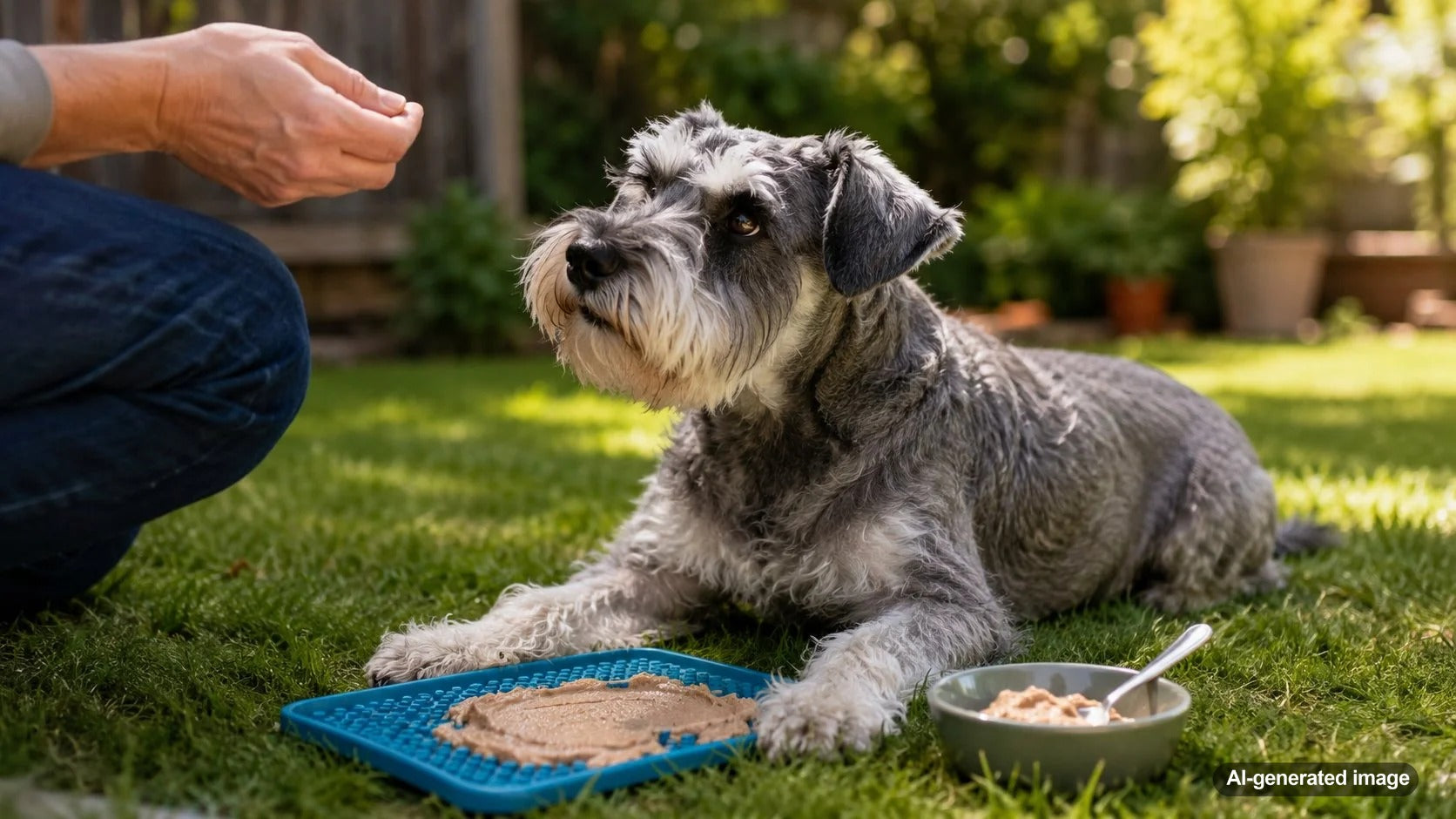
Senior dogs may move a little more slowly, but their need for curiosity, engagement, and enjoyable daily routines does not disappear. Soft foods can turn an ordinary snack or portion of a meal into a gentle enrichment activity that encourages licking, sniffing, and problem-solving without requiring intense physical effort. The key is choosing dog-safe foods, matching the challenge to your dog's comfort level, and keeping portions within their normal daily diet.
Soft-food enrichment can be especially useful for older dogs with sensitive teeth, missing teeth, reduced stamina, or less interest in hard treats. It can also add variety to quiet afternoons, rainy days, recovery periods, or moments when a long walk is not practical.
Quick answer: Spread a small portion of your senior dog's regular wet food or another veterinarian-approved soft food across a lick mat, place it inside an easy food toy, or freeze it briefly for a slightly longer activity. Begin with a thin, easy-to-reach layer, supervise the session, and count the food toward your dog's daily calories.
Why Soft Foods Work Well for Senior Dog Enrichment
Many enrichment activities ask a dog to work for food by licking, sniffing, nudging, or manipulating an object. These behaviors can provide mental engagement even when an older dog is no longer comfortable chasing balls, climbing stairs, or wrestling with difficult puzzles.
Soft foods are often easier for senior dogs to manage than crunchy biscuits or hard chews. Their aroma can also make an activity more interesting for dogs whose appetite or sense of smell has changed with age. Because the food can be spread into different textures and patterns, you can adjust the difficulty without buying an entirely new activity.
Enrichment should not become frustrating, however. A senior dog who walks away, paws anxiously at the toy, or cannot reach the food may need a simpler setup. The goal is relaxed participation, not a test your dog must pass.
Choose a Soft Food That Fits Your Dog's Diet
The safest starting point is often food your dog already eats comfortably. A spoonful of complete wet dog food, softened kibble, or a veterinarian-approved prescription diet can provide enrichment without introducing an unfamiliar ingredient.
Other possibilities may include plain canned pumpkin, mashed cooked sweet potato, or a small amount of plain yogurt, but these are not appropriate for every dog. Foods should be unseasoned and free from ingredients that are unsafe for dogs. Avoid onion, garlic, chocolate, grapes, raisins, macadamia nuts, xylitol, excessive salt, and rich table scraps.
If your senior dog has kidney disease, diabetes, pancreatitis, food allergies, digestive trouble, or another medical condition, ask your veterinarian before adding new foods. Even wholesome ingredients can disrupt a carefully managed diet.
Helpful tip: Use part of your dog's measured meal instead of adding a separate snack. This makes enrichment easier to repeat without quietly increasing daily calories.
Start With an Easy Licking Activity
For many senior dogs, a simple lick mat is the most approachable option. Spread a thin layer of soft food across the surface rather than filling every groove heavily. Your dog should be able to earn food immediately, especially during the first few sessions.
The FlipMat offers two textured sides, allowing you to begin with the easier pattern and introduce a more detailed surface if your dog enjoys the activity. Place it on a stable, nonslip floor where your dog can stand or lie comfortably.
Some older dogs find bending down difficult. You can position the mat on a low, secure platform, but it should not slide, tip, or require your dog to stretch awkwardly. Stay nearby and remove the mat once the food is gone, particularly if your dog likes to chew silicone items.
Turn Soft Food Into a Gentle Puzzle
Once your dog understands the basic activity, add a small amount of challenge. Spread food in only a few sections of the mat so your dog must sniff for it. Create several tiny dots instead of one large smear. You can also place the food inside an appropriately sized interactive toy with a wide, accessible opening.
For a longer session, use the Pupsicle Treat Tray to freeze a dog-safe mixture for The Pupsicle. Senior dogs may prefer a softer texture, so try chilling the treat or freezing it only until it is firm but not rock hard. A deeply frozen portion may be uncomfortable for sensitive teeth and can make the activity unnecessarily difficult.
Difficulty should increase in small steps. Hiding every bit of food in deep grooves, filling a toy too tightly, or freezing a dense mixture solid can turn a pleasant activity into a frustrating one.
Use Soft Foods in Short Senior-Friendly Routines
A simple enrichment routine:
- Measure a small portion from your dog's meal.
- Spread it thinly on an easy surface.
- Place the activity on stable, nonslip flooring.
- Allow five to ten minutes of relaxed licking.
- End the session if your dog appears tired or uncomfortable.
- Wash the toy thoroughly after use.
Short, predictable sessions are often better than one complicated activity. You might offer a lick mat after a gentle morning walk, during family dinner, or before a usual rest period. Repeating the routine at a familiar time may make it easier for a senior dog to understand what is happening.
You can also pair the activity with a very easy cue, such as asking your dog to touch your hand or settle on a mat before receiving the food. Keep expectations realistic. Senior enrichment should support confidence rather than demand fast responses or perfect performance.
Watch for Signs That the Activity Needs Adjusting
Your dog should look interested and comfortable. Slow licking, relaxed posture, and voluntarily returning to the activity are encouraging signs. Heavy panting, repeated pawing, whining, walking away, or chewing aggressively on the feeder may mean the setup is too difficult or uncomfortable.
Pay attention to physical positioning as well. Slippery floors can be tiring for dogs with weak hind legs, and standing for too long may be uncomfortable for dogs with joint stiffness. A washable rug or nonslip mat can provide better footing.
Contact your veterinarian: A senior dog who suddenly refuses hard food, drops food, chews on one side, has bad breath, drools excessively, loses weight, or wants to eat but seems unable to do so may have dental pain or another health concern. Soft food can make eating easier, but it should not be used to conceal a major appetite or chewing change.
Common Mistakes to Avoid
One common mistake is using too much food. A lick mat may not look full, yet several spoonfuls of calorie-dense food can add up quickly. Measure portions rather than spreading food straight from the container.
Another mistake is assuming that harder always means more enriching. Senior dogs often benefit from simple tasks they can complete successfully. A thin spread can be just as engaging as a complicated frozen puzzle, especially for a dog with reduced vision, mobility, or persistence.
Finally, do not leave a senior dog alone with an enrichment item unless it is specifically designed for unsupervised use and you already know how your dog interacts with it. Aging does not eliminate chewing habits, and damaged toys can create choking or swallowing risks.
Dog Parent FAQs
Can I use my senior dog's regular wet food?
Yes. Using part of a measured meal is often the simplest option because the food is already familiar and included in your dog's nutrition plan.
Should I freeze soft food for enrichment?
You can chill or lightly freeze it if your dog is comfortable with cold food. Avoid very hard frozen portions for dogs with sensitive, damaged, or missing teeth.
How long should a senior enrichment session last?
Begin with about five minutes and watch your dog's comfort. Some seniors enjoy longer sessions, while others do best with several short activities.
Are lick mats safe for senior dogs?
They can be useful when appropriately sized, placed on a stable surface, cleaned after use, and offered under supervision.
A Softer Way to Keep the Mind Active
Soft-food enrichment does not need to be elaborate. A familiar meal, an accessible surface, and a few minutes of calm exploration can give a senior dog a satisfying mental activity without overworking aging joints or sensitive teeth. Start easy, measure the food, supervise closely, and let your dog's comfort guide the routine.


