






































































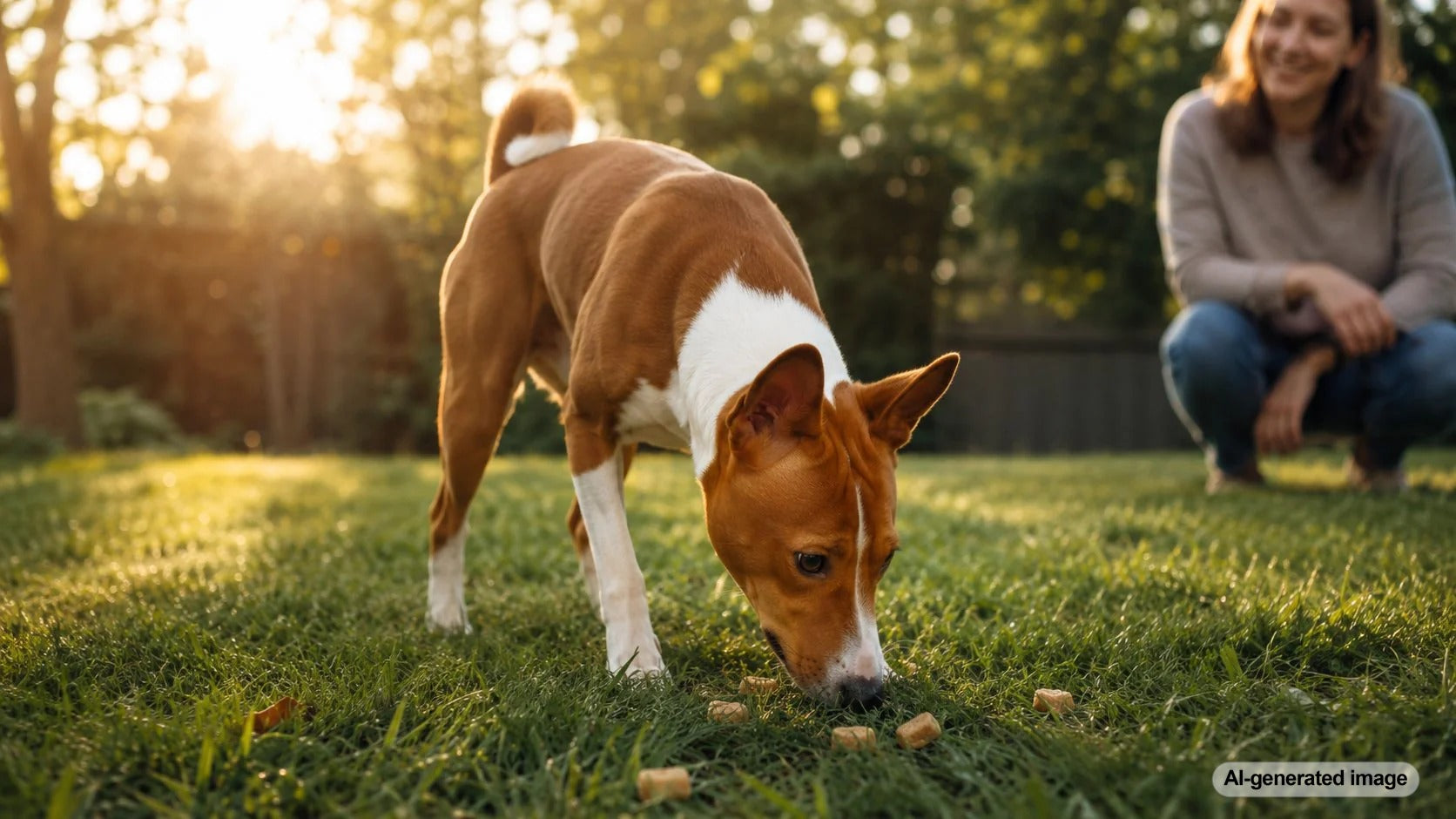
Some dogs do not need louder encouragement, bigger challenges, or more pressure. They need tiny wins that feel safe, clear, and fun. That is where How to Use "Find It" Games for Dogs Who Need Confidence becomes such a helpful everyday skill, because sniffing gives your dog a job they can understand and a reward they can discover at their own pace.
A "find it" game is simple: you hide a treat, toy, or piece of kibble, then invite your dog to search for it with their nose. For dogs who are shy, easily startled, newly adopted, recovering from a stressful experience, or unsure in new places, this kind of scent-based game can support confidence because it turns the environment into something rewarding instead of overwhelming.
Quick answer: To use "find it" games for a dog who needs confidence, start with treats in plain sight, use a happy cue like "find it," praise calm searching, and make the game only slightly harder when your dog is relaxed and successful. Keep sessions short, avoid tricky hiding spots at first, and let your dog win often.
Why "Find It" Games Can Help Nervous Dogs Feel Braver
Many worried dogs spend their day reacting to things they do not understand: a new sound, a moving object, a guest, a slippery floor, a loud truck, or even a doorway they are unsure about. A scent game changes the question from "Is this scary?" to "Where is the good thing?" That shift can be powerful.
Sniffing is a natural behavior for dogs, and it gives them a way to gather information without needing direct confrontation. Instead of asking a hesitant dog to walk right up to a person, object, or new room, you can let them search nearby and make their own safe discoveries. Confidence grows best when the dog feels like they are choosing to participate, not being pushed into it.
Start With the Easiest Version Possible
The first round should feel almost too easy. Say "find it" in a cheerful voice and place a treat on the floor right in front of your dog. When they eat it, praise them softly. Repeat this several times until your dog hears the cue and immediately looks down for the reward.
For very timid dogs, start in a quiet room with no guests, other pets, loud appliances, or slippery surfaces. Use a treat that smells good but does not upset your dog's stomach. If your dog is on a special diet or has allergies, check with your veterinarian before adding new treats.
Once your dog understands the cue, place the treat a few feet away while they watch. Then try placing it partly behind a table leg, next to a toy, or on a low towel. The goal is not to trick your dog. The goal is to create a repeatable pattern of "I searched, I found it, I did great."
Build Confidence by Adding Difficulty Slowly
Dogs who need confidence often shut down when the jump in difficulty is too big. If your dog stops searching, stares at you, walks away, lip-licks, yawns, tucks their tail, or seems frustrated, make the next round easier. That is not failure. That is good training information.
Treat in plain sight, one step away.
Treat a few feet away while your dog watches.
Treat partly hidden near an easy object.
Several treats scattered across a quiet room.
For puppies, keep the game extra short because their attention spans are still developing. For senior dogs, choose low hiding places so they do not need to climb, jump, or bend uncomfortably. For small dogs, remember that furniture, baskets, and even tall thresholds can feel like bigger obstacles. For large or enthusiastic dogs, use calm placement and avoid slick floors where fast turning could lead to slipping.
Use "Find It" Around Mildly Scary Things
Once your dog loves the game in an easy room, you can use it around gentle confidence-building situations. Sprinkle a few treats near a cardboard box, an open umbrella lying still on the floor, a new mat, or the doorway to a room your dog avoids. Let your dog approach, sniff, eat, and leave if they want.
Do not hide treats inside something scary right away. Put them near the object first, then gradually closer over multiple sessions. If your dog backs away, increase distance. Confidence does not come from forcing bravery. It comes from safe repetition and predictable wins.
Helpful tip: End the game while your dog still wants more. Two happy minutes are better than ten minutes that end in frustration, fatigue, or avoidance.
Make Treat Hunting Part of Everyday Enrichment
Find-it games fit beautifully into daily routines because they do not require a big setup. You can scatter a few pieces of kibble in the grass before a walk, hide treats in a towel on a rainy day, or ask your dog to find a reward after hearing a mild outside noise. This gives your dog something active and positive to do instead of only reacting.
For dogs who enjoy treat-based puzzles, Woof's Walkabout can add movement and problem-solving to feeding time, turning kibble or treats into a rolling search-style activity. For a calmer follow-up after a confidence game, The Pupsicle can help extend enrichment with long-lasting treat play while your dog settles.
The key is to match the tool to the dog. A bold, food-loving dog may enjoy a puzzle quickly. A cautious dog may need several days of easy floor searches before any toy or new object enters the routine.
Common Mistakes That Can Slow Progress
One common mistake is making the game too hard too soon. If the first few rounds involve hidden treats under boxes, behind doors, or up on furniture, a worried dog may decide the game is confusing instead of fun.
Another mistake is using too much excitement. Some dogs love cheering, but nervous dogs may prefer soft praise and calm body language. Try sitting sideways, avoiding direct staring, and letting your dog search without hovering.
It is also important not to use find-it games to cover up serious behavior or health concerns. If your dog suddenly becomes fearful, stops eating, seems painful, shows aggression, panics when alone, or has major behavior changes, ask your veterinarian or a qualified trainer for guidance.
Dog Parent FAQs
How long should a find-it game last?
Start with one to three minutes. Confident, experienced dogs may enjoy longer sessions, but shy dogs usually do best with short games that end successfully.
What treats should I use for find-it games?
Use small, easy-to-eat treats with a scent your dog likes. Tiny pieces work best because your dog can find several rewards without getting too full.
Can I play find-it games with a dog who is scared of new places?
Yes, but begin in a familiar area first. Once your dog understands the game, try very easy searches in slightly new spaces, keeping the rewards close and the pressure low.
Should I say "find it" every time?
Using the same cue helps your dog understand the game. Say it once, then give your dog time to sniff and solve the search without repeating the cue constantly.
The Bottom Line on Building Confidence Through Search Games
Find-it games are simple, but they can become a meaningful confidence routine for dogs who need gentle encouragement. Start easy, celebrate small wins, and let your dog use their nose to explore the world at a comfortable pace. When the game stays safe, rewarding, and predictable, your dog learns something important: trying new things can feel good.


