






































































A treat may be too rich for your dog if it is followed by loose stool, extra gas, vomiting, appetite changes, or obvious stomach discomfort. Sometimes the problem is the treat's fat content or ingredients, while other times the portion was simply too large for that particular dog. Paying attention to what your dog ate, how much they ate, and what happened afterward can help you make treat time easier on their stomach.
Rich does not have one universal definition on a dog treat label. Dog parents often use the word to describe a food that is unusually fatty, concentrated, unfamiliar, heavily flavored, or difficult for their dog to digest. A treat that agrees with one dog may cause digestive trouble for another.
What Does a Treat That Is Too Rich Look Like in Real Life?
The clearest clues usually appear during the hours after treat time, although timing can vary. Your dog may ask to go outside more often, pass softer stool, become unusually gassy, lick their lips repeatedly, swallow hard, or walk away from dinner. Some dogs become restless because they cannot get comfortable.
A single soft stool does not prove that a treat caused the problem. Dogs can develop digestive symptoms for many reasons, including sudden diet changes, scavenging, stress, parasites, infections, medications, and underlying health conditions. The treat becomes more suspicious when the same symptoms return after the same food or when several new treats were introduced at once.
- Loose, unusually frequent, or urgent stool
- More gas or loud stomach sounds
- Vomiting, gagging, or repeated lip licking
- Skipping a meal or seeming less interested in food
- Restlessness, a tense belly, or a hunched posture
- Low energy or behavior that seems noticeably different
Why Some Treats Hit Harder Than Others
High-fat foods are a common concern, especially for dogs that already need a veterinarian-directed low-fat diet. Fat also packs many calories into a small portion, so a treat can be physically small while still representing a large addition to the day's intake.
New proteins, dairy ingredients, rich meat coatings, table scraps, and large edible chews can also create trouble for sensitive dogs. An ingredient does not have to be unsafe for every dog to be a poor fit for yours. Food intolerance commonly shows up as digestive upset, while a true food allergy involves an immune response and may include skin or ear symptoms as well.
Quantity matters just as much as the ingredient list. A full jerky strip, large chew, or handful of training treats may overwhelm a small dog's daily calorie allowance. Puppies, seniors, dogs with sensitive digestion, and dogs with a history of pancreatic or gastrointestinal problems may require especially cautious portions.
Use the Portion Test Before Blaming the Entire Treat
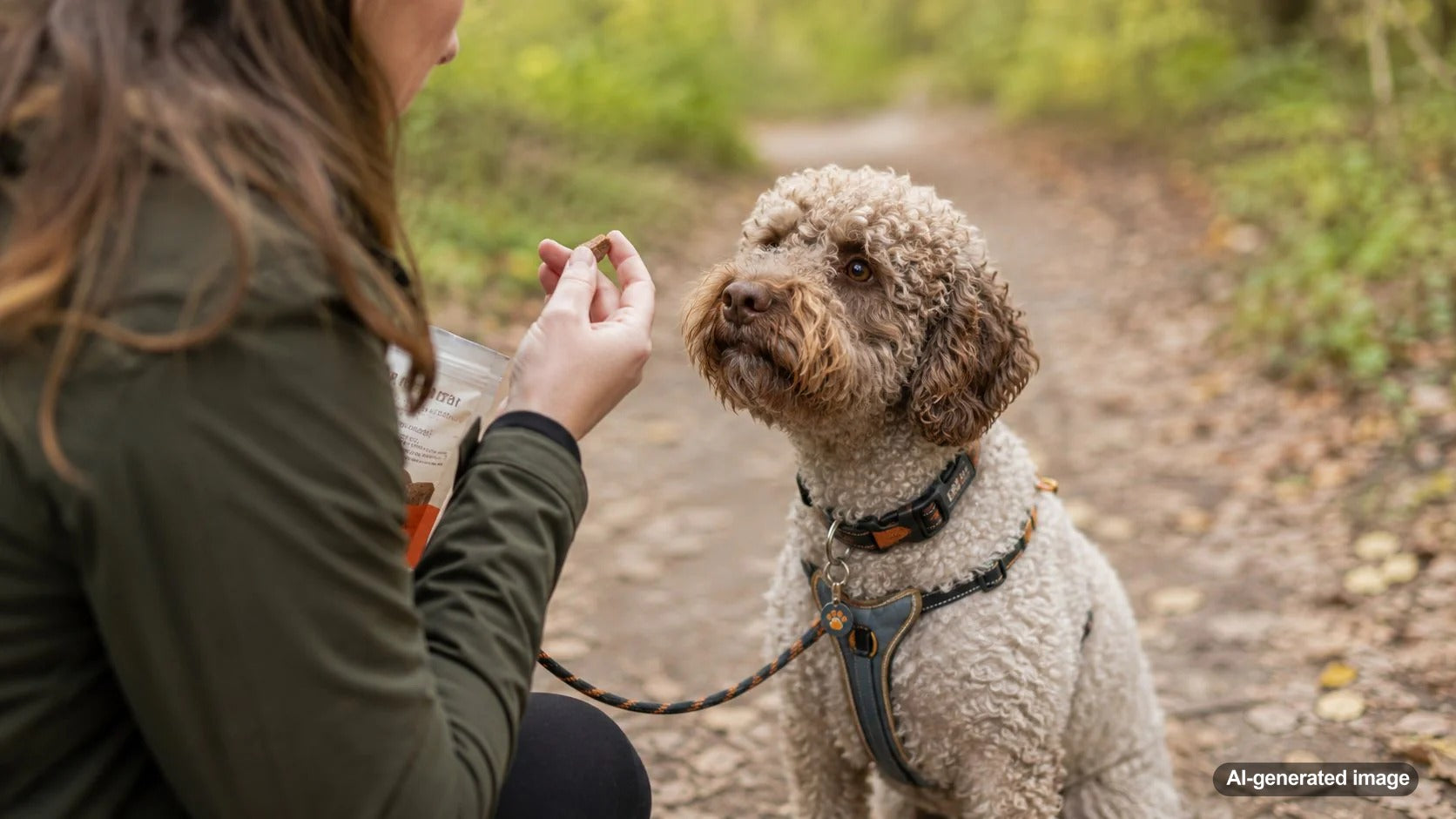
Start new treats one at a time and use a piece much smaller than the maximum serving on the package. For training, a reward only needs to be large enough for your dog to notice and swallow safely. Breaking treats into pea-sized or smaller pieces can deliver plenty of rewarding moments without repeatedly filling your dog's stomach.
As a general planning guide, treats should remain a small part of the day's total calories, commonly no more than about 10 percent. Your veterinarian can help estimate a more appropriate allowance based on your dog's size, age, activity level, body condition, medical history, and regular food.
Keep a simple food note when testing something new. Record the product, flavor, approximate amount, time offered, and any digestive changes during the following day. This is especially helpful in a multi-person household where several people may be handing out snacks without realizing it.
What to Do If a Treat Seems Too Rich
Stop the suspected treat rather than giving another serving to confirm your theory. Keep fresh water available and avoid introducing additional foods, toppers, chews, or supplements while you monitor your dog. Do not start home remedies, fasting, or a homemade bland diet without veterinary guidance, particularly for puppies, seniors, very small dogs, or dogs with medical conditions.
Once your dog is feeling normal and your veterinarian says treats are appropriate, return to a familiar reward in a tiny portion. Bite-sized options such as Love Nuggets can be divided into smaller training rewards, which makes portion control easier. You can also reserve part of your dog's regular kibble allowance for training when you want frequent reinforcement with fewer extra calories.
For enrichment, control the recipe and serving size instead of filling a toy with a large amount of an unfamiliar food. The Pupsicle Treat Tray can help you prepare consistently sized homemade treats using ingredients your veterinarian has already approved for your dog.
When It Is Time to Call the Veterinarian
Veterinary care is also important when symptoms keep returning, even if each episode seems mild. Repeated digestive trouble may not be caused by richness alone. Your veterinarian may need to investigate food intolerance, parasites, pancreatic disease, inflammatory conditions, or another medical issue.
Common Treating Mistakes That Make a Good Treat Seem Too Rich
One common mistake is introducing several products during the same week. If your dog develops diarrhea, you will not know whether the cause was the dental chew, training reward, food topper, or new table scrap.
Another is counting treats by number instead of calories and size. Ten tiny rewards are very different from ten dense chunks. Remember to include edible chews, supplements that contain calories, lick-mat spreads, food used for medication, and leftovers shared by family members.
Finally, avoid assuming that a large dog can tolerate unlimited rich food. Body size changes the appropriate portion, but it does not protect a dog from food intolerance, pancreatic problems, or digestive upset.
Dog Parent FAQs
Can a rich treat cause diarrhea in dogs?
Yes, a fatty, unfamiliar, or oversized treat may contribute to diarrhea. Because diarrhea has many possible causes, contact your veterinarian if it is severe, bloody, persistent, or accompanied by other symptoms.
How quickly can a dog react to a treat?
Some digestive changes appear within hours, while others may not be noticeable until the next bowel movement. A written food log can make patterns easier to recognize.
Should I give my dog the same treat again in a smaller amount?
Wait until your dog is completely back to normal and ask your veterinarian when you are unsure. Repeatedly testing a food that caused vomiting, pain, or significant diarrhea is not worth the risk.
Are small dogs more sensitive to rich treats?
They are easier to overfeed because even one ordinary-sized treat can represent a large share of their daily calories. Small portions and treats that can be divided easily are especially useful.
The Bottom Line on Rich Dog Treats
Your dog's response matters more than how wholesome, premium, or popular a treat sounds. Introduce one new reward at a time, begin with a tiny serving, count all extras in the daily routine, and stop when you notice a concerning pattern. Thoughtful portions let treats remain what they should be: a safe, happy part of training, enrichment, and life together.


