Teaching your dog to relax on cue is not about turning a lively pup into a little statue. It is about helping your dog understand what to do when life gets exciting, boring, noisy, or overstimulating. With the right setup, a clear cue, and plenty of calm repetition, many dogs can learn that relaxing is a behavior worth choosing.
This skill is especially helpful before guests arrive, during dinner, after walks, while you work from home, at a cafe patio, in the car, or when your dog is tired but still acting wired. The key is to teach relaxation when your dog is already capable of settling, then slowly practice around more real-life distractions.
What "Relax on Cue" Really Means
A relax cue is different from "down," "stay," or "place." Those cues describe a position or location. Relaxing is about the dog's emotional state and body language. A dog may be lying down but still be stiff, staring, whining, pawing, or ready to spring up. A more relaxed dog may have softer eyes, slower breathing, a looser body, a settled hip, or a chin resting near the floor.
That distinction matters because many dog parents accidentally reward stillness without noticing tension. The goal is not just "go there and freeze." The goal is "go there, soften, and hang out." For puppies, that may mean a few seconds at first. For high-drive dogs, power chewers, or busy working breeds, it may take more practice and more decompression before they can settle.
Step 1: Pick a Relaxation Spot
Choose one obvious spot, such as a mat, dog bed, folded blanket, or crate with the door open if your dog already likes it. A portable mat can be helpful because you can eventually bring the skill into other rooms or travel situations.
Start when the house is calm. Avoid beginning during the doorbell, dinner prep, or zoomies. If your dog has just had a reasonable walk, potty break, sniff session, or short play session, they may be more ready to practice without being overexcited.
Step 2: Reward the First Calm Choice
Walk your dog toward the mat and reward any easy interaction with it: looking at it, stepping on it, standing on it, sitting, or lying down. Use small treats and a soft voice. If your dog already knows "down," you can ask for it once they are on the mat, but do not repeat the cue over and over.
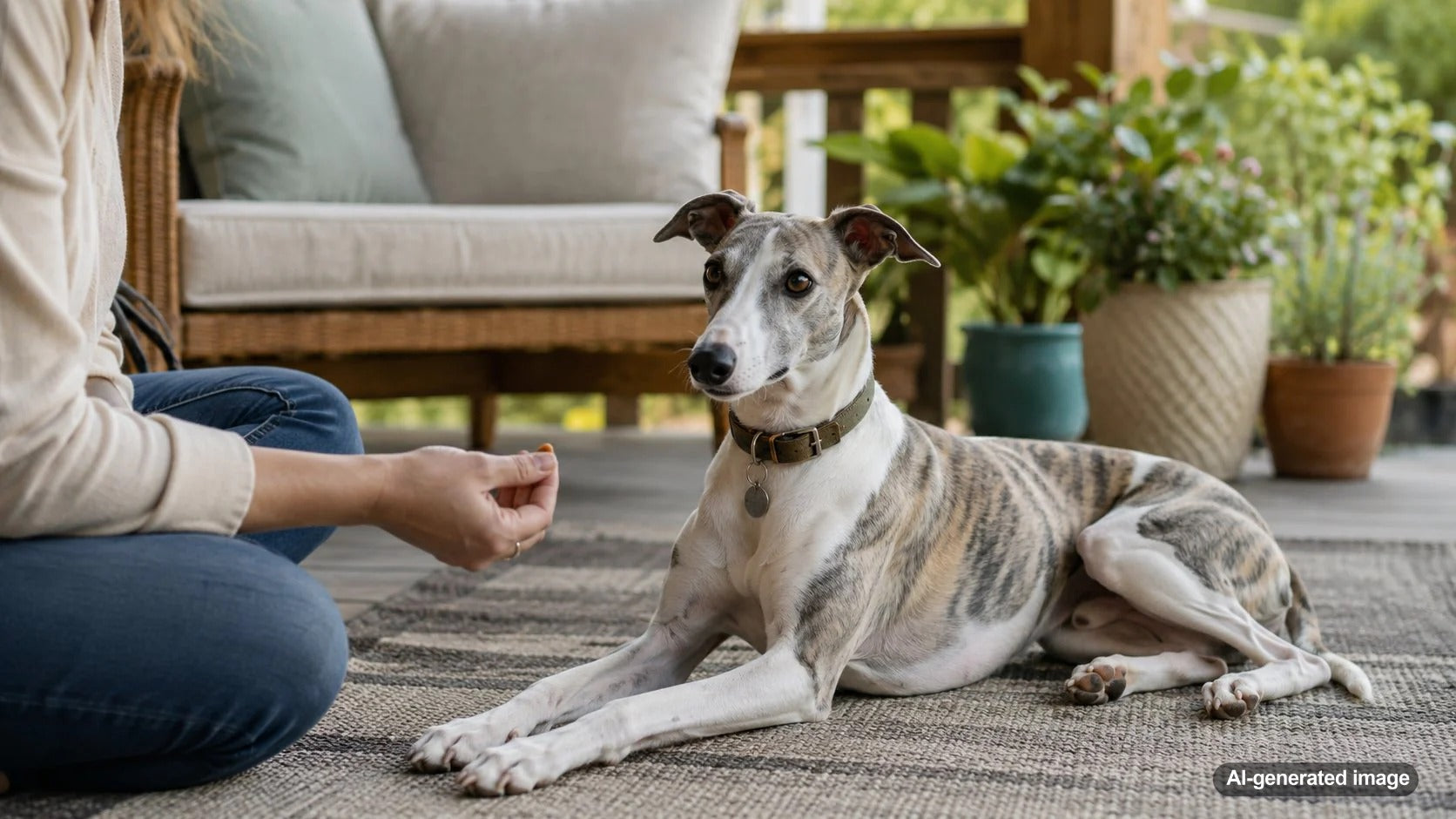
Once your dog lies down, pause. Watch for one tiny sign of settling, such as a breath out, a hip shift, head lowering, or less fidgeting. Mark that moment with a calm "yes" or gentle praise, then place the reward between their paws. Feeding low and slow helps encourage staying put instead of popping back up.
Step 3: Add the Cue After the Behavior Starts
It is tempting to say "relax" right away, but the word means nothing until your dog has a pattern to connect it to. For the first few sessions, let your dog find the mat, settle for a moment, then say your cue as the relaxed behavior is happening. Common cue words include "settle," "relax," "easy," or "go chill." Pick one and keep it consistent.
After several successful repetitions, say the cue just before your dog moves onto the mat. Reward when they go there and soften. If your dog runs to the mat and stares at you like a treat vending machine, wait for a more relaxed moment before rewarding again.
Step 4: Build Duration Without Making It Hard Too Fast
Many dogs can relax for two seconds. The challenge is helping them stretch that into 20 seconds, two minutes, and eventually a normal household rhythm. Increase time in tiny pieces. Reward after 3 seconds, then 5, then 8, then 4 again. Varying the timing keeps your dog from predicting exactly when to jump up.
Keep early sessions short, often 3 to 5 minutes. End before your dog gets frustrated. Puppies, adolescent dogs, and dogs with big feelings may need especially short practices. Senior dogs may settle faster, but they may also need a softer surface or shorter sessions if lying in one position is uncomfortable.
Dog lies on the mat for a few calm seconds.
Dog stays relaxed while you sit nearby.
Dog settles while you move around the room.
Dog can relax during normal household activity.
Step 5: Pair the Cue With Soothing Enrichment
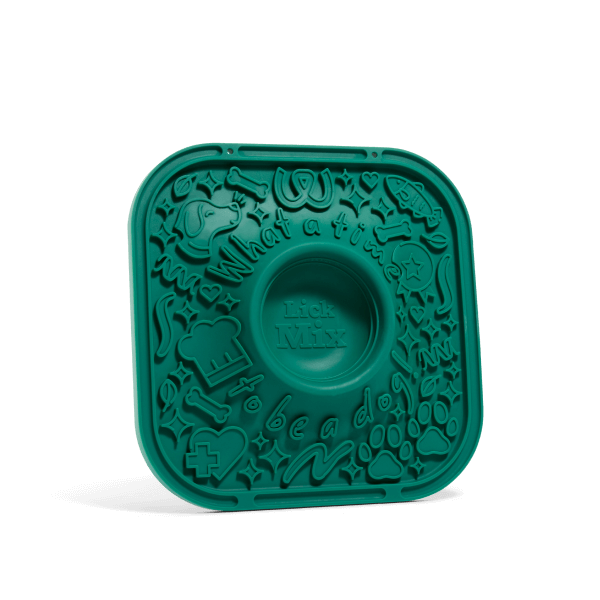
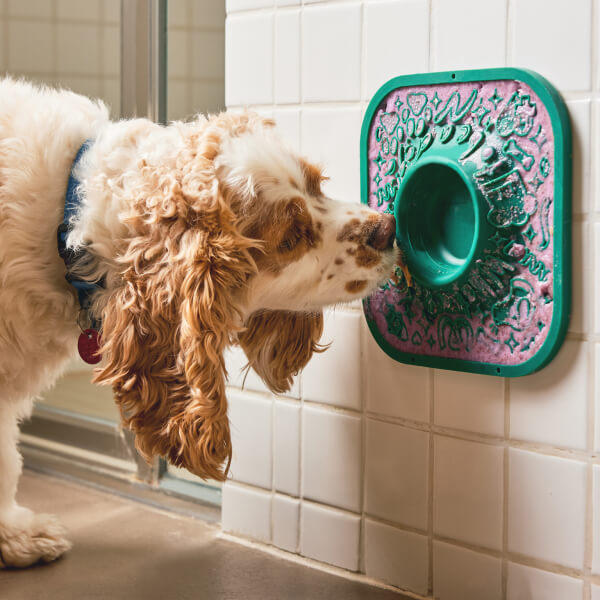
Some dogs settle more easily when their mouth has a calm job. Licking and gentle food-based enrichment can be useful because it gives your dog something focused and repetitive to do while they practice staying in one place. For example, The LickMat can be part of a settle routine because it encourages slower licking and can help turn downtime into an activity your dog understands.
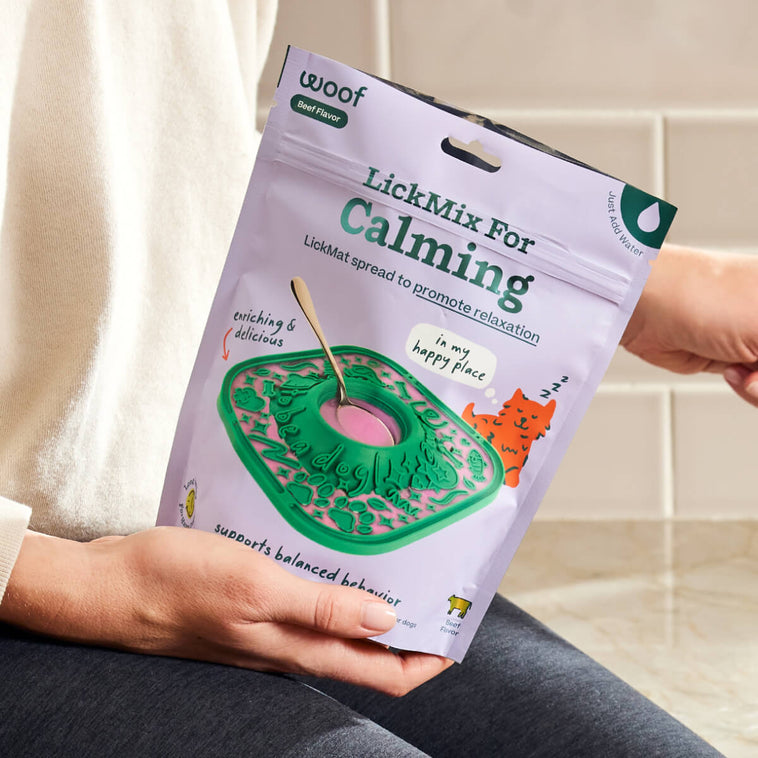
For dogs who need a little extra support during quiet time, a spread or mix can make the routine easier to repeat. Calming LickMix is a just-add-water lick mat mix made for calming enrichment, which can fit nicely into a relaxation practice after walks, before guests arrive, or during a predictable evening wind-down. Always supervise licking sessions and adjust portions to fit your dog's size, diet, and daily treat intake.
Common Mistakes That Make Relaxation Harder
Practicing only during chaos: If the first lesson happens when visitors are already at the door, your dog may be too excited to learn.
Rewarding frantic behavior: If your dog barks, paws, or springs up and immediately gets the treat, they may learn that busy behavior works.
Moving too quickly: Going from a quiet room to a loud family dinner is a big jump. Add distractions in small steps.
Expecting stillness from an under-exercised dog: Some dogs need a sniff walk, play, chewing, or training before they are ready to settle.
When to Practice the Relax Cue
Use the cue during low-pressure moments first. Try after a potty break, during your morning coffee, while watching TV, or after a short training game. Once your dog understands the routine, practice during slightly harder moments: while someone walks across the room, while you open the fridge, or while another family member moves nearby.
For dogs who struggle with separation stress, fear, reactivity, or sudden behavior changes, relaxation training can be one helpful skill, but it is not a complete solution by itself. If your dog panics when left alone, cannot settle, shows aggression, seems painful, has appetite changes, pants excessively at rest, or has a major behavior shift, check with your veterinarian or a qualified trainer or behavior professional.
A Simple 7-Day Starter Routine
For the first week, aim for consistency rather than perfection. Do one or two short sessions per day. Use the same mat, same cue, and same calm reward style.
Days 1 and 2: Reward your dog for stepping onto the mat and lying down. Days 3 and 4: Add the cue as your dog begins to settle. Days 5 and 6: Build a little duration while you sit nearby. Day 7: Add one tiny distraction, such as standing up, then reward your dog for staying relaxed.
If your dog struggles, go back a step. That is not failure. It is good training. Dogs learn best when the task is clear, rewarding, and achievable.
Dog Parent FAQs
How long does it take to teach a dog to relax on cue?
Some dogs understand the pattern in a few short sessions, while others need several weeks of practice. Age, energy level, environment, and previous training all matter.
Should I use "place" or "relax" as the cue?
You can use either, but they can mean different things. "Place" usually means go to a spot. "Relax" or "settle" should mean soften and stay calm once there.
Can puppies learn to relax on cue?
Yes, but keep expectations realistic. Puppies may only settle for a few seconds at first, and they need plenty of potty breaks, sleep, chewing outlets, and age-appropriate activity.
What if my dog gets more excited when treats come out?
Use lower-value treats, place rewards calmly between the paws, and practice after your dog has had some movement or sniffing time. You can also reward calm with quiet praise or a soothing lick mat routine.
Can enrichment replace training?
No. Enrichment can support the routine, but your dog still needs clear, gentle practice to understand the cue. Think of enrichment as a helpful tool, not a shortcut.
The Bottom Line on Teaching Calm
Relaxation is a skill, not a personality trait. Even busy, bouncy, treat-obsessed dogs can learn calmer patterns when you make the behavior easy to understand and rewarding to repeat. Start small, practice before your dog is overwhelmed, and build the cue into moments your dog can actually handle.
Over time, your dog can learn that relaxing is not missing out. It is part of the routine, part of feeling safe, and part of being a very good dog in a very busy world.