






































































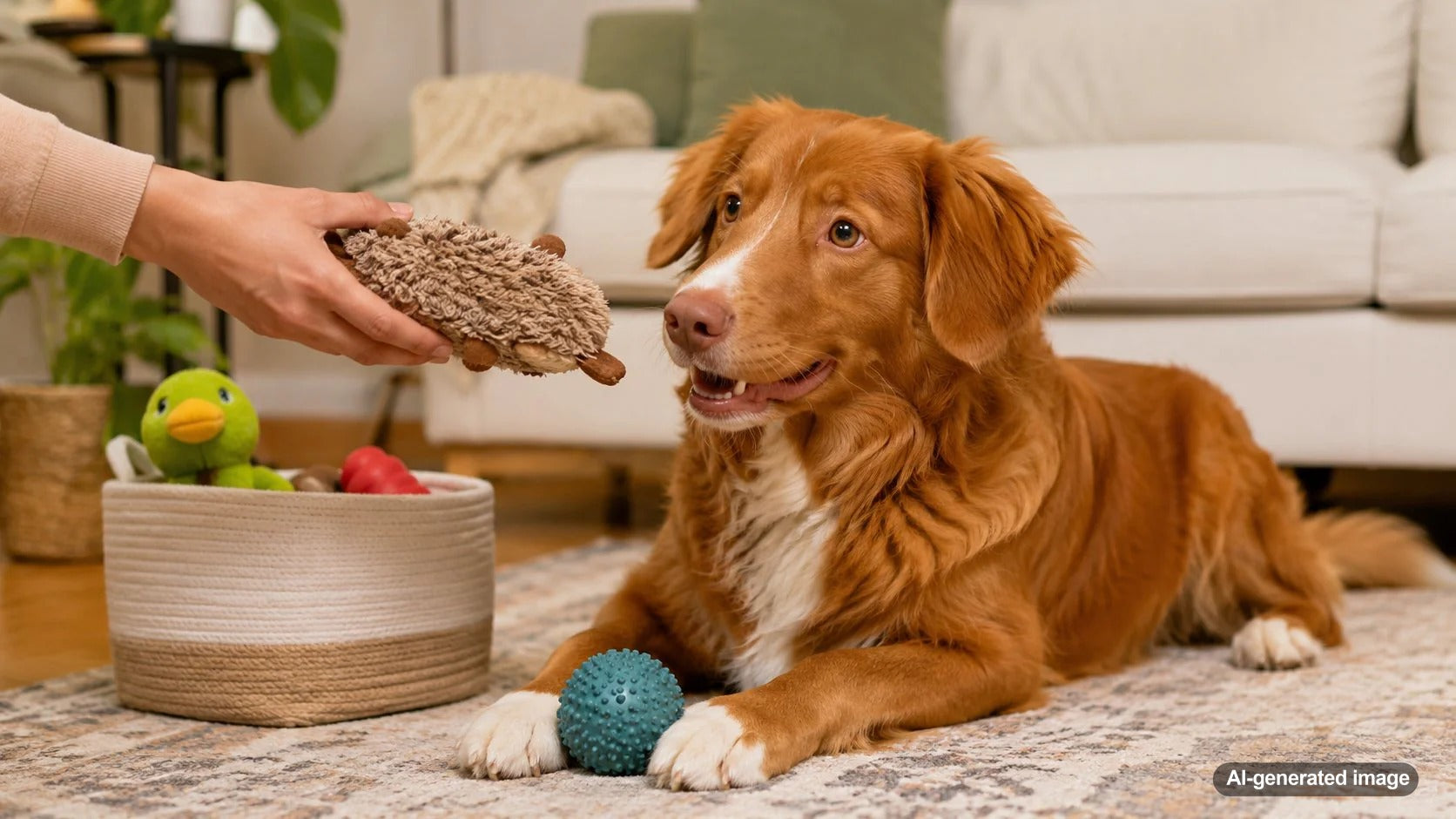
Your dog does not need a brand-new toy every time playtime starts to feel stale. Most dogs get bored with what they see all day, not necessarily with the toy itself. The trick is learning how to rotate dog toys without buying new ones every week so the same toys feel fresh, exciting, and worth sniffing, chasing, licking, carrying, or chewing again.
Toy rotation is one of the easiest ways to stretch your dog budget while giving your pup more mental stimulation. Instead of leaving every toy out at once, you create a small, changing menu of play options. That helps prevent the classic toy-bin problem: a pile of toys on the floor and one bored dog chewing the corner of the rug.
Quick answer: Rotate dog toys by keeping only 4 to 6 safe, varied toys available at a time, storing the rest out of sight, and swapping them every few days or once a week. Include different toy types in each rotation, such as one chew, one puzzle or food toy, one fetch toy, one soft comfort toy, and one lick or slow-feeding activity. Clean and inspect toys before they go back into the rotation.
Why Toy Rotation Works So Well
Dogs are naturally curious. A toy that sits in the same corner every day can become background noise, even if your dog loved it when it first arrived. When you put that toy away for a while and bring it back later, it can regain some novelty because it smells different, appears unexpectedly, and feels like a new opportunity.
Rotation also helps you learn what kind of enrichment your dog actually prefers. Some dogs want to carry soft toys around like tiny emotional support buddies. Others want to dissect squeaky toys, roll treat puzzles across the floor, chase balls, tug, lick, or settle into a long chew session. When everything is available at once, it is harder to notice those patterns.
Start With a Toy Audit
Before you rotate anything, dump the toy basket and sort what you have. Make three piles: keep, repair or wash, and retire. Retire anything with sharp edges, loose parts, ripped seams, exposed stuffing, frayed rope strands, or pieces your dog could swallow. If your dog is a power chewer, be extra strict. A toy that works for a gentle senior may not be safe for a young dog with determined jaws.
Next, group the keepers by purpose. Try categories like chew toys, fetch toys, tug toys, puzzle toys, lick toys, plush toys, and comfort toys. Your goal is not to make the perfect catalog. It is simply to avoid putting out five toys that all do the same job.
Helpful tip: Keep one or two true comfort favorites available all the time if your dog relies on them for settling. Rotation should add enrichment, not remove something that helps your dog feel secure.
The 4-to-6 Toy Rule
For many dogs, 4 to 6 toys out at one time is plenty. A balanced rotation might include one chew toy, one toy for fetch or movement, one soft toy, one puzzle or treat toy, and one lick-based activity. Smaller dogs or puppies may do better with fewer options. Busy, high-energy dogs may need more frequent swaps rather than more toys on the floor.
If your dog ignores everything after ten minutes, do not assume the rotation failed. Try changing the category mix first. For example, a dog who just finished a long walk may prefer licking or chewing over fetch. A dog who has been home alone may want interactive tug or a sniff-and-search game before settling.
A Simple Weekly Toy Rotation Plan
Bring out a chew, a soft toy, and a puzzle toy. Use the puzzle for a short morning brain game.
Swap the puzzle for a lick mat or slow-feeding activity. Keep the favorite chew if it is still safe.
Add a fetch or tug toy for more active play. Put away anything your dog has been ignoring.
Wash, inspect, and reset the toy basket. Choose next week's mix based on what your dog enjoyed most.
You can also make rotation even simpler: one small basket out, one storage bin hidden away. When toys go into the hidden bin, they stay there long enough to feel interesting again. For some dogs that means three days. For others, a full week works better.
Make Old Toys Feel New Again
A rotation system works best when you change the experience, not just the object. Hide a toy under a towel and let your dog sniff it out. Use a fetch toy in a different room. Pair a safe chew with a calm after-dinner routine. Put a familiar puzzle toy away before your dog gets frustrated so they are excited to see it next time.
Food-based enrichment can be especially useful for making ordinary days feel more satisfying. The Pupsicle is a good fit for rotation because it gives dogs a longer-lasting treat activity that feels different from a standard toy on the floor. If you like making your own refills, the Pupsicle Treat Tray can help you prep freezer-ready treats so you are rotating activities instead of constantly shopping for new toys.
Match the Rotation to Your Dog
Puppies often need short, supervised sessions because they are still learning what is okay to chew. Rotate textures gently: rubbery chew, crinkly toy, soft plush, and simple food puzzle. Senior dogs may prefer softer toys, slower sniff games, and lick-based enrichment over high-speed chasing. If your older dog suddenly stops playing, seems sore, drops toys, paws at the mouth, or avoids chewing, check with your veterinarian.
Power chewers need durability and supervision. They may enjoy fewer toys overall, but those toys need to be chosen carefully. Inspect after every session and put chews away when you cannot supervise. For dogs who relax through gnawing, a durable option like HonestChew can be one part of a safer chew rotation when used as directed.
Common Toy Rotation Mistakes
Watch out for these: leaving all toys out all the time, rotating only plush toys, ignoring damaged toys, using food toys without accounting for extra calories, and changing the whole routine so often that your dog cannot settle. Rotation should feel predictable enough to be comforting and varied enough to be interesting.
Another common mistake is expecting toys to do all the work. Dogs still need walks, sniffing, training, rest, and attention from their people. A toy rotation plan is a support tool, not a replacement for exercise, bonding, or professional help if your dog has serious anxiety, aggression, or destructive behavior that is escalating.
Dog Parent FAQs
How often should I rotate my dog's toys?
Most dogs do well with a toy swap every few days or once a week. If your dog loses interest quickly, try smaller, more frequent swaps instead of adding more toys.
Should I leave any toys out all the time?
Yes, if they are safe and comforting. Many dogs benefit from having a favorite comfort toy or appropriate chew available, especially during quiet time.
Can toy rotation help with boredom chewing?
It may help by giving your dog more appropriate outlets for chewing, licking, sniffing, and problem-solving. If chewing is sudden, intense, or linked to panic when alone, ask your veterinarian or a qualified trainer for guidance.
Do I need new toys to start a rotation?
No. Start with what you already have, remove unsafe items, group the rest by play style, and make old toys feel new by storing and reintroducing them.
The Bottom Line
Learning how to rotate dog toys without buying new ones every week is really about using what you already have with more intention. A smaller selection, a little variety, and a regular reset can turn the same toy basket into a better enrichment routine. Your dog gets more engaging play, you get less clutter, and everyone wins without another weekly toy haul.


