






































































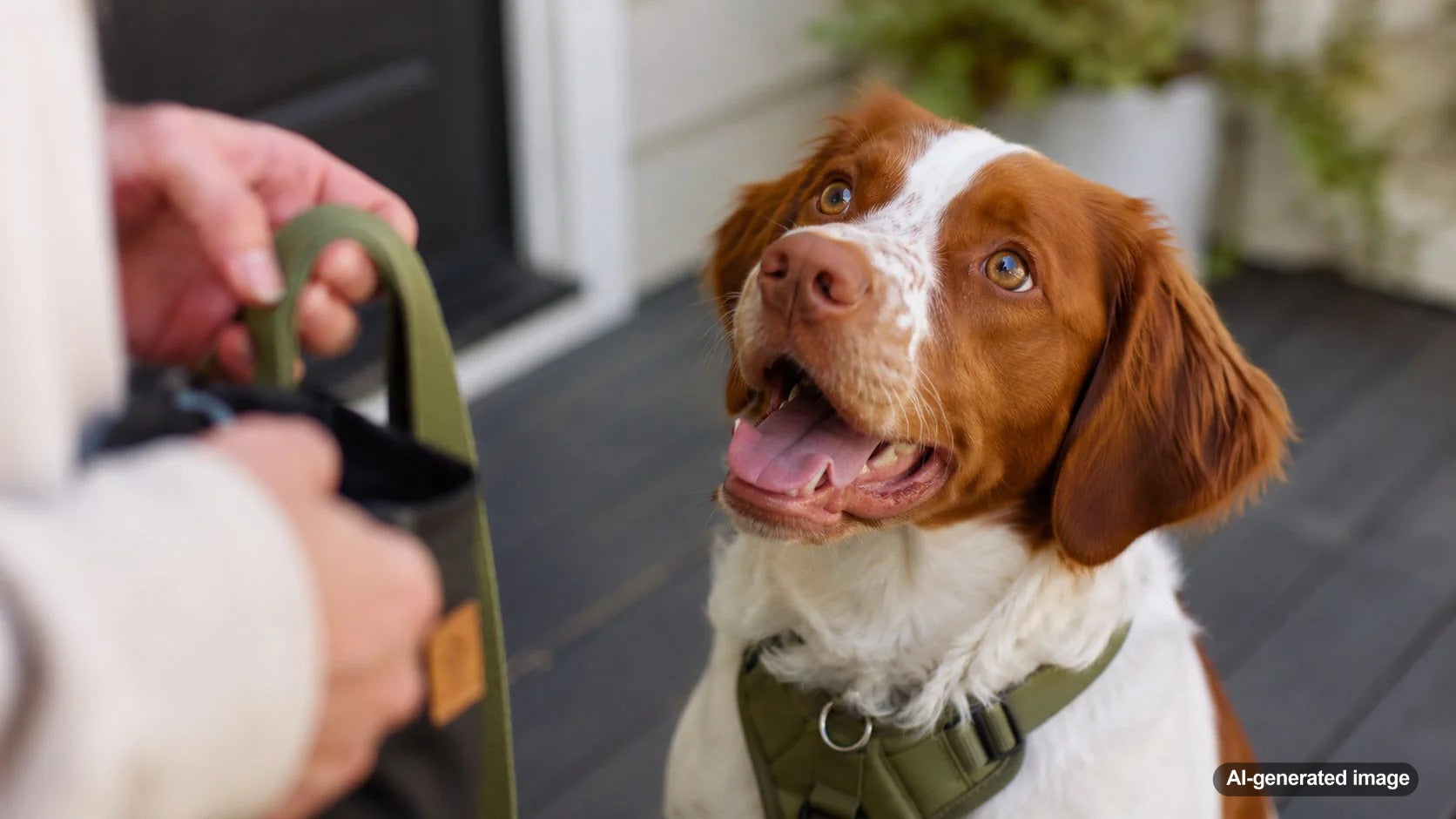
A walk can be so much more than a bathroom break and a few steps around the block. For your dog, the outside world is full of scent messages, tiny choices, movement challenges, social information, and interesting textures underfoot. When you know how to make walks more enriching for your dog, even a short stroll can become a satisfying mix of exercise, confidence-building, training, and nose-powered fun.
Enriching walks do not have to be longer, harder, or more complicated. In many cases, the best upgrade is slowing down, giving your dog a little more agency, and adding small activities that let them use their natural dog skills. Think sniffing, searching, watching, balancing, checking in with you, and exploring safely at their own pace.
Quick answer: To make walks more enriching for your dog, build in sniff breaks, vary your route, add simple training games, let your dog investigate safe spaces, use reward-based check-ins, and match the walk to your dog's age, energy, and confidence level. The goal is not just to tire your dog out. It is to help them feel mentally satisfied, emotionally settled, and connected to you.
Why Enriching Walks Matter
Dogs experience the world heavily through scent. A patch of grass, fire hydrant, tree trunk, or sidewalk corner can tell them which dogs passed by, what wildlife may have been there, and what has changed since yesterday. When a dog is rushed past every smell, the walk may meet their physical needs but miss a huge part of their mental needs.
That is why a slow sniff walk can sometimes leave a dog more content than a fast, straight-line march. Sniffing, choosing, searching, and processing the environment all use mental energy. For some dogs, especially anxious dogs, senior dogs, puppies, and dogs recovering from busy environments, a calm exploratory walk may be more helpful than a high-intensity outing.
Start With a Sniffari
A sniffari is a walk where your dog gets extra time to sniff and explore safely. You can still guide the route and avoid unsafe items, but the pace becomes less about distance and more about discovery.
Try choosing one section of your walk, such as a quiet block, a park edge, or a grassy strip, and letting your dog lead the investigation for 5 to 10 minutes. Keep the leash loose when possible, pause when they pause, and let them finish smelling before moving on. For dogs who usually pull, this can feel odd at first. Over time, many dogs learn that sniffing calmly gets them more access to the world than dragging their person down the sidewalk.
Helpful tip: If your dog is a power sniffer, give the sniffing part a cue like "go sniff." When it is time to move again, use a different cue like "let's go" and reward them for rejoining you.
Add Tiny Training Games Along the Way
Training does not have to turn the walk into a formal obedience session. In fact, short and playful works better for most dogs. Try asking for one easy cue at natural moments: a sit before crossing the street, a hand target before passing another dog, or a name-response game when your dog checks in with you.
Bring small, tasty rewards for the moments that matter. Love Nuggets can be useful for walk-friendly reward moments because they are bite-sized and easy to use when you want to reinforce attention, calm passing, or a great recall in a safe area. Keep rewards small so your dog stays interested in the walk instead of stopping for a full snack break.
For puppies, reward looking at new things calmly. For adolescent dogs, reward checking in before they hit the end of the leash. For senior dogs, reward steady movement, gentle engagement, and confidence around surfaces or sounds that may feel different as they age.
Let Your Dog Use Their Brain, Not Just Their Legs
A more enriching walk often includes simple problem-solving. You might scatter a few treats in a small patch of grass and say "find it." You might pause at a bench and ask your dog to settle for 30 seconds. You might practice walking around a tree, stepping over a low curb, or changing direction when your dog checks in.
These little moments matter because they turn passive walking into active participation. Your dog is not just being moved through the neighborhood. They are thinking, choosing, responding, and learning.
Easy enrichment ideas to try this week:
- Take one walk where distance does not matter and sniffing does.
- Hide a few treats in grass for a quick "find it" game.
- Practice three calm check-ins before crossing streets.
- Choose a new route with different smells, surfaces, or sights.
- End the walk with a calming lick, chew, or puzzle routine at home.
Vary the Route Without Overwhelming Your Dog
New routes can be exciting, but not every dog loves sudden change. A confident, social dog may enjoy a busy trail, a downtown sidewalk, or a new park. A nervous dog may do better with tiny changes, like walking the usual loop in reverse or visiting a quiet street at a low-traffic time.
Watch your dog's body language. A relaxed dog may sniff, move with a loose body, take treats, and recover quickly after surprises. A stressed dog may freeze, tuck their tail, pant heavily, refuse food, pull frantically, bark more than usual, or keep scanning the environment. If your dog seems overwhelmed, make the walk easier rather than pushing through.
Build in Calm After the Walk
Some dogs come home from walks peaceful. Others return even more charged up, especially if the walk included squirrels, traffic, barking dogs, or lots of pulling. A simple decompression routine can help your dog shift from outside excitement to home mode.
After the walk, offer water, a quiet resting spot, and a calm activity. For dogs who love outdoor play, Fly n' Feed can be a fun way to mix fetch with enrichment because it works as a flying disc and has a textured underside for licking. For high-energy dogs, pairing movement with a slower calming activity can make the whole routine feel more complete.
Common Walk Enrichment Mistakes
One common mistake is thinking every walk needs to be fast. Speed can be great for healthy dogs who enjoy it, but speed alone does not give your dog time to sniff, think, and explore. Another mistake is expecting the same walk to work for every dog. A young herding dog, a senior pug, a shy rescue, and a power chewer with big energy may all need different versions of enrichment.
It is also easy to accidentally reward pulling. If your dog pulls toward a smell and immediately gets to reach it, pulling worked. Instead, pause, wait for a softer leash or a quick check-in, then move forward. The smell becomes the reward, but polite movement is how your dog earns it.
When to Slow Down or Get Help
Walks should feel safe and manageable for both of you. If your dog suddenly does not want to walk, limps, pants excessively, coughs, seems painful, vomits, has diarrhea, or shows a major behavior change, check with your veterinarian. If your dog lunges, panics, growls, or cannot settle around triggers, a qualified trainer or veterinary behavior professional can help you build a safer plan.
Enrichment should support your dog, not flood them. Start small, notice what your dog enjoys, and make adjustments based on their body, age, health, and confidence.
Dog Parent FAQs
How long should an enriching dog walk be?
It depends on your dog's age, breed, health, and energy level. Some dogs benefit from a longer walk, while others may feel satisfied after a short sniff-heavy outing. Quality matters as much as distance.
Is sniffing on walks good for dogs?
Yes, sniffing can be an important form of mental enrichment. It lets dogs gather information, explore their environment, and use a natural behavior that many dogs find deeply satisfying.
What if my dog pulls the whole walk?
Use rewards for check-ins, stop before the leash gets tight when you can, and let polite walking earn access to smells. If pulling is intense or unsafe, consider working with a positive-reinforcement trainer.
Can senior dogs still have enriching walks?
Absolutely. Senior dogs may prefer slower routes, softer surfaces, shorter outings, and more sniff breaks. Ask your veterinarian if you are unsure what level of activity is safe.
The Bottom Line on Better Walks
Learning how to make walks more enriching for your dog is really about seeing the walk through your dog's nose, body, and brain. Add sniff time, sprinkle in simple games, reward connection, and give your dog safe chances to explore. The best walk is not always the longest one. It is the one that helps your dog come home a little more fulfilled, a little more settled, and a lot more connected to you.


