






































































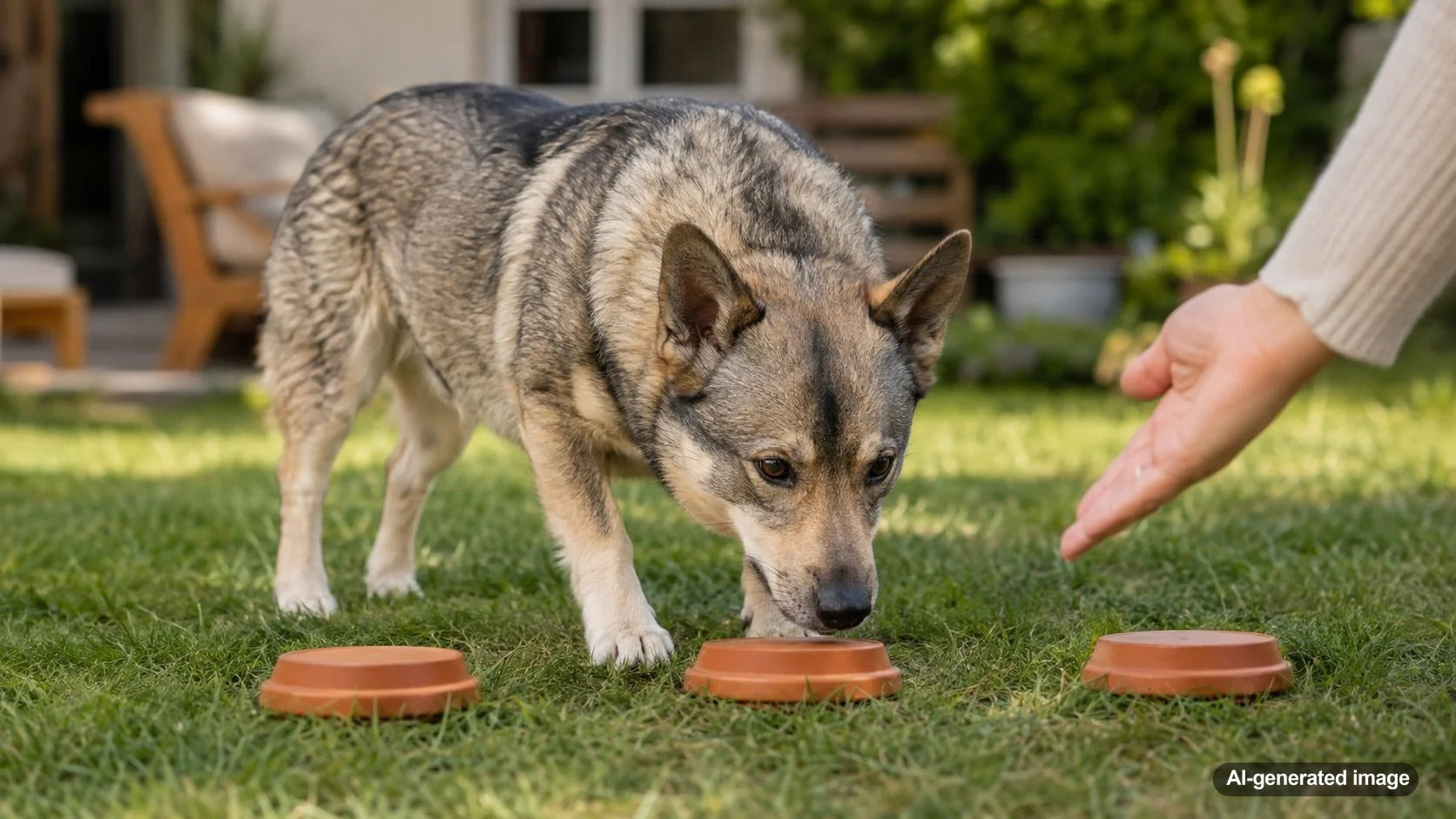
Treat time can be much more than handing your dog a snack and watching it disappear in two seconds. With a little creativity, the same small treat allowance can become a sniffing challenge, training session, puzzle, or calming activity. The key is to make your dog work with their brain instead of simply increasing the amount of food in the bowl.
Mentally stimulating treat routines encourage dogs to sniff, search, lick, problem-solve, and practice self-control. These activities can make a small portion feel more satisfying while helping you protect your dog's overall calorie balance.
Quick Answer
Make treat time mentally stimulating by dividing treats into tiny pieces, using part of your dog's regular meal, and presenting the food through training games, scent searches, slow feeders, or interactive toys. Measure the entire portion before the activity begins so the game lasts longer without quietly adding extra calories.
Start With a Daily Treat Budget
The easiest way to prevent accidental overfeeding is to decide how much food will be used for enrichment before the day gets busy. Treats are extra calories, and veterinary nutrition guidance commonly recommends keeping them to a small portion of a dog's total daily intake.
Place the day's treat allowance in a container each morning. Every family member uses treats from that container, rather than reaching into the original bag. When the container is empty, treat time is finished for the day.
You can also reserve a portion of your dog's regular kibble for games. This is especially useful for puppies in frequent training sessions, small dogs with lower calorie needs, and dogs following a veterinarian-guided weight plan.
Make Each Piece Smaller
Dogs often care more about the timing and excitement of a reward than its size. A soft treat can usually be divided into several pea-sized or smaller pieces. One larger reward might become six successful repetitions of sit, touch, place, or eye contact.
Very small rewards are particularly helpful during fast training games. Give one piece at a time, pause briefly, and ask for another simple behavior. Your dog experiences several rewarding moments without receiving several full-size treats.
Choose pieces that are appropriate for your dog's size and chewing ability. Puppies, seniors, and dogs with dental sensitivity may need softer textures. Dogs that gulp food should receive appropriately sized pieces under close supervision.
Turn Treats Into a Scent Search
Sniffing is a natural form of mental work. Instead of placing five treats in your dog's mouth, hide those same five treats around one safe room. Begin with obvious locations along the floor, then gradually place treats behind furniture legs, beside a box, or under the edge of a towel.
Use a release phrase such as "find it" and let your dog search at their own pace. Avoid pointing out every location immediately. The goal is for your dog to follow scent, make choices, and experience the satisfaction of finding the reward.
For beginners, scatter part of a meal across a clean rug or enclosed patch of grass. More experienced dogs can wait in another room while you prepare a short search course.
Use Interactive Toys Without Filling Them to the Top
An enrichment toy does not need to be packed full to be interesting. A few strategically placed treats can create plenty of work, especially when the toy rolls, wobbles, or requires licking.
The Pupsicle can turn a measured treat portion into a longer licking and problem-solving session. For homemade portions, the Pupsicle Treat Tray can help you prepare consistent frozen servings instead of estimating the amount each time.
You can also place a small smear of dog-safe food along textured surfaces rather than covering the entire toy. Thin layers take time to lick while using less food than a thick mound.
Helpful tip: Add water to dog-safe wet food or an approved treat mix before freezing it. The added volume can extend the activity without requiring a larger amount of calorie-dense food.
Create Mini Training Missions
Treats become more engaging when they are connected to a clear task. Build a three-minute mission using behaviors your dog already understands. You might ask for a hand target, a short stay, a spin, and a walk to a mat.
Keep the pace cheerful and achievable. Mental stimulation does not require complicated tricks. Asking your dog to switch between simple behaviors encourages listening, memory, and impulse control.
For a puppy, reward calm choices such as keeping four paws on the floor. For a senior dog, use comfortable low-impact behaviors that do not require repeated jumping, sharp turns, or slippery footing.
Rotate the Type of Challenge
Repeating the same puzzle every day can make it too easy. Rotate among licking, sniffing, rolling, training, and gentle chewing activities. The food portion can remain similar while the experience changes.
On Monday, use kibble for a hallway scent search. On Tuesday, practice five familiar cues. On Wednesday, freeze a measured portion in an enrichment toy. On Thursday, place treats in a loosely folded towel while supervising your dog.
Adjust the challenge before your dog becomes frustrated. If your dog paws frantically, barks at the toy, walks away, or begins chewing a puzzle in an unsafe way, make the activity easier. Successful enrichment should be challenging enough to hold attention but not so difficult that it causes distress.
Avoid These Common Overfeeding Traps
Watch out for: refilling a toy because your dog finished quickly, using full-size treats for every repetition, letting several family members reward the same behavior, and forgetting to count edible chews or frozen fillings. These small extras can add up quickly.
Another common mistake is making every enrichment session food-based. Praise, play, sniffing access, a favorite toy, and permission to go outside can also be valuable rewards. Mixing food and non-food rewards keeps the routine interesting while reducing reliance on snacks.
When to Ask Your Veterinarian
Talk with your veterinarian if you are unsure how many calories your dog needs or how treats should fit into the diet. Veterinary guidance is especially important for puppies, dogs with medical conditions, dogs taking prescription diets, and dogs that need to gain or lose weight.
Contact your veterinarian if you notice a major appetite change, unexpected weight change, vomiting, diarrhea, trouble chewing, excessive drooling, or signs of pain. Enrichment can support a healthy routine, but it is not a substitute for medical care.
Dog Parent FAQs
Can I use regular kibble for enrichment?
Yes. Setting aside part of your dog's measured meal is one of the simplest ways to create food games without adding extra calories.
How long should a treat puzzle last?
There is no required length. A few focused minutes can be valuable. Increase the difficulty gradually rather than adding more food to make the activity last longer.
What if my dog solves every puzzle immediately?
Change the presentation, combine two easy tasks, or hide the toy for a scent search. Use the same measured portion while making the path to the reward less predictable.
Can mentally stimulating treat time replace exercise?
No. Brain games complement walks, play, training, rest, and age-appropriate physical activity. Dogs benefit from a balanced routine rather than one type of activity alone.
Make the Experience Bigger, Not the Portion
The best enriched treat routines do not depend on a mountain of snacks. They stretch a measured portion through sniffing, licking, learning, and problem-solving. By planning the amount first and changing how it is delivered, you can give your dog a more satisfying experience while keeping daily nutrition on track.


