






































































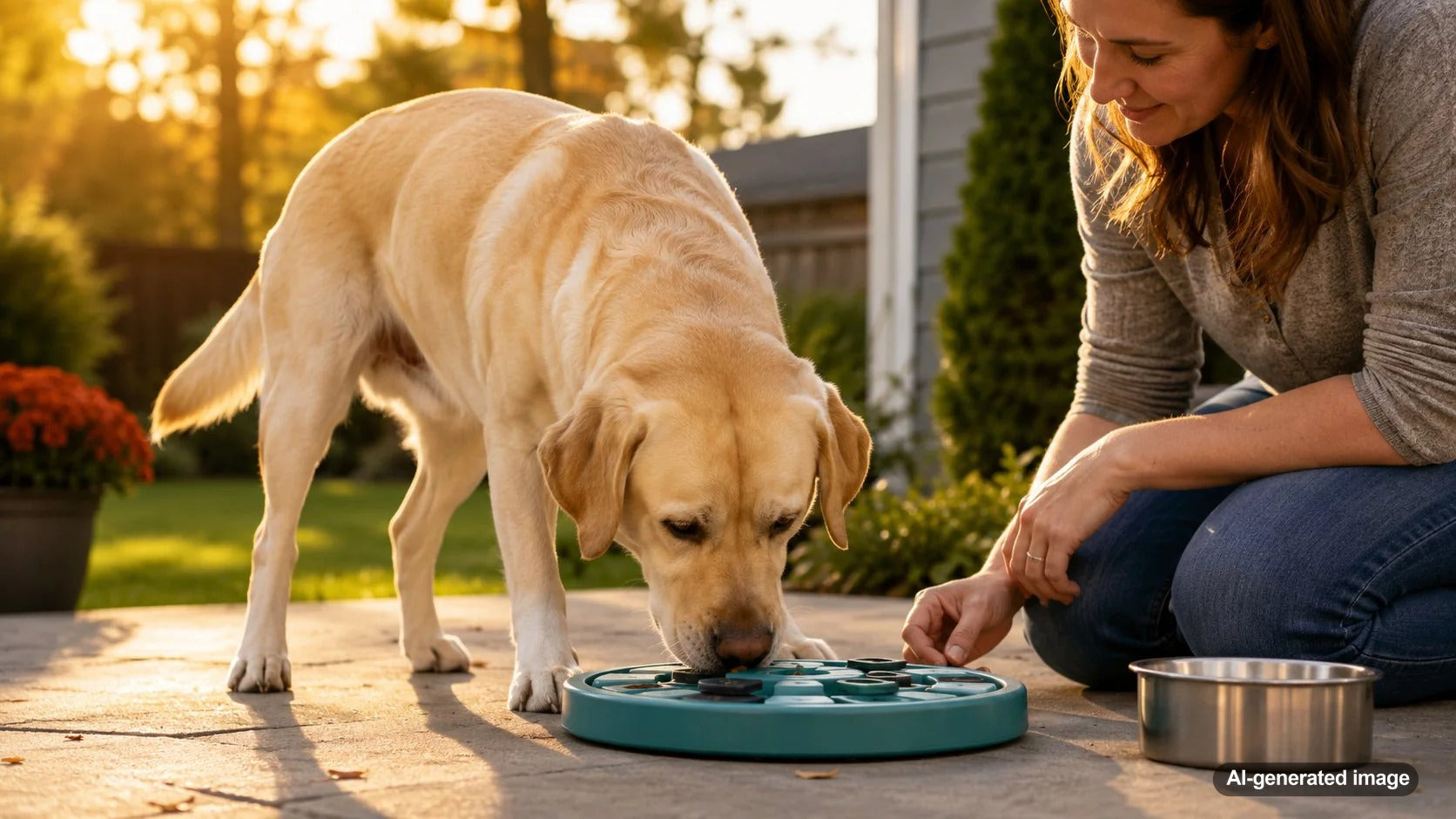
Labradors often approach dinner with the enthusiasm of a dog who has not eaten in weeks, even when breakfast happened a few hours ago. Instead of letting that excitement end with a 30-second bowl-cleaning sprint, you can turn part or all of each meal into a satisfying brain game. Mentally enriching meals encourage your Lab to sniff, lick, roll, search, and problem-solve while still receiving the measured portion of food that belongs in the daily feeding plan.
This approach is especially useful for Labradors because many are highly food-motivated, energetic, and eager to work with their people. A thoughtful feeding activity can add stimulation without piling extra treats onto the day, which matters for a breed that can gain weight easily.
1. Use the Meal, Not Extra Calories
The simplest enrichment upgrade is to stop thinking of kibble as something that must go directly into a bowl. Measure your Lab's full meal first, then use that portion for the activities you have planned. This prevents the common mistake of serving a normal dinner and adding a puzzle full of bonus food afterward.
You might place half the meal in an interactive feeder, reserve one-quarter for training, and scatter the remaining quarter in a safe search area. Your Labrador gets several rewarding activities without quietly doubling dinner.
2. Turn Kibble Into a Sniffing Game
Labs were bred to work closely with people and use their noses, so searching for food can be deeply engaging. Start indoors by scattering a small amount of kibble across a clean rug or open floor. Once your dog understands the game, hide small piles behind furniture legs, beside a doorway, or under lightweight cups that are safe to move.
Outdoor scatter feeding can also work in clean, untreated grass. Avoid areas where pesticides, wildlife waste, mushrooms, sharp debris, or toxic plants may be present. Dogs that swallow leaves, dirt, fabric, or household objects should use a purpose-built feeder instead of improvised hiding materials.
3. Add Movement With a Rolling Slow Feeder
A rolling feeder makes your Labrador push, follow, and reposition the toy to release food. The movement adds a physical component, while the unpredictable path keeps the brain involved. The Walkabout is a rolling slow-feeder puzzle ball with an adjustable opening for different kibble or treat sizes.
Set the opening wide enough that food comes out frequently during the first session. If nothing appears after several attempts, a new user may become frustrated and start barking, pawing aggressively, or trying to crush the toy. Make the first experience easy, then narrow the opening as your Lab becomes more skilled.
4. Use Licking for a Slower, Quieter Meal
Not every enriching meal needs to involve energetic movement. Licking can create a slower, more methodical activity that fits well after a walk, during family dinner, or when you want your Labrador to settle.
Soften some kibble with warm water, allow it to cool, and spread it across a textured feeder. The dual-sided FlipMat can be used as a slow feeder or lick mat, letting you adjust the challenge to your dog's experience. Freezing the prepared food can extend the activity, but begin with a thin layer so the task does not become frustrating.
Wash textured feeders thoroughly after every wet meal. Food and saliva can remain in grooves even when the surface looks clean.
5. Make Your Labrador Earn Dinner Through Training
Food-motivated Labradors often enjoy working for individual pieces of their meal. Use a handful of kibble for two or three minutes of simple training before serving the rest. Practice useful behaviors such as waiting at a doorway, going to a mat, touching your palm, dropping an object, or making eye contact when called.
Keep the pace brisk enough to hold your dog's interest. Puppies may need several 30-second sessions, while an experienced adult can work through a longer sequence. Senior Labs may appreciate stationary exercises that do not require repeated sitting, jumping, or tight turns.
6. Rotate the Experience Instead of Constantly Increasing Difficulty
Enrichment should be challenging enough to require thought, but not so hard that your Labrador gives up or dismantles the feeder. Rather than making every puzzle more complicated, rotate among different types of work.
Search Day
Hide or scatter measured kibble in a safe, supervised area.
Rolling Day
Use a dispensing toy that rewards pushing and following.
Licking Day
Serve softened or frozen food across a textured surface.
Training Day
Use part of dinner to practice practical everyday skills.
This variety keeps familiar activities interesting and exercises different behaviors without requiring an elaborate setup every night.
7. Match the Challenge to Your Labrador
A young adult Lab may happily chase a rolling feeder around the kitchen. A puppy needs a simpler setup, close supervision, and equipment that cannot be swallowed. A senior with dental discomfort, arthritis, vision changes, or reduced mobility may prefer a stationary lick mat placed on a nonslip surface.
Watch your dog's body language. Productive engagement looks like steady sniffing, licking, nudging, and brief pauses to think. Frustration may look like frantic biting, repeated barking, hard pawing, abandoning the food, or guarding the activity. Make the task easier if you see those signs.
A Simple Weeknight Enrichment Routine
Measure the complete dinner portion before beginning. Use a small handful for one minute of training, place most of the meal in a familiar slow feeder, and save the final few pieces for a short search game. The entire setup can take less than five minutes while giving your Labrador a much richer experience than eating from an open bowl.
Consistency matters more than complexity. A repeatable routine used several times a week is more valuable than an elaborate puzzle that is too messy or inconvenient to prepare again.
Dog Parent FAQs
Should every Labrador meal be served in a puzzle?
No. You can alternate enrichment meals with regular bowl feeding based on your schedule and your dog's needs. Even enriching part of one meal can add useful mental activity.
Can slow feeding help a Labrador that eats too quickly?
A slow feeder or food puzzle may encourage a more gradual pace, but it is not a substitute for veterinary care. Ask your veterinarian about persistent gulping, regurgitation, vomiting, abdominal swelling, or discomfort after eating.
How difficult should a food puzzle be?
Your Labrador should succeed within the first few attempts. Start with food that is easy to release, then increase the challenge gradually as your dog learns the toy.
Can I use treats instead of my dog's regular meal?
You can use treats occasionally, but regular food is often the easiest choice for daily enrichment. Count treats and toppers as part of your dog's total daily intake and ask your veterinarian about appropriate portions.
Make Dinner Work a Little Harder
Making mealtime mentally enriching does not require a complicated obstacle course. A measured portion of food, an achievable challenge, and a few minutes of supervision can turn dinner into sniffing, licking, movement, training, and problem-solving. For a curious, food-loving Labrador, that is a much more satisfying way to clean the plate.


