






































































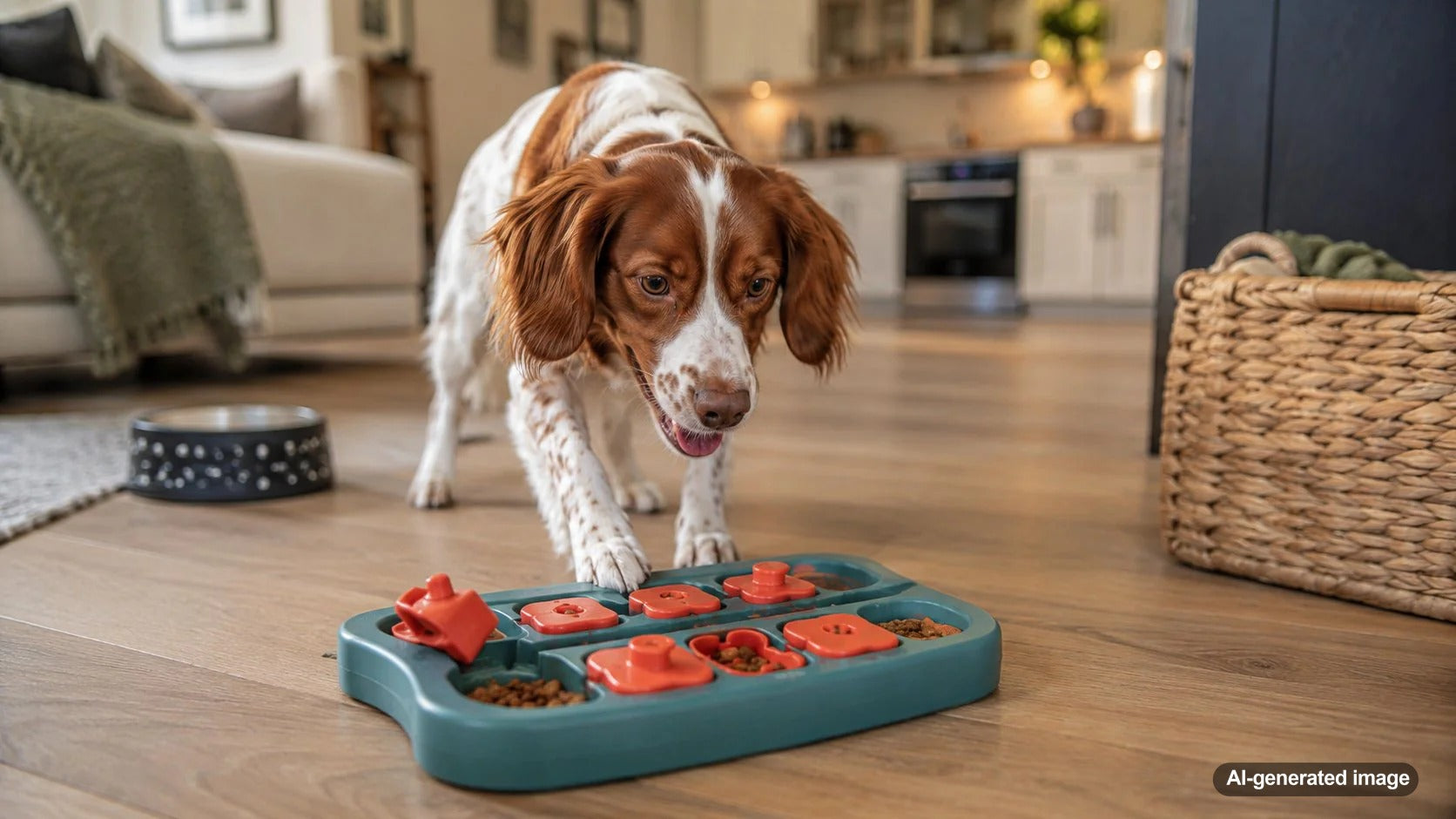
A bowl of food may disappear in 30 seconds, but mealtime can offer much more than calories. By changing how food is served, you can encourage sniffing, problem-solving, licking, training, and other engaging behaviors that many dogs naturally enjoy. The best approach is not to make every dinner difficult, but to add safe variety that fits your dog's age, size, confidence, and eating style.
Mealtime enrichment can be especially useful for dogs who inhale their kibble, seem restless before dinner, lose interest in a plain bowl, or immediately search the house for something else to do. Even a small change, such as scattering part of the meal or using kibble as training rewards, can make an ordinary routine feel more satisfying.
1. Turn the Meal Into a Sniffing Game
Dogs experience much of the world through scent, so searching for food can be more engaging than simply eating it from a bowl. Start by placing a few pieces of kibble in easy-to-see spots around one room. Once your dog understands the game, hide pieces behind a chair leg, beside a toy, or under the edge of a towel.
You can also scatter dry food across a clean section of grass or a washable mat. Keep the search area controlled so you can confirm that every piece is found, especially in multi-dog homes.
2. Use a Slow-Feeding Puzzle
A food puzzle asks a dog to move, roll, nudge, or manipulate something to release the meal. This can extend eating time while adding mental and physical activity. The Walkabout, for example, is a rolling slow-feeder puzzle ball with an adjustable opening for different kibble and treat sizes.
Set the opening wide enough that food comes out regularly during the first session. A dog who tries for several minutes without earning anything may become frustrated or give up. As your dog learns how the toy works, you can gradually increase the challenge.
3. Split Dinner Between Two Activities
One feeding method does not have to hold the entire meal. Place half in a slow feeder and use the other half for a food search, puzzle toy, or five-minute training session. This creates variety without adding extra calories.
Splitting a meal also helps owners match the activity to the dog. A high-energy young dog may enjoy rolling a puzzle around the kitchen, while a senior dog may prefer a stationary lick mat that does not require as much movement.
4. Add a Short Training Session
Reserve a portion of the meal and reward simple behaviors such as sitting, touching your palm, going to a mat, making eye contact, or waiting calmly while the food is prepared. Keep the session upbeat and brief. Dinner should not become a long test that leaves a hungry dog frustrated.
Puppies may benefit from practicing their names, recall, and gentle handling. Adult dogs can rehearse household manners, while senior dogs may enjoy familiar cues performed at a comfortable pace.
5. Try Licking-Based Enrichment
Soft or moistened food can be spread across a textured slow feeder to create a longer licking activity. The dual-sided FlipMat offers two challenge levels, allowing you to choose a simpler surface for beginners or a more detailed pattern for experienced dogs.
Use food that already fits your dog's diet, such as canned dog food, soaked kibble, or a veterinarian-approved spread. You can serve it fresh or chill it for a firmer texture. Freezing may make the activity last longer, but it can also make the challenge too difficult for puppies, seniors, or dogs with sensitive teeth.
6. Create a Simple Kibble Trail
Instead of hiding food in separate locations, create a short trail that leads your dog from one piece to the next. The trail can wind through a hallway, around a table, or toward the dog's usual feeding area.
This is an easy option for dogs who are new to food games because the next reward is always nearby. It may also work better than a complicated puzzle for dogs who become discouraged easily.
7. Rotate Textures and Temperatures Carefully
Some dogs enjoy variety in the form of soaked kibble, a spoonful of compatible wet food, or a chilled meal. Introduce changes one at a time and in small amounts. Sudden dietary changes can cause digestive upset, and rich toppers can unbalance the meal or add more calories than expected.
Dogs with allergies, sensitive stomachs, medical conditions, or prescription diets should not receive new ingredients without veterinary guidance. The excitement should come primarily from the activity, not from constantly adding richer food.
8. Make the Challenge Fit Your Dog
Choose simple puzzles with quick rewards. Supervise closely and avoid removable pieces that could be chewed or swallowed.
Use stable, accessible feeders. Consider softer food and avoid setups that require uncomfortable bending, chasing, or pawing.
Use appropriately sized openings and pieces. Large chambers can be difficult for a short muzzle to reach.
Select durable equipment and supervise for biting, cracking, or attempts to dismantle the feeder instead of using it as intended.
Watch your dog's body language. Relaxed sniffing, persistent exploration, and returning to the activity are encouraging signs. Repeated barking, frantic biting, pawing that could cause injury, or walking away may mean the task is too hard.
9. Build a Rotation You Can Repeat
Exciting mealtimes do not need to involve elaborate preparation every day. Create a small weekly rotation that uses equipment and routines you can clean, refill, and repeat easily.
- Meal one: slow-feeding puzzle
- Meal two: five minutes of training followed by the regular bowl
- Meal three: sniffing search around one room
- Meal four: chilled licking activity
You can repeat favorite methods rather than inventing a new game for every meal. Predictable variety is often more sustainable for dog parents and still gives dogs different ways to engage with their food.
Common Mealtime Enrichment Mistakes
Making the first attempt too difficult: Let your dog see food enter the puzzle and make early rewards easy to obtain.
Adding too many extras: Toppers, treats, and spreads still count toward daily intake. Use regular meal portions when possible.
Leaving a new toy unsupervised: Watch for chewing, damaged parts, food guarding, or attempts to swallow pieces.
Assuming slow eating fixes every concern: A sudden appetite change, difficulty chewing, vomiting, diarrhea, excessive drooling, weight loss, or refusal to eat needs veterinary attention.
Dog Parent FAQs
Should every meal be served in a puzzle toy?
No. Many dogs enjoy a mix of puzzle meals, training, food searches, licking activities, and regular bowl feeding. Choose routines that are safe and practical for your household.
What if my dog becomes frustrated with food puzzles?
Make the puzzle easier, demonstrate how food comes out, or place a few rewards beside it. Stop the session if your dog becomes frantic, destructive, or unwilling to continue.
Can mealtime enrichment help a fast eater?
Slow feeders and food puzzles may reduce how quickly some dogs can access food. Ask your veterinarian about persistent gulping, regurgitation, swallowing trouble, or other feeding concerns.
How can I make meals exciting for a picky dog?
Try changing the presentation before changing the diet. A food search, short training session, or different feeding surface may renew interest. Contact your veterinarian if reduced appetite is sudden, prolonged, or accompanied by other symptoms.
Can I freeze my dog's regular food?
Many wet foods and soaked kibbles can be frozen in suitable enrichment toys, but check the food's storage directions and your veterinarian's advice. Use a softer or chilled option for dogs with dental sensitivity.
Make Dinner More Than a Bowl of Food
The most successful mealtime enrichment is safe, appropriately challenging, and easy enough to become part of real life. Start with one small adjustment, such as using a quarter of dinner for training or serving kibble in a simple slow feeder. Once your dog understands the activity, rotate in new ways to sniff, lick, search, and problem-solve.


