






































































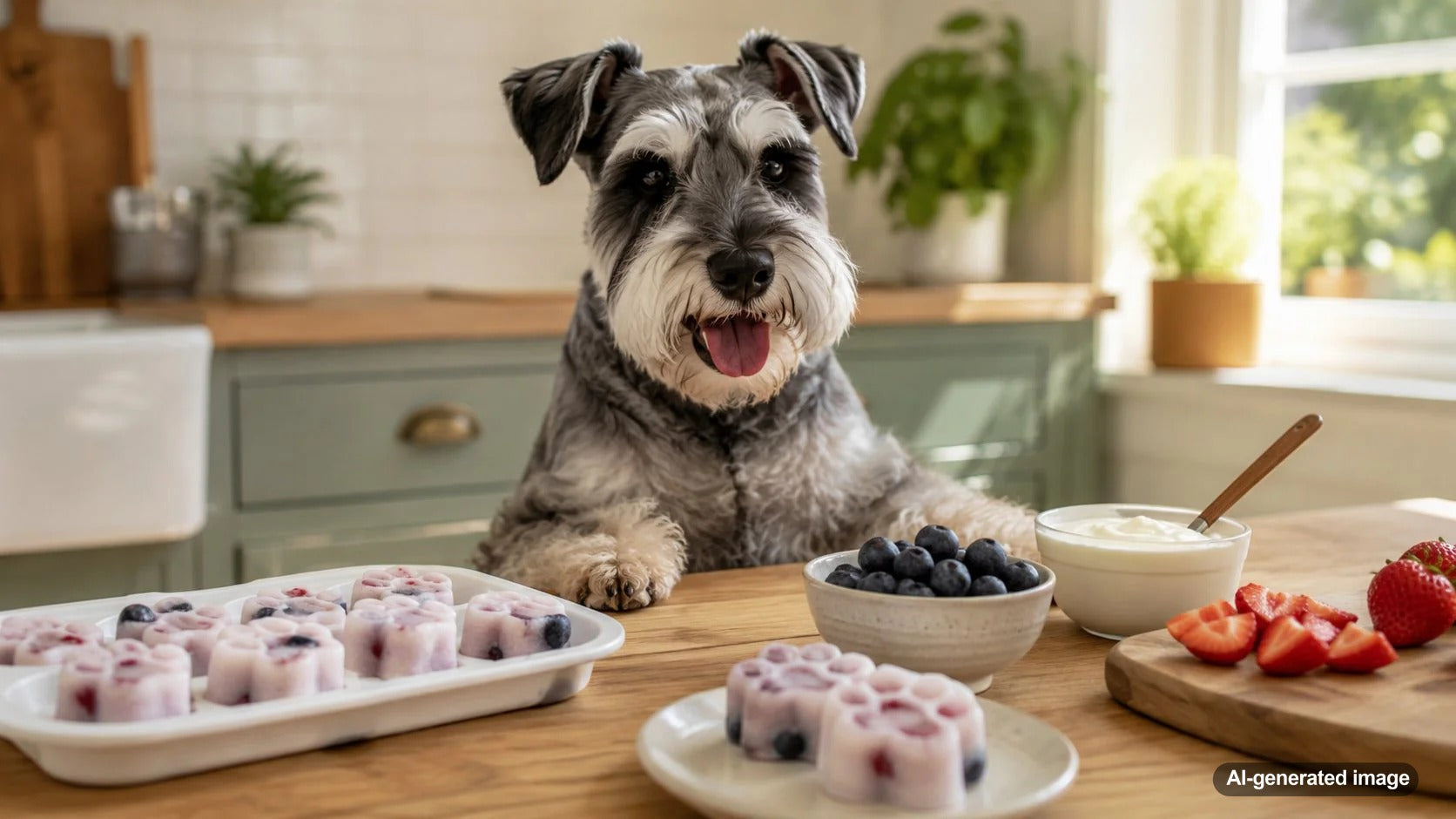
Frozen dog treats can turn a hot afternoon, a boring stretch indoors, or a stressful grooming session into something your dog genuinely enjoys. The trick is making them flavorful without relying on sweetened yogurt, fruit juice, honey, or oversized portions of naturally sugary fruit. With a simple base, a few dog-safe ingredients, and sensible serving sizes, you can create refreshing treats that provide enrichment without loading your dog's day with unnecessary sugar.
You also do not need a complicated recipe. Many of the best frozen treats use two or three ingredients, which makes it easier to track calories, avoid foods that upset your dog's stomach, and identify the cause if a new ingredient does not agree with them.
Start With a Low-Sugar Base
The base determines whether a frozen treat becomes a light enrichment snack or a surprisingly calorie-dense dessert. Water is the simplest option, but you can add flavor and texture with plain canned pumpkin, mashed cooked vegetables, soaked kibble, or sodium-free broth that contains no onion or garlic.
Plain, unsweetened yogurt can also work for dogs that tolerate dairy. Check the ingredient list carefully and never use a product containing xylitol or other sugar substitutes. Some dogs develop gas, loose stool, or stomach discomfort after eating dairy, so begin with a very small serving.
Nut butter is popular in homemade dog treats, but it is concentrated in both calories and fat. Choose an unsweetened, xylitol-free variety and use a thin smear or small spoonful for flavor instead of making it the primary ingredient.
Use Fruit for Flavor, Not Bulk
Fruit can add color and aroma, but even naturally occurring sugar adds up when several pieces are blended into one treat. Blueberries, strawberries, seedless watermelon, and small amounts of banana are common options for dogs, but the portion matters more than whether the fruit sounds healthy.
Try blending one or two strawberries into a larger mixture of water and pumpkin rather than filling an entire tray with fruit puree. A few blueberries pressed into several treats can provide bursts of flavor without making every bite fruit-heavy. Banana creates a creamy texture, so a small piece is usually enough for a full batch.
Remove pits, seeds, tough rinds, and stems before blending. Never use grapes or raisins, and keep chocolate, macadamia nuts, onions, garlic, alcohol, and xylitol out of every dog treat recipe.
Three Easy Lower-Sugar Frozen Dog Treat Recipes
Pumpkin Freezer Bites
Mix 1/2 cup of plain canned pumpkin with 1/2 cup of water. Spoon the mixture into small molds and freeze until solid. Make sure the can contains pure pumpkin rather than sweetened pumpkin pie filling.
Blueberry Broth Cubes
Place one or two blueberries into each mold, then cover them with sodium-free, dog-safe broth. Read the broth label to confirm that it contains no onion, garlic, added sweetener, or excessive salt.
Kibble and Water Pops
Soak a portion of your dog's regular kibble in warm water until soft, mash it into a thick mixture, and freeze it in small portions. Because the recipe uses food already included in your dog's diet, you can subtract the kibble from the next meal instead of adding many extra treat calories.
Turn the Treat Into Longer-Lasting Enrichment
A frozen cube may disappear in seconds. Freezing the mixture inside an enrichment toy can encourage slower licking and give your dog a more satisfying activity.
The Pupsicle Treat Tray creates shaped homemade treats that fit inside The Pupsicle. This can be useful when you want a measured portion to last longer than a loose ice cube, particularly during quiet time, post-walk settling, or household activities that tend to make your dog restless.
Supervise your dog during treat time, choose equipment suited to your dog's size and chewing style, and remove anything that becomes damaged.
Keep Portions in Perspective
Frozen treats still count as treats, even when they contain nutritious ingredients. A commonly used guideline is to keep treats and other extras to no more than about 10 percent of a dog's daily calories, with the remaining calories coming from complete and balanced food.
That allowance includes training rewards, table scraps, chews, toppers, and frozen snacks combined. A small dog may reach the limit with far less food than a large, active dog. Cutting recipes into small portions makes it easier to offer enrichment without accidentally replacing balanced meals.
Dogs with diabetes, pancreatitis, food allergies, digestive disease, weight concerns, or a prescription diet may need different ingredients. Ask your veterinarian before introducing homemade treats if your dog has a medical condition or dietary restriction.
Common Mistakes to Avoid
Using sweetened ingredients: Flavored yogurt, sweetened applesauce, syrup, and juice can add sugar quickly.
Making every treat fruit-based: Rotate in pumpkin, vegetables, soaked kibble, or plain broth.
Skipping the label check: Products marketed as low-sugar or sugar-free may contain ingredients that are unsafe for dogs.
Serving human-sized portions: A modest spoonful can be substantial for a small dog.
Introducing several foods at once: Start with one new ingredient so stomach upset or sensitivity is easier to identify.
Dog Parent FAQs
Can dogs eat frozen treats every day?
Many dogs can enjoy a small frozen treat regularly when it fits their calorie needs and does not replace complete and balanced meals.
What is the best low-sugar fruit for frozen dog treats?
Blueberries and strawberries can work in small amounts. Portion size is still important because all fruit contains natural sugar.
Can I freeze my dog's regular food?
Yes. Wet food or water-softened kibble can be portioned and frozen, provided it is stored safely and counted as part of the dog's normal meal.
Why did a frozen treat upset my dog's stomach?
A new ingredient, dairy intolerance, rich food, or an oversized serving may be responsible. Stop serving it and contact your veterinarian if vomiting, diarrhea, pain, appetite changes, or other concerning symptoms occur.
A Cooler Treat Without the Sugar Rush
The easiest way to make better frozen dog treats is to keep the ingredient list short, skip added sweeteners, and control the portion before it enters the freezer. Build recipes around water, pumpkin, vegetables, broth, or your dog's regular food, then add only a little fruit when you want extra flavor. Your dog gets a refreshing activity, and you get a treat routine that is simple enough to repeat.


