






































































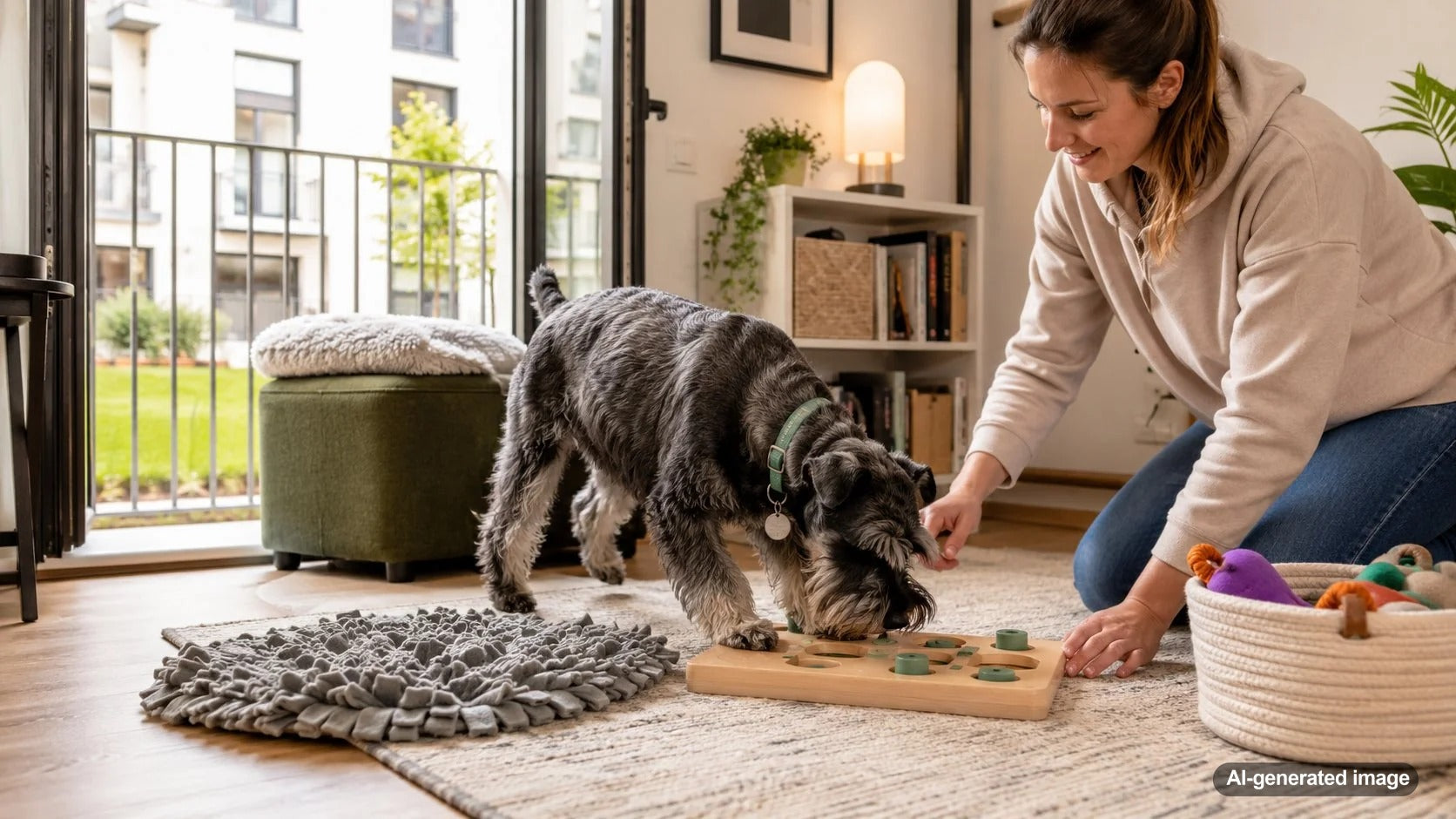
A small apartment can still feel like a big, interesting world to a dog. The key is not filling every corner with toys, but giving your dog different ways to sniff, search, lick, chew, learn, watch, and rest throughout the day. With a few simple rotations and mini routines, even a studio apartment can support satisfying enrichment without becoming cluttered or chaotic.
Dogs experience space differently than people do. A hallway can become a scent trail, a kitchen corner can become a puzzle station, and a five-minute training session can make an ordinary afternoon feel new. Variety matters more than square footage.
Think in Activities, Not Rooms
You do not need a dedicated dog room. Give the same area different jobs at different times. The living room rug might be a training zone in the morning, a supervised chew spot after lunch, and a calm settling area in the evening.
Use Part of a Meal for a Search Game
Instead of placing every meal in a bowl, reserve a small portion of kibble for a supervised search. Hide pieces in easy, safe places around one room, such as beside a table leg, under the edge of a washable towel, or inside open cardboard boxes.
Start with obvious placements so your dog understands the game. Puppies and senior dogs often do best with short searches and easy access. Large dogs and experienced sniffers may enjoy a wider search area, but avoid slippery floors, unstable furniture, and places that encourage counter surfing.
Create a Licking Station
Licking can give a dog a focused, low-space activity that fits naturally into apartment life. A FlipMat can work as a dual-sided lick mat and slow feeder, so you can vary the texture and challenge without adding several bulky items to your home.
Use dog-safe foods in appropriate portions, supervise the session, and wash the mat afterward. A licking station can be especially useful while you answer emails, prepare dinner, or help your dog settle after an exciting walk.
Rotate Toys Instead of Leaving Everything Out
A basket overflowing with toys may look generous, but constant access can make each item less interesting. Keep a few options available and store the rest out of sight. Every few days, swap in a different texture or activity type, such as a tug toy, rolling puzzle, durable chew, or soft toy.
During each swap, discard anything damaged enough to create a choking or swallowing risk.
Turn the Hallway Into a Training Lane
A short hallway is enough space for useful games. Practice recalls between two people, send your dog to a mat, teach a slow heel, or place a few safe objects for your dog to walk around. Keep sessions to three to five minutes and stop while your dog is still engaged.
In noise-sensitive buildings, favor low-impact exercises such as nose targeting, spins, position changes, and toy cleanup.
Build a Tiny Daily Enrichment Rhythm
Take a sniff-focused walk and let your dog investigate at a comfortable pace.
Use five minutes of training or a food search to break up the day.
Offer supervised licking or chewing, followed by a predictable rest routine.
The goal is not constant stimulation. Dogs also need uninterrupted sleep and a place where nobody bothers them. A healthy rhythm alternates activity with genuine downtime.
Use Walks to Expand Your Dog's World
Change walking routes, pause for sniffing, visit a quiet green space, or practice simple cues near the entrance. A short sniff-heavy outing may feel more interesting than a rushed walk covering more distance.
Match outings to age and comfort. Puppies may need brief exposure to elevators and lobby sounds, while seniors may prefer slower routes with secure footing. Fearful or reactive dogs may need help from a qualified trainer.
Keep One High-Value Activity for Busy Moments
Save one engaging option for times when you need your dog occupied, such as a video call or meal preparation. The Pupsicle is designed for longer-lasting interactive treat play and can help turn a predictable busy period into a familiar enrichment routine.
Introduce new toys while present, choose the correct size, and check them for wear. Count food-based enrichment toward daily intake, especially for small dogs.
Signs Your Apartment Routine Needs an Adjustment
- Your dog repeatedly raids trash, steals items, or chews furniture.
- Your dog paces or cannot settle after normal activity.
- Your dog abandons enrichment that is too difficult or repetitive.
- A sudden change appears with appetite changes, pain, vomiting, diarrhea, drooling, or unusual fatigue.
Persistent destructive behavior can reflect boredom, stress, unmet exercise needs, or another concern. Contact your veterinarian about sudden or major changes, and seek qualified training help when fear, barking, or separation distress affects daily life.
Dog Parent FAQs
How much enrichment does an apartment dog need?
There is no single number for every dog. Most do well with a mix of walks, sniffing, play, training, food puzzles, and rest spread across the day.
Can a large dog be happy in a small apartment?
Yes. Size alone does not determine apartment success. Energy level, exercise, training, noise sensitivity, and the dog's ability to settle often matter more.
Should I leave puzzle toys out when I am gone?
Only leave items your dog has already used safely and that are intended for unsupervised use. When unsure, supervise or ask the manufacturer for guidance.
What is the easiest apartment enrichment idea to start today?
Use part of your dog's normal meal for a simple scent search in one room. It requires little space, little setup, and no extra treats.
A Small Home Can Still Hold a Full Day
Your apartment does not need to become an indoor dog park. A few repeatable changes can make daily life richer: one sniffing opportunity, one short learning session, one satisfying licking or chewing activity, one interesting walk, and plenty of calm rest. When those experiences rotate through the week, a small home can feel surprisingly big to a dog.


