






































































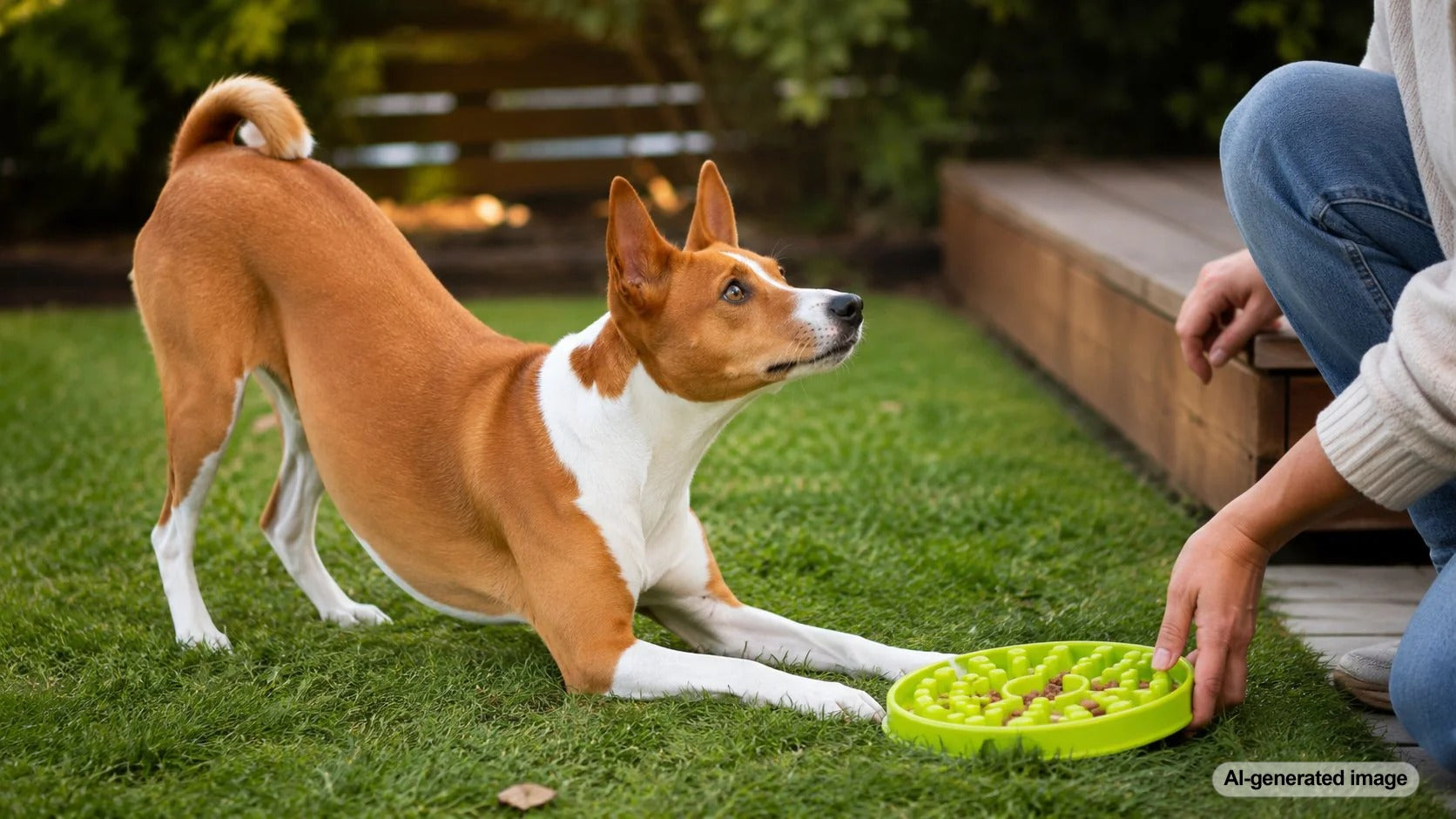
If your dog finishes dinner before you finish saying sit, you are not alone. Many dogs gulp meals quickly, then look confused, bored, or still hungry even when the bowl is empty. How to Make a Dog's Meal Last Longer Without Frustration starts with one simple idea: slow the meal down in a way your dog can actually understand and enjoy.
The goal is not to make dinner difficult just for the sake of it. A good slow-feeding routine should feel like a satisfying little puzzle, not a locked treasure chest. When the challenge matches your dog's size, age, confidence, and food style, mealtime can become calmer, more engaging, and easier to repeat every day.
Quick answer: To make a dog's meal last longer without frustration, spread the food out, add an easy enrichment tool, start with a low challenge level, and adjust based on your dog's body language. Try scatter feeding, a lick mat, a beginner slow feeder, a rolling puzzle toy, or short training games with part of the meal. If your dog paws wildly, walks away, whines, guards the food, or seems panicked, make the setup easier.
Why Some Dogs Eat So Fast
Fast eating can happen for many reasons. Some dogs are naturally enthusiastic about food. Others learned to eat quickly around littermates, other pets, or unpredictable routines. Puppies may rush because they are excited and still learning impulse control, while senior dogs may need softer textures, easier access, or a slower setup that does not strain their neck, teeth, or joints.
There is also a difference between a dog who loves food and a dog whose eating habits suddenly change. If your dog becomes intensely hungry, loses weight, vomits often, has diarrhea, drools excessively, coughs while eating, or seems painful around the mouth, check with your veterinarian. Slow feeding can support a routine, but it should not be used to cover up a medical concern.
Start With Easier, Not Harder
The most common mistake is jumping straight to the hardest puzzle. A dog who has always eaten from a bowl may not understand why dinner suddenly takes work. That can create barking, biting at the feeder, flipping it over, or giving up completely.
Begin by making the food visible and easy to reach. Spread kibble across a wide tray, place small portions into a muffin tin, or scatter a few pieces on a clean mat. For wet food or softened kibble, smear it thinly so your dog can lick and succeed right away. Once your dog is relaxed and engaged, slowly increase the challenge.
Helpful tip: A good first goal is not a 30-minute meal. It is a calm meal that lasts a little longer than usual without your dog getting annoyed. Add time gradually.
Choose the Right Slow-Feeding Style
Different dogs need different tools. A small dog with a short snout may need shallow grooves. A large dog who inhales kibble may do better with a wider surface that spreads the meal out. A power chewer should be supervised closely and given durable options that are appropriate for chewing style.
| Mealtime method | Best for | Watch for |
|---|---|---|
| Scatter feeding | Dogs new to enrichment, kibble meals, easy sniffing practice | Use a clean area and avoid multi-dog competition |
| Lick mat or spreadable feeder | Wet food, softened kibble, calming lick routines | Keep layers thin at first so it is not too hard |
| Rolling puzzle feeder | Dogs who enjoy movement, sniffing, and working for kibble | Start with the easiest opening and supervise play |
| Training meal | Puppies, eager learners, dogs practicing manners | Keep sessions short and fun, not repetitive |
Use Licking to Slow the Pace
Licking is one of the easiest ways to stretch a meal because it naturally takes longer than gulping from a bowl. You can use plain wet food, soaked kibble, dog-safe purees, or a small amount of your dog's regular meal spread across a textured surface. For dogs who get excited at dinner, licking may also encourage a steadier rhythm.
Woof's FlipMat can be a useful tool here because it works as both a lick mat and slow feeder with two challenge levels. Use the simpler side first, especially for puppies, seniors, small dogs, or dogs who get frustrated easily. As your dog gets the hang of it, you can make the meal last longer by using the more challenging side or by freezing a thin layer for an added time boost.
Turn Kibble Into a Low-Stress Brain Game
For kibble-fed dogs, the easiest upgrade is to stop serving the full meal in one pile. Divide the portion into mini moments. Put some in a slow feeder, reserve a handful for training, and use the rest in a simple puzzle. This works especially well for dogs who finish fast and then immediately look for something else to do.
A rolling feeder can help active dogs because it adds gentle movement and problem solving. The Walkabout is designed as a rolling slow-feeder puzzle ball, so dogs can nudge and chase their meal instead of inhaling it from a bowl. Start with an easy setting and a familiar kibble size so your dog learns the game before you make it more challenging.
Make It Longer Without Making It Annoying
The sweet spot is a meal that feels doable. If your dog is licking steadily, sniffing, nudging, pausing, and returning to the task, the setup is probably working. If your dog is biting hard at the feeder, barking at it, abandoning the food, or trying to destroy the tool, the challenge may be too high.
Try this simple progression:
- Day 1: Spread the meal on a flat tray or easy mat.
- Day 2: Add one shallow texture or a few muffin tin cups.
- Day 3: Use half the meal in a beginner slow feeder and half as training rewards.
- Day 4: Add a puzzle feeder only if your dog stayed calm the previous days.
- Day 5: Freeze a thin lickable layer for a longer session, if your dog enjoys it.
Common Mistakes That Create Frustration
One mistake is making every meal a major project. Dogs thrive on patterns, so a simple routine you can repeat is better than an elaborate setup you only manage once. Another mistake is using a challenge that is too small, too deep, or too physically awkward for your dog. Short-nosed dogs, tiny dogs, seniors, and dogs with dental sensitivity may need softer food and easier access.
Multi-dog homes need extra care. Slow-feeding one dog while another dog hovers nearby can create pressure and speed eating. Feed dogs separately if there is competition, guarding, or rushing. Mealtime should feel safe, not like a race.
Dog Parent FAQs
How long should my dog's meal last?
There is no perfect number. A helpful goal is to extend the meal gradually while your dog stays relaxed, engaged, and successful.
Can I use my dog's regular food for enrichment?
Yes. Using part or all of your dog's normal meal is often the easiest way to add enrichment without adding too many extra treats.
Is it okay to freeze a slow-feeding meal?
Many dogs enjoy frozen lickable meals, but start with a thin layer. Very hard frozen food can frustrate some dogs or be uncomfortable for dogs with dental sensitivity.
What if my dog gets angry at puzzle feeders?
Make the puzzle easier, use fewer obstacles, or go back to scatter feeding. If frustration, guarding, or anxiety continues, ask a qualified trainer or behavior professional for help.
A Calmer Bowl Starts With a Better Plan
Making your dog's meal last longer is not about slowing them down at any cost. It is about creating a routine that supports calmer eating, gentle problem solving, and a little more satisfaction from the food they already love. Start easy, watch your dog's signals, and build from there. A few extra minutes at mealtime can turn a rushed bowl into one of the most useful enrichment moments of the day.


