






































































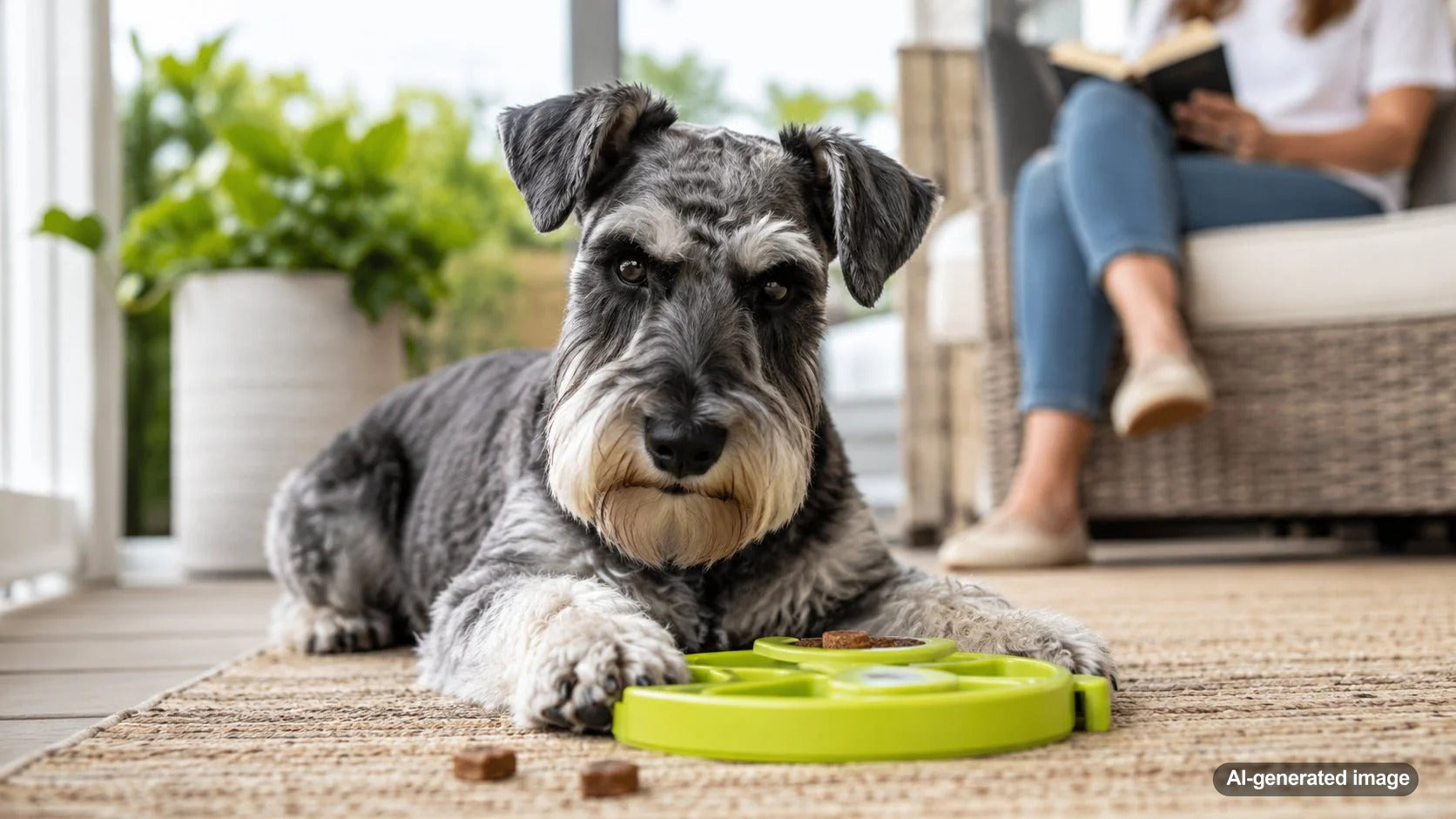
A quiet afternoon can feel very different to a dog than it does to a person. While you are working, running errands, or handling school pickup, your dog may be watching the same window, listening for your keys, and searching for something interesting to do. The best way to make a dog's afternoon less lonely is to create a predictable rhythm that combines movement, scent, food-based enrichment, comfortable rest, and appropriate social contact.
You do not need to entertain your dog every minute. In fact, many adult dogs should spend a good part of the afternoon sleeping. The goal is to help your dog settle comfortably instead of drifting into restless barking, destructive chewing, pacing, or repeated trips to the front door.
Start With a Better Morning
A lonely afternoon often begins with a rushed morning. A quick bathroom trip may meet your dog's immediate physical need, but it may not provide enough movement, sniffing, or mental engagement to help them relax later.
Try adding a decompression walk before the household becomes busy. This does not have to be a fast or exhausting workout. Give your dog time to sniff grass, investigate safe areas, and move at a comfortable pace. Sniffing provides mental activity, while a predictable walk can help separate the active part of the morning from the resting part of the afternoon.
Match the activity to the dog. A young sporting dog may need more vigorous movement than a senior with stiff joints. Puppies usually need shorter activity sessions and more frequent bathroom breaks. Flat-faced breeds, older dogs, and dogs with medical limitations may need gentler exercise, especially in warm weather. Ask your veterinarian what level of activity is appropriate if you are unsure.
Give the Afternoon a Predictable Shape
Dogs often settle more easily when daily events happen in a familiar order. A simple routine might include a morning walk, breakfast, a bathroom break, a short enrichment session, and then quiet time. The exact clock time matters less than the sequence.
A routine can also prevent the common mistake of creating nonstop excitement before leaving. Dramatic goodbyes, frantic play, and a sudden exit may make the transition feel bigger. Instead, finish active play several minutes before departure, lower the energy in the room, and offer a calm activity as you leave.
- Fresh water in an accessible location
- A temperature-controlled, dog-safe resting area
- Window access only if outdoor activity does not trigger barking
- One appropriate enrichment toy or chew
- Background sound if household noises cause alert barking
- A planned bathroom break when needed
Use Food Enrichment Instead of a Plain Snack
A portion of your dog's regular food can become an activity rather than disappearing from a bowl in seconds. Food puzzles, slow feeders, treat-dispensing toys, and licking activities encourage dogs to work through a manageable challenge.
For a calm transition into afternoon rest, The Pupsicle can hold a longer-lasting treat that encourages focused licking. Prepare it before the day gets busy and offer it in a familiar, washable area. Count any food used toward your dog's daily intake, especially if your dog is small, gains weight easily, or receives several treats during training.
Difficulty matters. An enrichment toy should be challenging enough to hold attention but not so frustrating that your dog barks at it, throws it around angrily, or abandons it. Beginners may need loosely packed food that comes out easily. Experienced puzzle solvers may enjoy a frozen option or a more complex setup.
Rotate Activities to Keep Them Interesting
Leaving a mountain of toys on the floor can make every toy feel ordinary. Keep a small rotation and bring out one or two activities at a time. A dog that receives a food puzzle on Monday might get a supervised chew on Tuesday and a scent-search game on Wednesday.
You can also hide a few pieces of kibble around one dog-safe room before leaving. Start with easy locations where your dog can see or smell the food. Avoid hiding treats near electrical cords, trash cans, houseplants, or furniture you do not want investigated.
Dogs that prefer chewing may benefit from a durable, size-appropriate option such as HonestChew. Inspect any chew regularly, remove it if it becomes damaged or small enough to swallow, and supervise initial sessions so you can observe how your dog uses it. No chew is appropriate for every dog.
Consider a Midday Connection
Some dogs are comfortable through a typical afternoon, while others need a visitor. Puppies, seniors, dogs taking certain medications, and dogs with limited bladder control may need more frequent bathroom breaks. A trusted dog walker, neighbor, family member, or pet sitter can provide a brief walk and reassuring social contact.
Keep the visit calm and useful. A short sniff walk, water check, bathroom opportunity, and a few minutes of gentle interaction may be more helpful than intense play followed by an abrupt departure. For highly social dogs, even a dependable 20-minute visit can divide a long stretch of solitude into manageable pieces.
Learn the Difference Between Boredom and Distress
A bored dog may steal a shoe, investigate the trash, or bark at passing delivery vehicles. Separation-related distress can look more urgent. Warning signs may include persistent howling, heavy drooling, frantic pacing, repeated indoor accidents, attempts to escape, damaged doors or windows, vomiting, or an inability to eat after you leave.
A home camera can help you see what happens after departure. Many dogs finish their activity and fall asleep within a short time. Others begin pacing immediately or become distressed only after a particular noise. That information can help you adjust the environment and explain the pattern clearly to a veterinarian or trainer.
Make Your Return Calm and Meaningful
Your dog has probably been waiting for you, but the reunion does not need to become an explosion of jumping and shouting. Enter calmly, put away your belongings, and take your dog outside promptly. Once immediate bathroom needs are handled, offer attention, a walk, training practice, or play.
This teaches your dog that reunions are dependable without making every departure and return feel emotionally enormous. It also gives the afternoon a satisfying ending: quiet time is followed by connection, movement, and family life.
Dog Parent FAQs
Should I leave the television on for my dog?
Soft television, radio, or white noise may help mask hallway sounds and outdoor activity. Keep the volume low, and use a camera to see whether the sound helps your dog rest.
How long can a dog stay home alone?
There is no single limit for every dog. Age, health, bladder control, previous training, and emotional comfort all matter. Puppies and dogs with medical needs generally require more frequent breaks.
Is getting a second dog the best cure for loneliness?
Not necessarily. A second dog adds companionship only when the dogs are compatible, and it will not reliably resolve separation anxiety. Consider another dog only when your household genuinely wants and can care for one.
Can I leave an enrichment toy with my dog unsupervised?
Only after confirming that the toy is appropriately sized and your dog uses it safely. Observe several supervised sessions first, inspect it for damage, and follow the product's safety guidance.
A Happier Afternoon Starts With Small Habits
Making a dog's afternoon less lonely is not about filling every quiet moment. It is about meeting important needs before rest, offering a safe and satisfying activity, and making the day predictable. Begin with one change, such as a longer sniff walk or a prepared food toy, and observe how your dog responds. A thoughtful routine can turn an empty afternoon into a comfortable stretch of enrichment, rest, and anticipation for your return.


