






































































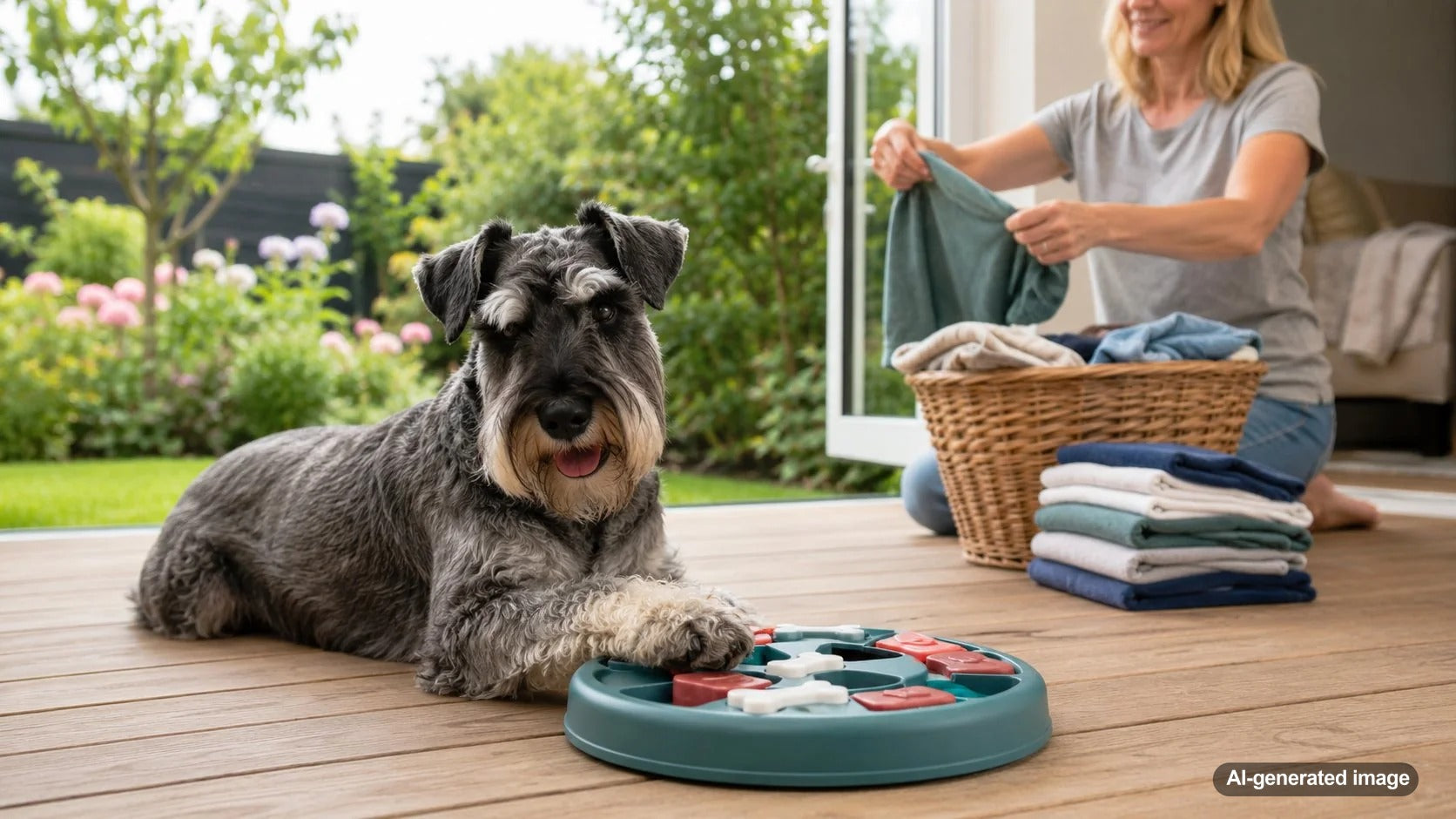
Folding laundry can feel like an invitation for your dog to steal socks, burrow into warm towels, or demand attention one paw at a time. To keep a dog busy while you fold laundry, offer a safe activity that matches the length of the chore, set it up before the basket hits the floor, and keep your dog within sight. Licking, sniffing, puzzle feeding, and appropriate chewing can turn laundry time into a predictable enrichment routine instead of a weekly game of chase-the-underwear.
The best choice depends on your dog. A puppy may need a simple activity that delivers quick rewards, while an experienced puzzle solver may enjoy something that requires more effort. A senior dog might prefer comfortable, stationary licking over a toy that rolls across a slippery floor.
Set Up the Activity Before the Laundry Appears
Dogs are excellent at noticing patterns. If the laundry basket usually leads to sock stealing or attention-seeking, your dog may begin getting excited the moment you carry it into the room. Change the sequence by preparing their activity first.
Choose a designated spot such as a washable mat, dog bed, open crate, or clear section of floor a few feet from you. Place the enrichment item there, then bring in the laundry. Repeating this order can help your dog learn that laundry time predicts an activity in their own space.
Avoid setting your dog up directly beside the basket. Even a great puzzle may lose its appeal when a pile of warm clothes is within grabbing distance.
Choose an Activity That Fits the Chore
A five-minute load of towels does not require the same setup as folding a week's worth of clothes. Match the activity to how long you expect to be occupied.
Scatter a small portion of kibble across a snuffle mat or give your dog an easy puzzle they already understand.
Use a textured licking surface, a stuffed food toy, or a treat-dispensing puzzle with an appropriate difficulty level.
Offer a longer-lasting enrichment toy or safe chew, provided you can supervise and your dog has used it successfully before.
The Pupsicle can be a useful option for this routine because it provides a contained, long-lasting licking activity while your dog remains nearby. For dogs who prefer a stationary surface, the dual-sided FlipMat can support licking or slow feeding with different levels of challenge.
Use Part of Your Dog's Meal
Enrichment does not always need to add extra treats. Reserve a portion of your dog's regular kibble or wet food and use it in the laundry-time activity. This can make the routine easier to repeat without unintentionally adding too many calories.
Start with an easy win. Loosely fill a puzzle instead of packing it tightly, spread food across a larger licking area, or leave a few pieces partly visible. If the challenge is too difficult, some dogs bark, paw at you, chew the toy aggressively, or abandon it and return to the laundry basket.
Once your dog understands the activity, you can gradually increase the challenge. Freezing an appropriate filling may extend licking time, but introduce frozen activities slowly, especially for puppies, seniors, or dogs with sensitive teeth.
Turn Laundry Time Into a Settle Practice
The goal is not only to distract your dog. Laundry time can also become an opportunity to practice calm behavior around normal household activity.
Guide your dog to their designated spot, give them the enrichment item, and quietly begin folding. If they remain in place, occasionally offer calm praise. When the activity is finished, release them from the spot rather than expecting them to stay indefinitely.
If your dog carries the toy away, block access to unsafe rooms and keep laundry out of reach. If they repeatedly leave the activity to steal clothing, make the task easier, shorten the session, or use a baby gate or exercise pen to create clearer boundaries.
Skip Loose-Sock Games
Hiding treats inside old socks may look like an easy scent game, but it can blur the difference between dog toys and everyday laundry. A dog who is rewarded for digging into one sock cannot be expected to understand why another sock is off-limits.
Loose dryer sheets, detergent pods, fabric-softener products, buttons, strings, and small clothing items should also stay out of reach. These are not enrichment materials. Use dog-specific toys made from durable, size-appropriate materials, and remove any item that begins breaking into swallowable pieces.
Adjust the Routine for Your Dog
Puppies often need easier puzzles, shorter sessions, and closer supervision because they are more likely to chew the activity itself. Power chewers need durable options that cannot be torn apart quickly. Small dogs need appropriately sized toys, while large dogs need items too big to swallow.
Senior dogs may appreciate a nonslip mat and an activity they can use without chasing it around the room. Dogs with mobility limitations, dental discomfort, dietary restrictions, or food sensitivities may need modifications recommended by a veterinarian.
In multi-dog homes, give food-filled toys in separate spaces if either dog becomes tense, hovers over the other, gulps food, or guards valuable items. Contact a qualified trainer or veterinary behavior professional if your dog growls, snaps, freezes, or displays other guarding behavior.
Dog Parent FAQs
Why does my dog steal socks while I fold laundry?
Socks carry strong human scents, are easy to grab, and often trigger an exciting chase. Prevent access and reward your dog for engaging with an appropriate activity instead.
Can I leave my dog alone with a food puzzle?
Supervise new toys and activities at first. Only consider stepping away after you know your dog uses the item safely and does not break off or swallow pieces.
What if my dog finishes the activity too quickly?
Increase difficulty gradually, use part of a meal, try a frozen dog-safe filling, or offer a more challenging puzzle. Do not make it so difficult that your dog becomes frustrated.
Should I use treats every time I fold laundry?
You can use part of your dog's normal meal, rotate nonfood chews and toys, or reward calm settling with occasional small treats rather than adding a large snack every time.
Make the Routine Easy to Repeat
Keep one or two enrichment tools near the laundry area and prepare fillings in advance when practical. A routine that takes 30 seconds to set up is far more likely to become a habit than one requiring a complicated recipe every time.
With a designated settling spot, the right level of challenge, and sensible supervision, your dog can enjoy laundry day without redecorating the house with socks. The basket gets folded, your dog gets a satisfying job, and both of you finish the chore a little calmer.


