






































































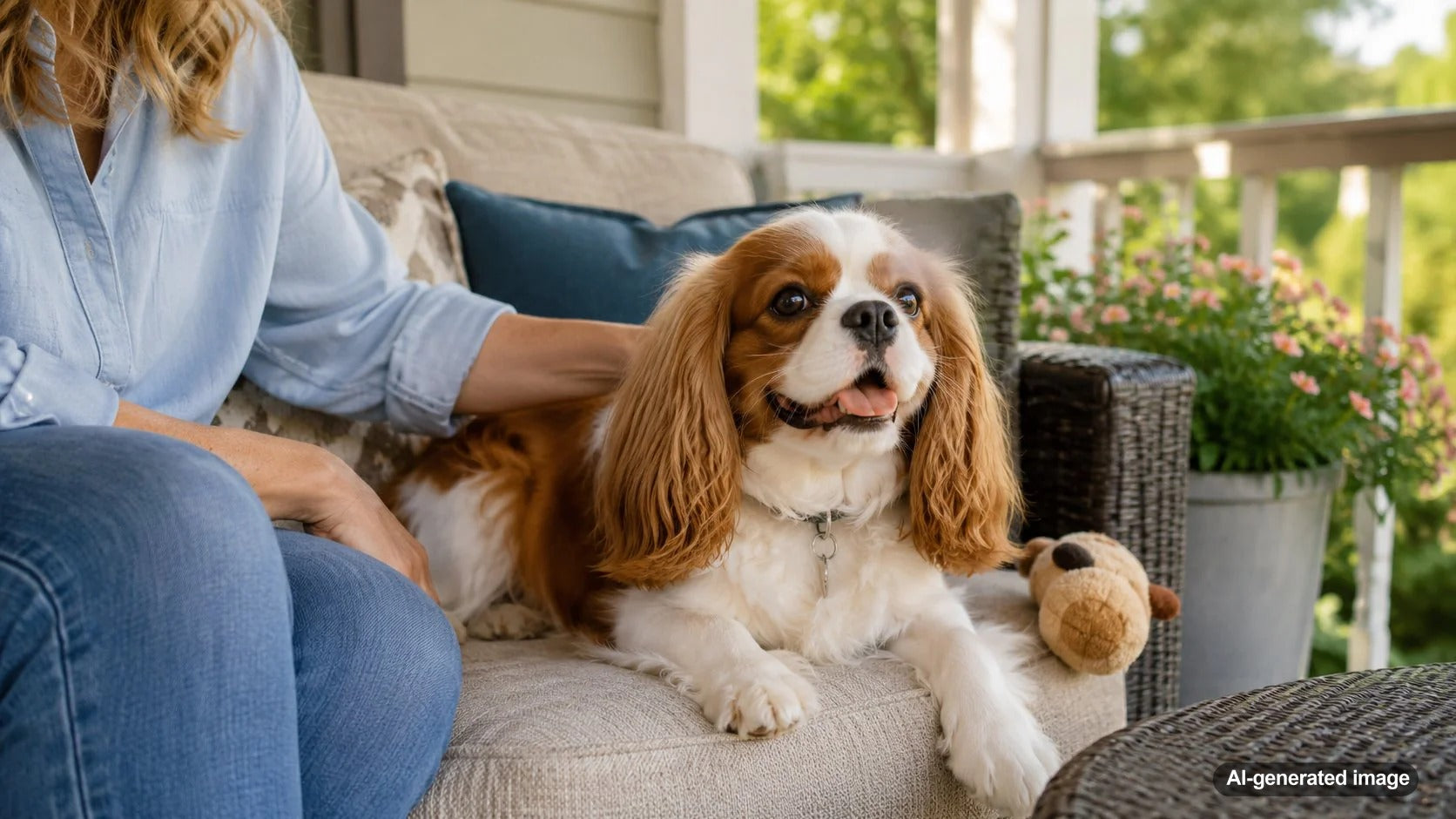
Cavalier King Charles Spaniels tend to love deeply, follow closely, and notice every change in their household. Keeping one emotionally satisfied involves more than offering a comfortable lap, although they certainly appreciate that too. These sensitive companion dogs usually thrive when affection, gentle activity, mental enrichment, predictable routines, and healthy independence are all part of everyday life.
A Cavalier may look perfectly content curled beside you, but emotional satisfaction also includes opportunities to sniff, learn, explore, make choices, and settle without constant entertainment. The goal is not to keep your dog busy every minute. It is to create a balanced day in which your Cavalier feels connected, secure, and pleasantly tired.
Understand Your Cavalier's Strong Need for Companionship
Cavaliers were developed as companion dogs, and many want to stay near their people throughout the day. They may trail you from the kitchen to the office, climb into the nearest available lap, or become alert when you pick up your keys. That closeness is a normal breed tendency, not automatically a behavior problem.
Quality connection matters more than constant physical contact. Give your Cavalier several periods of focused attention each day, such as a relaxed grooming session, a training game, a neighborhood walk, or quiet time together without phones and distractions. This can be more satisfying than absentminded petting for hours while your dog remains under-stimulated.
Make Walks About Sniffing, Not Just Distance
Cavaliers are small, but they are still spaniels with curiosity and an interest in scent. A hurried walk around the block may provide bathroom time without offering much mental satisfaction. Allow your dog to investigate grass, trees, safe pathways, and new neighborhood smells at an unhurried pace.
Many healthy adult Cavaliers enjoy a couple of moderate walks or play sessions each day, but exercise needs vary. Puppies need shorter, age-appropriate outings, while seniors may prefer several brief walks instead of one long trip. Because the breed can develop heart, joint, neurological, or mobility concerns, ask your veterinarian about an appropriate activity level and slow down if you notice coughing, weakness, reluctance to move, unusual fatigue, limping, or breathing changes.
Use Short Training Games to Build Confidence
A five-minute training session can provide meaningful mental work without overwhelming a sensitive dog. Practice useful behaviors such as coming when called, touching your palm with the nose, settling on a mat, waiting at a doorway, or finding a hidden treat.
Keep the tone upbeat and reward small successes. Harsh corrections can be especially discouraging for soft-tempered dogs. Bite-sized rewards such as Love Nuggets can make it easy to reinforce calm check-ins, polite greetings, and other behaviors you want to see more often.
Rotate Enrichment Instead of Offering Everything at Once
Emotional enrichment works best when activities remain interesting. Rather than leaving every toy on the floor all day, rotate a few options and bring them out with purpose. One day might include a food puzzle, another a gentle game of fetch, and another a supervised search for treats hidden around one room.
Licking can also become part of a calming transition before a video call, grooming session, visitor arrival, or quiet evening. The FlipMat Mini is sized for small dogs and can provide a portable licking or slow-feeding activity. Use an appropriate portion of your dog's usual food or a dog-safe spread, supervise the activity, and count enrichment calories as part of the daily diet.
Create a Repeatable Daily Rhythm
Predictability can help a people-focused dog understand when it is time to interact and when it is time to rest. Your schedule does not need to run by the minute, but familiar patterns can reduce uncertainty.
Bathroom break, sniffing walk, breakfast enrichment, and a short training game.
Brief connection, gentle play, a food puzzle, or a quiet chew followed by rest.
Walk or play, family time, light grooming, and a consistent settling routine.
Include real downtime. An emotionally satisfied dog does not need nonstop stimulation. Cavaliers should have a comfortable, low-traffic place where they can sleep without being repeatedly touched, moved, or invited to play.
Teach Comfortable Independence Gradually
Being affectionate and being unable to cope alone are not the same thing. Healthy independence should be practiced in tiny, manageable steps before your dog becomes distressed. Encourage your Cavalier to relax on a bed while you move around the room, step behind a door briefly, and return before anxiety escalates.
A camera can help you see what actually happens after you leave. Mild boredom may look like brief wandering followed by sleep. Separation-related distress may involve prolonged barking, pacing, panting, scratching at exits, refusing food, destructive escape attempts, or an inability to settle.
Do not use a long absence as a test or allow a panicking dog to simply cry it out. If distress is intense, worsening, or sudden, contact your veterinarian and a qualified reward-based trainer or veterinary behavior professional. A sudden increase in clinginess can also accompany pain or illness and deserves veterinary attention.
Give Your Cavalier Appropriate Social Variety
Many Cavaliers enjoy friendly people and compatible dogs, but social satisfaction should not mean forced interaction. A quiet visit with a familiar person may be more enjoyable than a crowded dog park. Watch for signs that your dog needs space, including turning away, lip licking, hiding behind you, repeatedly shaking off, yawning when not tired, or refusing treats.
Let your dog choose whether to approach. Positive social experiences build confidence, while overwhelming encounters can make a sensitive Cavalier more hesitant over time.
Adjust the Routine as Your Dog Ages
Puppies often need frequent short activities, gentle exposure to new environments, and plenty of sleep. Adults may enjoy a fuller mix of walking, play, training, and enrichment. Senior Cavaliers may still want to participate but need softer surfaces, shorter sessions, easier puzzles, and more recovery time.
Any major change in personality, sleep, appetite, movement, tolerance for touch, or willingness to participate should be discussed with your veterinarian. What appears to be sadness, stubbornness, or anxiety may sometimes be discomfort or another health issue.
Dog Parent FAQs
Can a Cavalier King Charles Spaniel be left alone?
Many Cavaliers can learn to spend reasonable periods alone, but the skill should be developed gradually. Arrange extra support if your dog becomes distressed or must regularly be alone longer than they can comfortably manage.
How can I tell if my Cavalier is bored?
Possible signs include persistent attention-seeking, restless wandering, stealing household objects, excessive barking, repeated licking, or difficulty settling. These behaviors can have other causes, so contact your veterinarian when they appear suddenly or seem extreme.
What indoor activities are good for Cavaliers?
Try treat searches, short training sessions, food puzzles, gentle tug, hide-and-seek, licking activities, or supervised chewing. Choose challenges your dog can solve without becoming frustrated.
Does my Cavalier need another dog for company?
Not necessarily. Some Cavaliers enjoy canine companionship, while others are happiest with people or carefully chosen dog friends. A second dog does not automatically resolve separation distress and should only be added when it suits the entire household.
A Satisfied Cavalier Needs Both Closeness and Confidence
The most emotionally fulfilling routine combines the companionship Cavaliers adore with opportunities to use their bodies, noses, and brains. Offer warm connection, purposeful enrichment, gentle movement, sufficient sleep, and small lessons in independence. When those needs are met consistently, your Cavalier can enjoy being your devoted shadow without depending on constant attention to feel secure.


