






































































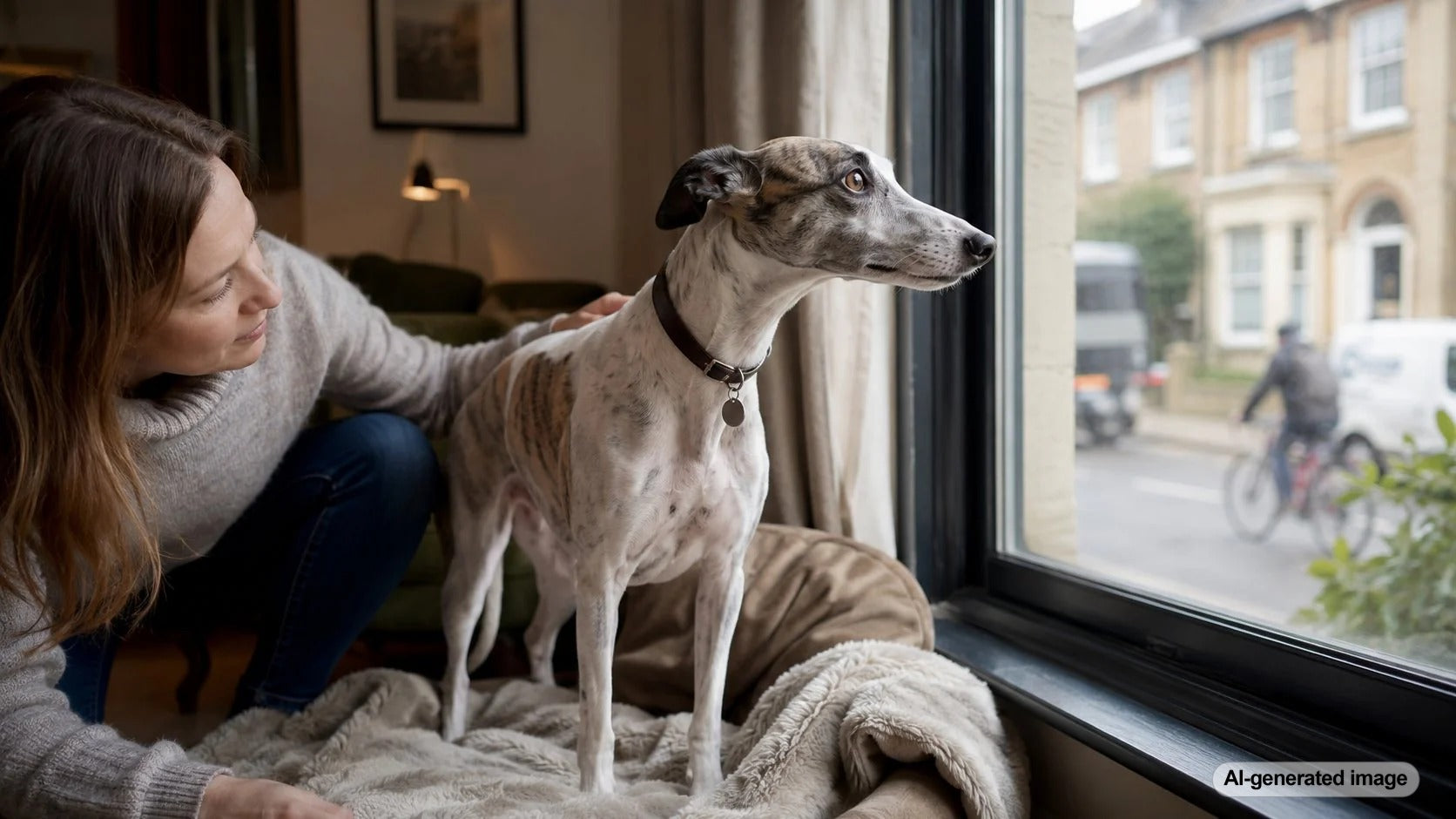
A garbage truck hisses at the curb, a motorcycle cracks through the intersection, and your Whippet suddenly freezes like a statue. Their ears may pin back, their body may crouch, and the walk that started normally can turn into a determined pull toward home. You can help a Whippet feel braver in a noisy neighborhood by reducing the intensity of scary sounds, pairing manageable noise with something positive, and building confidence in small, repeatable steps.
Whippets are gentle, affectionate sighthounds that often notice movement and environmental changes quickly. A dog who seems calm on the couch may feel very different outside, where buses, construction, rolling trash cans, shouting, skateboards, and surprise bangs can arrive from every direction. The goal is not to force your dog to tolerate everything. It is to help them learn that they have choices, support, and a reliable path back to safety.
Learn What Fear Looks Like Before It Becomes Panic
A frightened Whippet does not always bark or lunge. Many become still, lower their body, tuck their tail, scan rapidly, refuse food, pant when it is not hot, or pull home. Some shake after the sound has ended. Others look unusually slow because they are processing the environment rather than enjoying the walk.
Watch for the earliest change, such as a closed mouth, sudden head turn, weight shifting backward, or hesitation near a certain block. Those subtle signs tell you when to create distance. Waiting until your dog is scrambling at the end of the leash makes learning much harder.
Find Your Whippet's Working Distance
Confidence training works best below your dog's fear threshold. That means the sound is noticeable, but not so intense that your Whippet cannot think. For one dog, a bus may be manageable from across a wide street. Another may need to hear it from half a block away.
Use a simple test: Can your dog take a small treat, sniff the ground, and turn toward you? If yes, you may be at a workable distance. If your dog freezes, refuses a favorite reward, or urgently tries to leave, increase the distance immediately. Crossing the street, stepping behind a parked car, turning down a side street, or going home is not failure. It is good handling.
Pair Noises With Predictable Rewards
When a manageable sound appears, mark the moment with a calm phrase such as "good" and offer a high-value treat. The sequence matters: sound first, reward second. Over time, your Whippet may begin to hear the sound and look toward you because it predicts something pleasant.
Keep sessions short. Five successful minutes near light traffic can be more useful than a 30-minute walk filled with repeated scares. Use tiny, easy-to-swallow rewards so your dog can eat without stopping for long. Love Nuggets can be broken into small training rewards for these brief confidence-building moments.
Choose Easier Walks Before Harder Walks
Map out a confidence route rather than automatically taking the longest loop. Begin with predictable sidewalks, wider streets, escape options, and lower-traffic hours. Avoid placing your Whippet between a loud road and a wall or fence, where the dog may feel trapped.
Build difficulty one feature at a time. You might first walk near distant traffic, then practice with one passing delivery truck, and later try a slightly busier block. Do not add crowding, unfamiliar dogs, construction, and heavy traffic all in the same session. Fear can stack, meaning several manageable events can combine into one overwhelming experience.
Give Your Dog a Calming Routine After the Walk
Recovery matters. A dog may look normal once inside but still need time to settle. Offer water, dim the activity level, and provide a comfortable resting place. Sniffing for scattered treats or working on a calm licking activity may help your Whippet shift from alert mode into a quieter routine.
For dogs who enjoy licking, a portable FlipMat Mini can be used at home after a challenging outing or in a quiet travel setting. Introduce it during calm moments first, so it becomes familiar rather than appearing only when your dog is already distressed.
Avoid Common Confidence-Building Mistakes
Do not drag your Whippet toward a noise, hold them close to "make them face it," or punish fearful behavior. Flooding a dog with an intense trigger can increase fear rather than resolve it.
Do not lure your dog so close to a scary sound that they suddenly realize they are trapped. Use food to create positive associations, not to trick them into an unsafe distance.
Do not measure progress only by how far you walked. A short outing with loose body language and voluntary check-ins is a meaningful win.
Use Secure Walking Gear
Whippets have narrow heads and can back out of poorly fitted collars. Use secure, properly fitted walking equipment appropriate for your individual dog, and check the fit regularly. Many owners use a well-fitted martingale-style collar or secure harness, sometimes with a backup connection for dogs with a history of escape attempts. Keep the leash attached in unfenced areas because a startled sighthound can accelerate quickly.
Know When to Ask for Professional Help
Contact your veterinarian if noise fear appears suddenly, becomes severe, follows an injury or illness, or comes with pain, disorientation, appetite changes, or other major behavior changes. A veterinarian can help rule out medical contributors and discuss appropriate support.
Professional help is also important if your Whippet panics regularly, cannot recover after walks, refuses to go outside, tries to bolt, or reacts aggressively when frightened. Look for a qualified trainer who uses reward-based methods and has experience with fear and noise sensitivity. Severe cases may benefit from a veterinary behavior plan.
Dog Parent FAQs
Should I comfort my Whippet when they are scared?
Yes. Calm reassurance, distance, and predictable support will not reward fear. Avoid frantic handling, but let your dog know you are available and help them leave the situation.
Should I play traffic sounds at home?
Low-volume recordings may support gradual sound practice, but real neighborhood noise includes vibration, movement, and surprise. Start very quietly, pair the sound with rewards, and stop if your dog shows stress.
How quickly should my Whippet improve?
Progress varies. Some dogs relax within weeks, while others need months of careful practice. Track calmer body language and faster recovery, not just closeness to the noise.
Is skipping a walk okay after a frightening day?
Yes. A quiet potty break, indoor scent game, gentle play, or enrichment session can provide a lower-stress day while your dog recovers.
Bravery Grows Through Small Wins
Your Whippet does not need to become fearless to enjoy neighborhood walks. They need enough safety and predictability to make good choices around everyday sounds. Keep sessions manageable, reward calm observation, protect your dog's distance, and celebrate the moment they hear a noise and choose to check in with you. Those small decisions are how real confidence grows.


