






































































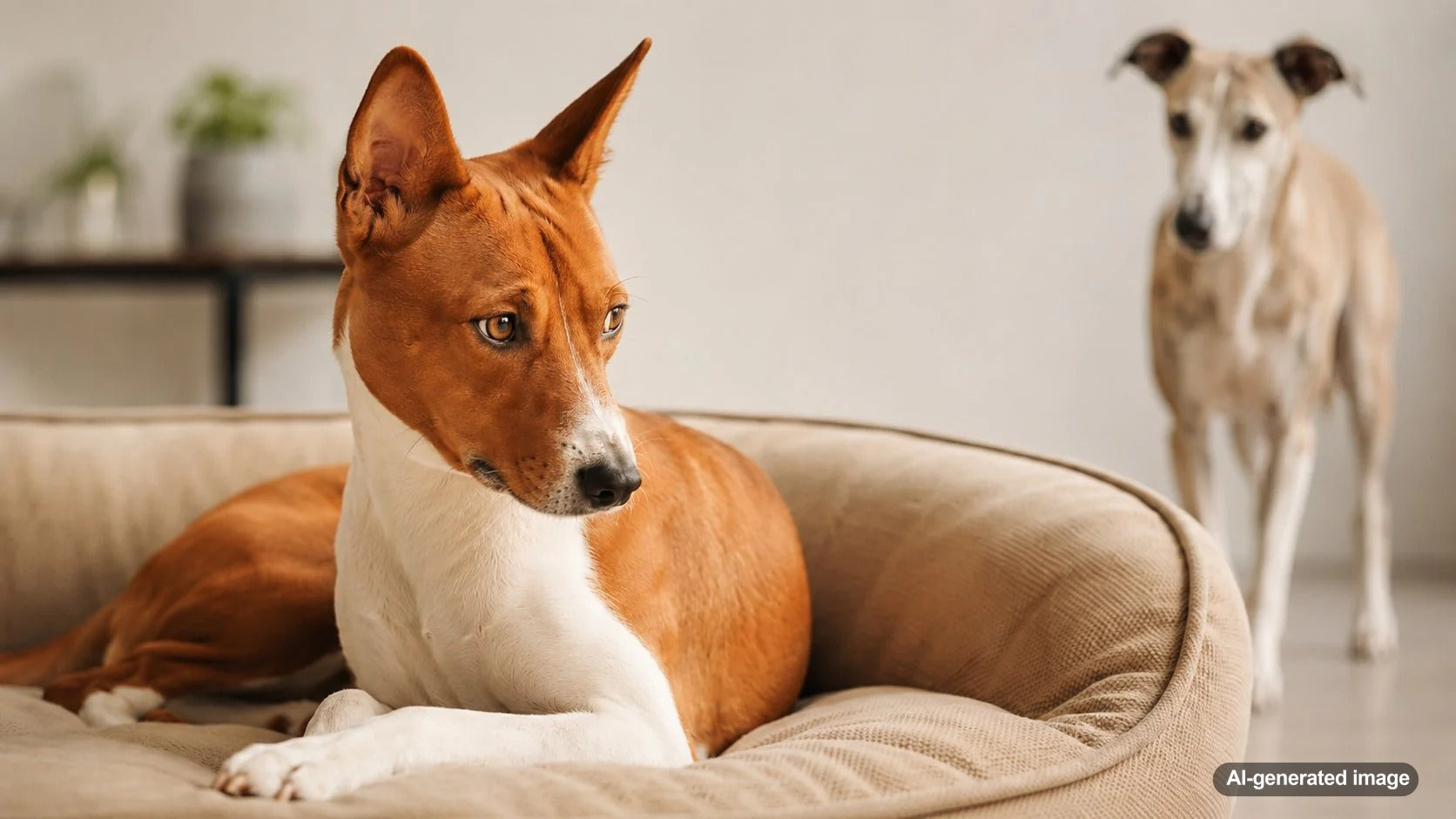
When one dog refuses to share space with another dog, everyday life can start to feel like a traffic-control job. You may find yourself blocking doorways, moving beds, picking up toys, or holding your breath every time one pup walks near the couch. The first step is not forcing friendship. It is creating enough safety, distance, and predictability that both dogs can relax and learn that sharing a home does not mean competing for every inch of it.
This behavior can look like freezing, hard staring, body-blocking, growling, chasing, guarding a doorway, or claiming a favorite bed, couch, person, food bowl, or sunny spot. Those signals do not mean your dog is bad. They mean your setup may need more space, clearer routines, and slower introductions.
Quick answer
To help a dog that refuses to share space with another dog, separate first, remove high-value triggers, give each dog their own safe zones, reward calm behavior at a distance, and reintroduce shared areas gradually. Do not punish growling, crowd the dogs together, or expect them to work it out. If there has been biting, repeated fights, intense guarding, or a sudden behavior change, contact your veterinarian and a qualified reward-based trainer or veterinary behavior professional.
Why one dog may refuse to share space
Dogs do not always see rooms the way people do. A doorway can feel like a tight pressure point. A couch can feel like a valuable resting place. A kitchen can mean falling food. A favorite human can become something worth guarding. When another dog moves into that area, the worried dog may try to create distance by staring, stiffening, growling, barking, or snapping.
Space issues often overlap with resource guarding, fear, pain, overstimulation, or poor introductions. A bouncy puppy may overwhelm an older dog. A senior dog may feel vulnerable if their joints hurt or their hearing has changed. A small dog may feel trapped under a larger dog's body. Even dogs who usually get along can struggle when chews, toys, food, or attention are involved.
Start with management, not a lecture
Your first job is to prevent rehearsal. Every time one dog successfully chases, corners, or intimidates the other dog, that behavior can become easier to repeat. Use baby gates, closed doors, exercise pens, leashes, or separate rooms to create calm breaks before tension builds.
Feed dogs separately. Pick up bowls, chews, toys, puzzle toys, and unfinished treats when you cannot supervise. Give each dog their own bed or crate in a quiet area where the other dog cannot barge in. If one dog guards the couch, bed, hallway, kitchen, or your lap, temporarily limit access to that trigger while you build a better routine.
Safety note: Do not stick your hands between fighting dogs, punish a growl, or scold one dog for communicating discomfort. Growling is information. If you remove the warning without changing how the dog feels, the next reaction may be less predictable.
Read the body language before it gets loud
Many dog parents wait for barking or snapping before they intervene, but the earlier signs matter most. Watch for hard staring, freezing, closed mouth, stiff tail, raised posture, hovering over an object, turning sideways to block access, lip licking, whale eye, or one dog repeatedly leaving the room when the other enters.
Notice patterns, too. Does tension happen near food prep? At bedtime? After walks? Around guests? When one dog is tired? When a favorite toy is out? The more specific you can be, the easier it is to change the environment before either dog feels pushed.
Build a better shared-space routine
Once the dogs are safely managed, practice calm togetherness at a distance. Place the dogs on opposite sides of a baby gate, across a large room, or in separate beds with enough space that neither dog stiffens. Reward both dogs for relaxed behavior, such as looking away, sniffing, settling, or checking in with you.
Keep sessions short. Thirty calm seconds can be more useful than ten tense minutes. End before either dog gets worried. Over time, you can very gradually decrease distance, but only if both dogs remain loose, responsive, and able to disengage.
A simple practice setup:
- Start after both dogs have had a potty break and light exercise.
- Remove toys, chews, bowls, and other high-value items from the room.
- Use a barrier or leash so no dog can rush the other.
- Reward calm glances, relaxed posture, and choosing to settle.
- Stop while things still feel boring and successful.
Give each dog solo enrichment
A dog who is bored, overstimulated, or always competing for attention may have a harder time relaxing around another dog. Solo enrichment can take pressure off the relationship. Instead of giving one exciting item in a shared room, offer each dog their own activity in separate spaces.
For licking and settling time, Woof's FlipMat can be useful because it works as a slow feeder and lick mat for calming, brain-boosting enrichment. Use it separately for each dog, not as something they gather around together. For longer-lasting distraction during crate time, gate time, or decompression after a stressful moment, The Pupsicle can help keep one dog happily engaged while the other gets quiet space elsewhere.
Common mistakes that make space tension worse
One common mistake is letting dogs "sort it out." Some dogs can communicate gently and move on, but dogs who are already guarding space may escalate. Another mistake is forcing closeness with shared beds, side-by-side feeding, group treat time, or one small room where nobody has an exit.
It can also backfire to comfort one dog while the other is crowding. If the worried dog feels trapped near your body, your attention can become part of the resource. Instead, calmly create distance, redirect both dogs, and reward the behavior you want to see before the room gets intense.
When to get professional help
Ask for help if either dog has bitten, punctured skin, cornered the other dog, guarded multiple areas, or seems unable to relax even with distance. Also check with your veterinarian if the behavior is sudden, increasing, or paired with signs like limping, appetite changes, excessive drooling, sensitivity to touch, vomiting, diarrhea, or unusual tiredness. Pain and health changes can make a dog less tolerant of sharing space.
Dog Parent FAQs
Should I let my dogs work it out?
No. If one dog is refusing to share space, step in calmly and create distance. Repeated conflict can make the behavior stronger and less safe.
Is my dog being dominant?
Not necessarily. Space guarding can come from fear, insecurity, pain, excitement, resource guarding, or a lack of clear household structure. Focus less on labels and more on safety, distance, and calm reinforcement.
Can two dogs who fight over space ever live together peacefully?
Many dogs can improve with management, training, and professional support, but every situation is different. Some dogs need lifelong separation around food, chews, resting spots, or high-excitement moments.
What should I do if the behavior started suddenly?
Schedule a veterinary checkup, especially if the dog is older or showing any signs of discomfort. Sudden irritability around space can sometimes be connected to pain, illness, vision changes, or hearing changes.
The bottom line on helping dogs share space
Helping a dog that refuses to share space with another dog is about lowering pressure, not forcing closeness. Separate before things escalate, remove triggers that cause competition, reward calm behavior from a safe distance, and give both dogs predictable places to rest, eat, play, and decompress.


