






































































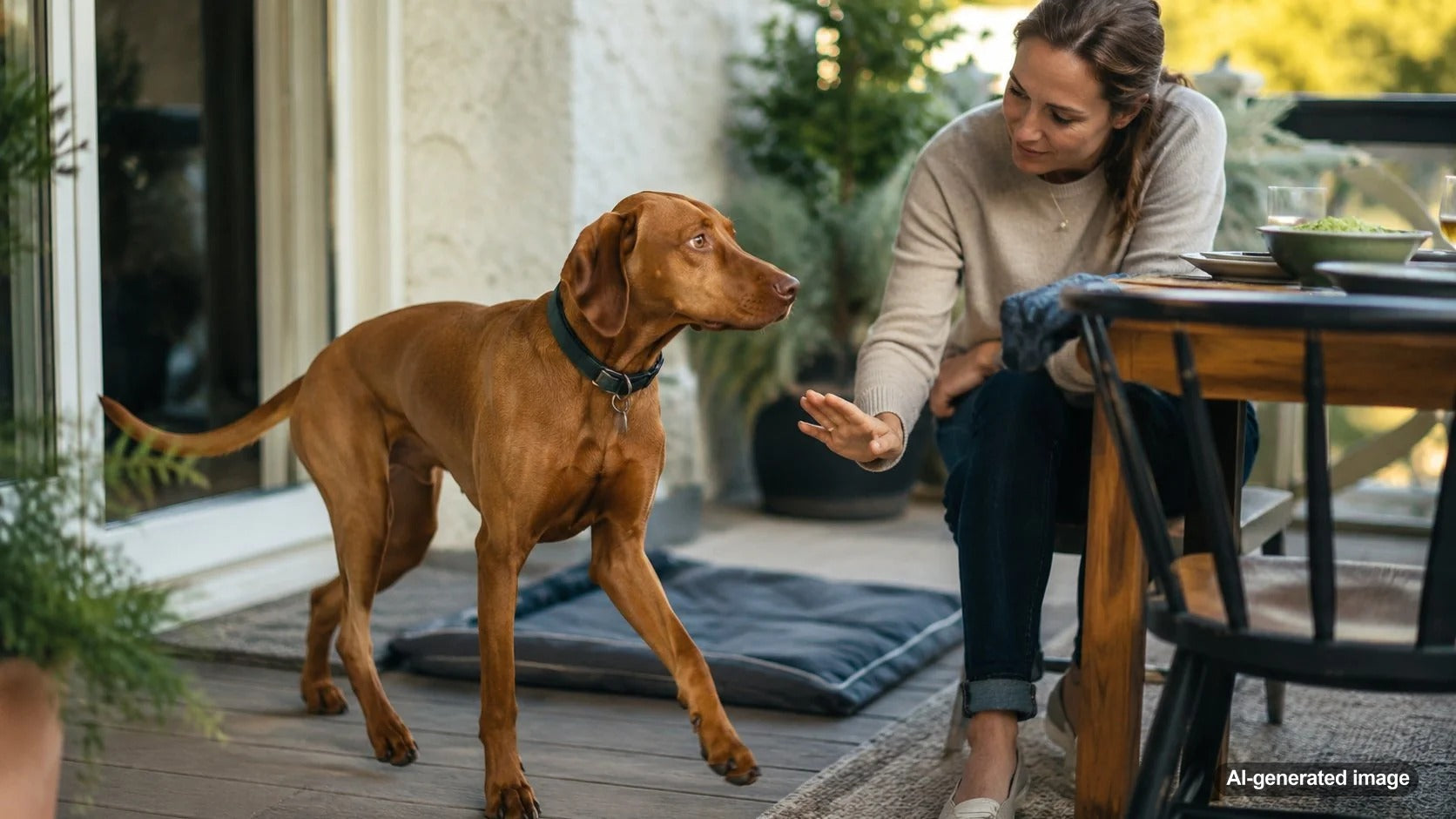
Family dinner should not feel like a nightly obstacle course, but a pacing dog can turn every meal into a loop of clicking nails, hopeful stares, nudged elbows, and repeated trips around the table. In many cases, the dog is not being stubborn or trying to take charge. Pacing during meals is often a learned response to food, attention, excitement, uncertainty, or a lack of clarity about what to do instead.
The most effective solution is to combine management with a simple alternative routine. Rather than repeatedly telling your dog what not to do, give them a predictable place to settle and an appropriate activity that is more rewarding than circling the table.
Why Dogs Pace While the Family Eats
Meal-related pacing can have several causes, and more than one may be happening at the same time.
Your dog may have learned that circling the table eventually produces a scrap. Even occasional success can keep the habit going. A single bite handed down by a child, a guest who cannot resist pleading eyes, or access to a dropped noodle can make pacing feel worthwhile.
Some dogs are responding to excitement rather than hunger. Chairs move, dishes clink, people talk, and food smells fill the room. Puppies and high-energy dogs may have trouble settling through all that stimulation. Dogs who are sensitive to household activity may pace because they are unsure where to position themselves.
Timing matters too. A dog who has been resting all afternoon may arrive at dinner with unused physical and mental energy. Senior dogs may pace for different reasons, including discomfort, sensory changes, or age-related confusion. A sudden new pacing habit deserves more attention than a behavior your dog has practiced for years.
Start Before Anyone Sits Down
A calmer dinner often begins 15 to 30 minutes before the meal. Give your dog a bathroom break and a chance to sniff outside. The goal is not to exhaust them with intense exercise right after eating, but to take the edge off and meet obvious needs before asking for quiet behavior.
Consider feeding your dog before or at the same time as the family. You can reserve part of their measured meal for an enrichment activity so you are not accidentally adding a large number of extra calories. Dogs who finish a bowl in seconds may benefit from a slow feeder or food puzzle that makes their own dinner last longer.
Remove temptation from the environment as well. Push chairs in, keep serving dishes away from table edges, and ask every family member to follow the same rule: no feeding from the table. Consistency is especially important when children or guests are present.
Teach a Place to Settle
Choose a bed or mat that is close enough for your dog to remain part of the family but far enough away that they are not underfoot. Practice when no one is eating and the room is quiet.
- Reward your dog for looking at, sniffing, or stepping onto the mat.
- Place each reward on the mat so good things are associated with that location.
- Reward four paws on the mat, then reward a sit or down.
- Add a release word such as "free" before inviting your dog off.
- Build duration in small steps before adding food and family activity.
Do not jump from a five-second practice session to expecting your dog to remain there through a 40-minute dinner. Add one challenge at a time: duration, your distance from the mat, or distractions. If your dog gets up repeatedly, the exercise is probably too difficult. Shorten the practice and reward success sooner.
Give Your Dog an Appropriate Dinner Activity
For many dogs, lying still while everyone else eats is a major skill. An enrichment activity can bridge the gap while the place behavior becomes stronger.
A licking activity is often useful because it gives the dog a repetitive task that can support a quieter routine. The FlipMat can hold an appropriate spread or part of a dog's meal while offering two levels of licking challenge. Another option is The Pupsicle, an interactive treat toy designed to keep dogs engaged with a longer-lasting licking activity.
Introduce any new toy before family dinner so you can see how your dog uses it. Choose the correct size, supervise the session, follow product instructions, and account for treats or fillings in your dog's daily food intake. For dogs with food allergies, sensitive stomachs, or prescribed diets, check ingredients and ask your veterinarian when needed.
Reward Calm Behavior, Not Table Patrol
Reward your dog while they are settled, ideally before they decide to get up. At first, that may mean quietly delivering small rewards to the mat every few seconds. Increase the time gradually as your dog becomes successful.
Avoid rewarding directly from your plate or table. Otherwise, your dog may learn that going to the mat is simply another way to request human food. Prepare rewards in advance and deliver them to the designated spot.
If your dog leaves the mat, calmly guide or cue them back without scolding. Yelling, repeated eye contact, and animated conversations with the dog can all provide attention that keeps the pacing pattern interesting.
Common Mistakes That Keep Pacing Going
The biggest mistake is inconsistency. If four people ignore pacing but one person slips the dog a bite, the behavior can remain persistent. Other common problems include waiting until the dog is already highly excited, using the mat only as punishment, advancing training too quickly, or offering an enrichment toy that is so difficult the dog immediately abandons it.
Management is not failure. A baby gate, exercise pen, or comfortable separate room may be the safest choice while training develops, especially when hot dishes are being carried or young children tend to drop food. Give your dog a suitable activity and make the space comfortable rather than using isolation angrily.
When Pacing May Need Professional Attention
Contact your veterinarian if pacing begins suddenly, occurs at other times, or appears with appetite changes, excessive thirst, vomiting, diarrhea, panting, drooling, restlessness at night, limping, swelling, pain, confusion, or difficulty getting comfortable. These signs may have causes that cannot be addressed through table-manners training alone.
If your dog seems distressed around food, guards items, snaps, or cannot settle despite gradual training, consult a qualified reward-based trainer or veterinary behavior professional. Keep children away from a dog who is guarding food, chews, toys, or resting areas.
Dog Parent FAQs
Should I ignore my dog when they pace around the table?
Avoid giving food or attention for pacing, but do not rely on ignoring alone. Prevent access to scraps and teach a rewarding alternative, such as resting on a mat with an appropriate activity.
Should my dog eat before the family?
Many dogs settle more easily when fed shortly before or at the same time as the family. Use measured portions so enrichment does not unintentionally add too many calories.
How long does place training take?
Progress varies. Some dogs understand the mat quickly but need days or weeks of short practice sessions before they can remain settled through a full meal.
Is pacing always caused by begging?
No. It may reflect excitement, anxiety, unused energy, discomfort, or age-related changes. Sudden or widespread pacing should be discussed with a veterinarian.
A Better Family Mealtime Routine
Your dog does not need perfect manners overnight. Focus on making calm choices easy and pacing unrewarding. With a bathroom break, consistent household rules, a well-trained resting place, and supervised enrichment, many dogs can learn that family dinner is their cue to relax rather than patrol.


