






































































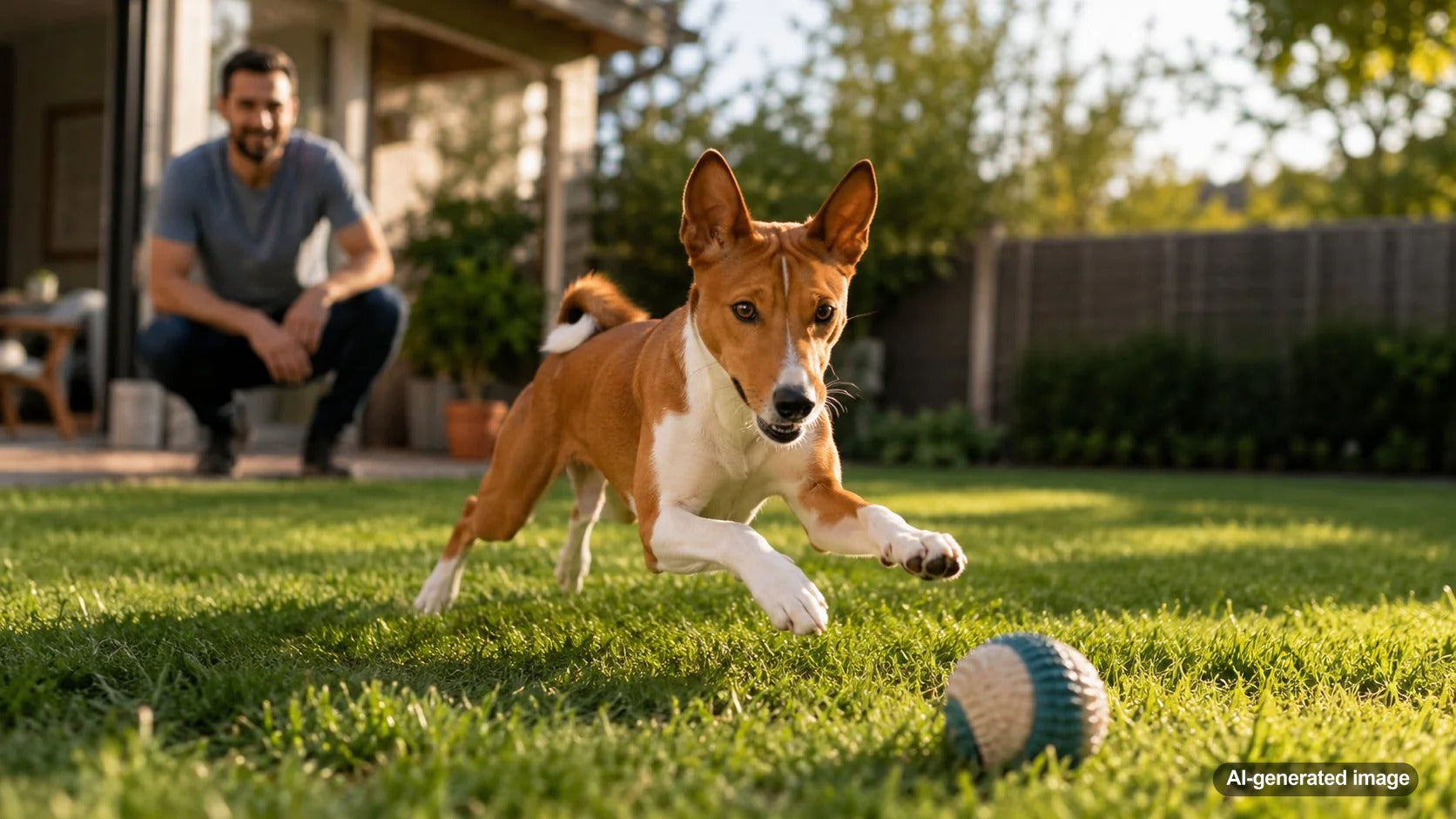
Some dogs will happily toss a toy, chase a ball, or work on a puzzle as long as their favorite person is watching. The moment you turn toward your laptop or leave the room, however, playtime stops. This usually does not mean your dog is lazy or incapable of entertaining themselves. It often means that your attention has become part of the game, the activity is not rewarding enough on its own, or your dog has not yet learned that independent play can feel safe and satisfying.
You do not need to stop playing together. Shared play is valuable for exercise, communication, and bonding. The goal is to help your dog enjoy brief periods of independent activity without making them feel ignored or pushing them beyond their comfort level.
Quick Answer
Start with an activity your dog already loves, stay nearby without actively participating, and reward small moments of independent engagement. Gradually increase your distance and reduce how often you respond. Choose toys that create their own payoff through food, movement, scent, licking, or chewing, and keep early sessions short enough that your dog succeeds.
Why Does My Dog Only Play When I Watch?
For many dogs, play is naturally social. Your facial expressions, voice, movement, and attention make an ordinary toy more exciting. A ball on the floor may seem uninteresting, while the same ball becomes irresistible when you pick it up and celebrate.
Your dog may also have learned a simple pattern: pick up the toy, look at the human, and receive attention. Even laughing, talking, or repeatedly handing the toy back can strengthen this routine. That is not manipulation. It is normal learning based on what has worked before.
Other dogs stop because the available activity requires too much effort or does not match their preferred play style. A dog who loves sniffing may ignore a hard rubber chew. A power chewer may lose interest in a lightweight puzzle. A cautious puppy may need help understanding how a new toy works, while a senior dog may avoid an activity that slides, rolls too quickly, or requires uncomfortable bending.
Begin With Parallel Play
Independent play does not have to begin with you leaving the room. Sit near your dog while doing something quiet, such as reading or answering messages. Offer a familiar enrichment activity, then allow your dog to investigate without repeatedly pointing at it, shaking it, or praising every interaction.
When your dog engages for a few seconds without asking for help, calmly place a small treat nearby or offer brief, low-key praise. Avoid turning the reward into a burst of exciting social play. You want your dog to discover that continuing the activity is rewarding, even when you are relatively boring.
After several successful sessions, move a few feet farther away. Later, stand up briefly, walk across the room, or step out of sight for one or two seconds. Return before your dog becomes worried or abandons the activity. Progress can be measured in seconds at first.
Choose Activities That Reward the Dog Directly
A plain toy often depends on a person to make it move. Food puzzles, rolling feeders, scent games, licking activities, and appropriate chews provide a more immediate reward for independent effort.
For dogs who enjoy nudging and chasing food, the Walkabout turns kibble or treats into a rolling slow-feeder game. Its adjustable opening can help you begin with an easy payoff and increase the challenge after your dog understands the activity.
Dogs who prefer steady licking may respond better to The Pupsicle, which can provide a longer-lasting activity without requiring you to throw, tug, or reset the toy constantly. Select fillings that fit your dog's diet, account for the calories in the daily food allowance, and supervise until you know how your dog uses any new item.
Use a Simple Independence-Building Routine
- Meet basic needs first: Give your dog an appropriate walk, bathroom break, or sniffing opportunity so excess energy is not working against you.
- Pick a high-interest activity: Use a familiar food, scent, texture, or movement pattern that your dog already enjoys.
- Make the first attempt easy: Treats should come out readily, and frozen fillings should not be so difficult that your dog gives up.
- Stay nearby but neutral: Be present without directing every move.
- End while engagement is still strong: A successful three-minute session is more useful than a frustrating 20-minute one.
- Repeat in the same general window: Predictable practice can make independent enrichment part of the daily routine.
Avoid Accidentally Making Attention the Only Reward
If your dog picks up a toy and stares at you, pause before reacting. Give them a chance to return to the toy on their own. When they do, reinforce that choice with a quiet treat placement, then resume what you were doing.
Do not suddenly ignore every request for connection. That can create frustration, especially for dogs who have always experienced toys as shared activities. Continue scheduling interactive fetch, tug, training, and affection. Separate those social sessions from the moments when you are teaching independent engagement.
Toy rotation can also help. Keep most toys out of reach and offer a small selection at a time. Changing the available textures and activities every few days may renew interest without requiring you to buy something new constantly.
Helpful Tip
Use part of your dog's regular meal for independent enrichment. This creates a natural payoff while helping you avoid adding too many extra treats. Begin with an easy puzzle so your dog learns the game instead of becoming frustrated.
Adjust the Plan for Your Dog
Puppies often need more demonstration and shorter sessions because their attention shifts quickly. Puppy-safe activities should be simple, durable, and closely supervised. Remove an item if pieces loosen or your puppy tries to swallow material.
Large dogs and power chewers need appropriately sized products that can withstand their play style. No toy is indestructible, so inspect items regularly and replace anything that becomes cracked, torn, or small enough to swallow.
Senior dogs may benefit from stationary licking activities, easy food searches, and toys that do not require fast movement. Place activities on a nonslip surface and consider whether reduced vision, hearing, dental comfort, or joint mobility could be affecting play.
When a Sudden Change Deserves Attention
Contact your veterinarian if your dog suddenly stops playing, avoids chewing, struggles to pick up toys, limps, seems unusually tired, drops food, drools excessively, or shows a major change in appetite or behavior. Pain, dental discomfort, illness, or sensory changes can look like a loss of interest.
If your dog cannot engage when you move away and also barks, paces, pants, scratches at exits, eliminates indoors, or becomes destructive when alone, the issue may be more than a play preference. Ask your veterinarian or a qualified behavior professional for individualized guidance rather than using independent toys as the only solution.
Dog Parent FAQs
Is it normal for a dog to prefer playing with people?
Yes. Many dogs find social play more rewarding than playing alone. Independent activity is a useful skill, but it does not need to replace games and bonding time with you.
Should I ignore my dog until they play alone?
No. A gradual approach is usually easier and kinder. Stay nearby, reduce your participation in small steps, and reward moments when your dog chooses to continue independently.
How long should independent play last?
Start with one to five successful minutes. Duration varies by age, energy level, experience, and activity type. Increase the time gradually instead of waiting until your dog becomes bored or frustrated.
Why does my dog bring me a toy but refuse to play alone?
The toy may be an invitation for social interaction rather than the main reward. Keep enjoying shared games while separately practicing activities that provide food, scent, movement, licking, or chewing rewards without constant help.
Build Independence Without Losing the Bond
A dog who only plays while you watch is often telling you that your involvement makes play meaningful. You can preserve that special connection while teaching a second skill: settling into an enjoyable activity without continuous attention. Begin close by, choose a game with a clear payoff, make success easy, and increase independence in tiny steps. With patient repetition, many dogs learn that solo play can be rewarding too.


