






































































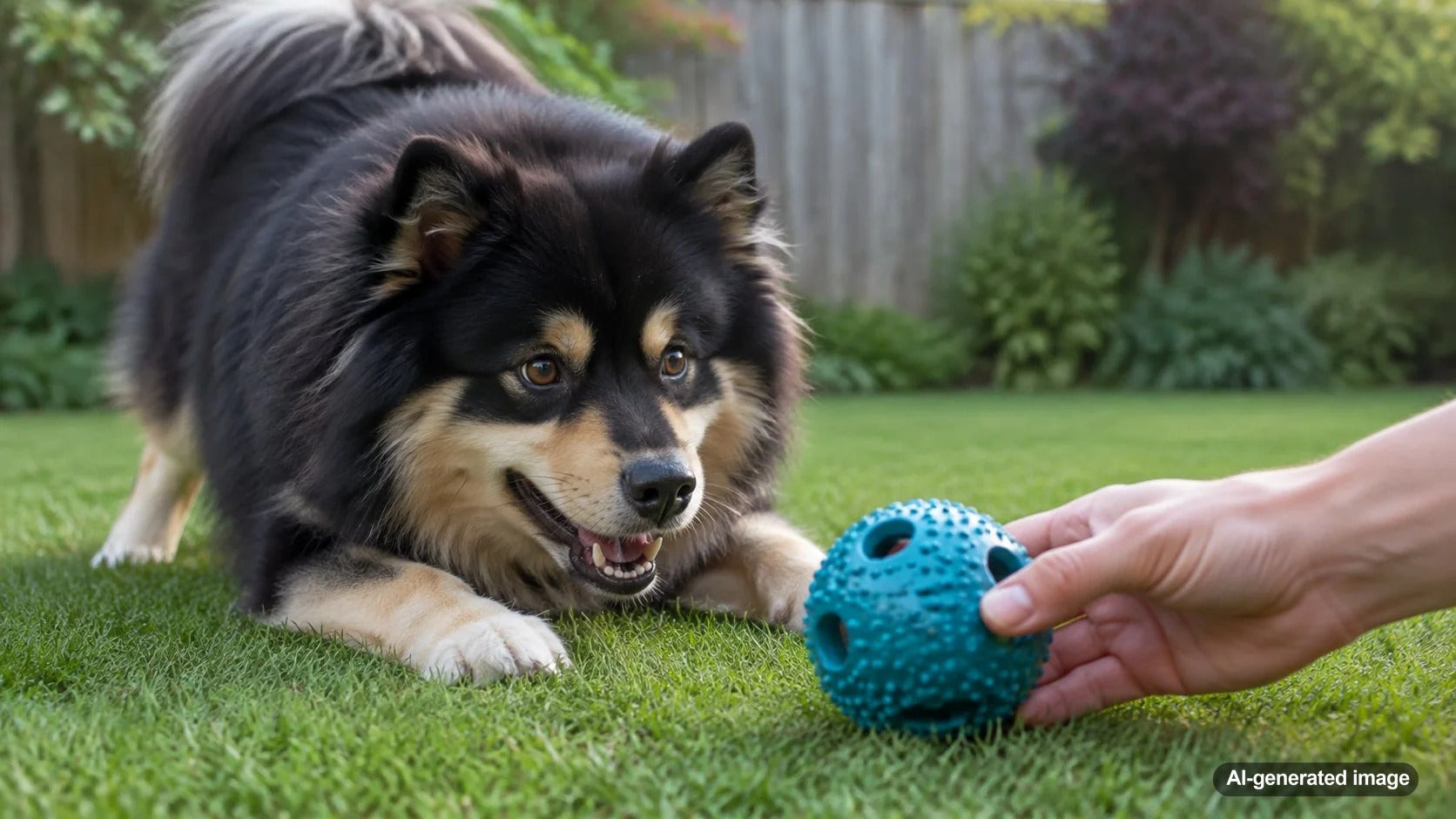
A new toy should be fun, but some dogs react as though you have just unveiled the greatest treasure in canine history. They may jump, bark, grab wildly, sprint through the house, ignore familiar cues, or become so wound up that play stops being enjoyable. You can help by slowing down the introduction, rewarding calm behavior before access, keeping the first session brief, and choosing a style of play that matches your dog's current ability to regulate excitement.
Extreme enthusiasm does not automatically mean your dog is aggressive, stubborn, or getting too much enrichment. Puppies, adolescents, high-energy dogs, and dogs with limited toy experience may simply have trouble controlling themselves around something exciting. The goal is not to eliminate that joy. It is to teach your dog that calm choices make the fun begin and help it continue.
Recognize When Excitement Is Becoming Overarousal
Healthy excitement may look like a loose, wiggly body, playful movement, and an ability to pause or respond to you. Overarousal often looks more frantic. Your dog may repeatedly jump at your hands, clamp down and refuse to release, redirect their mouth toward clothing or skin, bark sharply, race without checking their surroundings, or become unable to perform an easy cue they normally know.
Watch the whole dog rather than focusing on one action. A wagging tail does not always mean a dog is relaxed. Fast movement, tense muscles, hard grabbing, wide eyes, repeated vocalizing, and an inability to disengage can signal that the session has become too intense.
Do not wait for complete chaos before taking a break. A short pause at the first signs of escalating intensity is easier and safer than trying to calm a dog who is already overwhelmed.
Prepare the Environment Before Showing the Toy
Introduce new toys in a familiar, uncluttered room where your dog has enough space to move without crashing into furniture. Put other pets, children, food bowls, and favorite chews elsewhere during the first session. Competition and extra stimulation can make an already exciting moment harder to manage.
Have small treats ready, but keep them in a pocket or container rather than waving them near the toy. You may also use a lightweight leash indoors if your dog tends to launch across the room, provided the leash remains supervised and cannot become tangled.
Check that the toy is appropriately sized and inspect it before and after play. Dogs who bite, tear, or swallow pieces should not be left alone with a new item. Replace or remove toys that become damaged, develop sharp edges, or expose loose material.
Teach That Calm Behavior Opens the Door to Fun
Hold the toy behind your back or place it on a high surface. Wait quietly for a behavior you can reward. This might be a sit, but it does not have to be. For a very excited puppy, simply keeping four paws on the floor for one second may be a realistic starting point.
Mark the calm moment with a consistent word such as "yes," offer a small treat if needed, and then present the toy. If your dog jumps or grabs before you release it, calmly move the toy out of reach. Avoid scolding, wrestling, or repeatedly shouting "no," since added noise and movement may increase the excitement.
With repetition, your dog begins to learn a useful pattern: calm behavior makes the toy appear, while frantic grabbing makes it pause. Keep your criteria achievable and gradually ask for a slightly longer moment of self-control.
Use Short Play Bursts and Planned Pauses
For a dog who becomes overstimulated quickly, begin with five to ten seconds of play. Then make the toy still and cue "drop it" or trade for a treat. Once the dog releases, give the toy back after a brief calm moment. Returning the toy is important because it teaches your dog that releasing does not always end the fun.
Several brief play-and-pause cycles can build better habits than a nonstop ten-minute session. End while your dog is still capable of listening, not after they have completely lost control.
Match the Toy and Game to Your Dog
Different toys create different levels of arousal. Fast tugging, bouncing balls, squeakers, and chase games can quickly intensify movement. Licking, sniffing, and slowly working for food may encourage a steadier style of engagement for many dogs.
If an active toy repeatedly sends your dog into a frenzy, begin with a lower-intensity enrichment option. The Pupsicle is an interactive treat toy designed for longer-lasting licking and engagement. Presenting it calmly on a washable surface may give your dog a chance to explore something new without the rapid movement of fetch or tug.
Once your dog can approach and use lower-intensity toys calmly, you can practice the same wait, release, play, and pause pattern with more exciting options. Toy rotation can also help. Keeping only a few items available and bringing others out for structured sessions may preserve interest without creating a constant pile of stimulation.
Avoid Common New-Toy Mistakes
- Do not tease your dog by repeatedly waving the toy close and pulling it away.
- Do not chase a dog who steals the toy, since the chase may become the most rewarding part of the game.
- Do not forcibly pry the toy from your dog's mouth unless there is an immediate safety emergency.
- Do not introduce several new toys at once to a dog who struggles with excitement.
- Do not continue playing after your dog becomes too frantic to respond or release.
Instead, trade calmly, create distance when needed, and practice with easier toys before returning to the most exciting one. Consistency matters more than demanding perfection during the first session.
Adjust the Plan for Puppies, Seniors, and Power Chewers
Puppies often need extremely short sessions because their excitement can rise faster than their ability to settle. They may also redirect their mouths toward hands or clothing. Keep an appropriate toy between your skin and the puppy, pause when teeth touch you, and restart once the puppy is calmer.
Senior dogs may become excited but still need slower movement, nonslip flooring, and gentler play. Sudden reluctance to chew, difficulty picking up toys, limping, or an abrupt behavior change deserves a conversation with your veterinarian.
Power chewers need close supervision and durable, correctly sized options. Even tough toys should be checked frequently. No toy is appropriate for every chewing style, and a dog who attempts to swallow large pieces needs a different setup or professional guidance.
When to Ask for Professional Help
Contact a qualified reward-based trainer or veterinary behavior professional if your dog guards new toys, freezes when approached, growls, snaps, bites, or becomes difficult to interrupt. Do not punish warning signals or test the dog by repeatedly taking items away. Create space and seek guidance for a safer training plan.
Ask your veterinarian about sudden or major behavior changes, especially when they appear alongside pain, appetite changes, excessive drooling, vomiting, diarrhea, limping, or unusual sensitivity around the mouth or body.
Dog Parent FAQs
Should I take the toy away when my dog gets too excited?
Pause access calmly when play becomes unsafe, but avoid turning removal into a confrontation. Trade for a treat, allow a brief reset, and offer the toy again only if your dog can engage more calmly.
Will my dog eventually stop getting so excited about new toys?
Many dogs become more manageable with predictable introductions and repeated impulse-control practice. Puppies and adolescent dogs may need extra time, patience, and shorter sessions.
Can I use treats to encourage calm behavior?
Yes. Small treats can reward a pause, release, sit, or moment of eye contact. Keep the rewards small and include them in your dog's daily food allowance when appropriate.
How long should the first play session last?
For a highly excitable dog, several rounds of five to ten seconds may be enough. Stop before your dog becomes frantic and gradually increase the duration as their self-control improves.
Build Better Play One Calm Moment at a Time
Your dog's huge reaction to a new toy is not something you need to crush. That excitement can become a useful training opportunity. By controlling access, rewarding manageable behavior, using brief play periods, and selecting toys that fit your dog's needs, you can protect the joy while making play safer and easier to repeat.
Progress may begin with only one second of calm. Reward that second, build from there, and let your dog discover that patience is part of the game.


