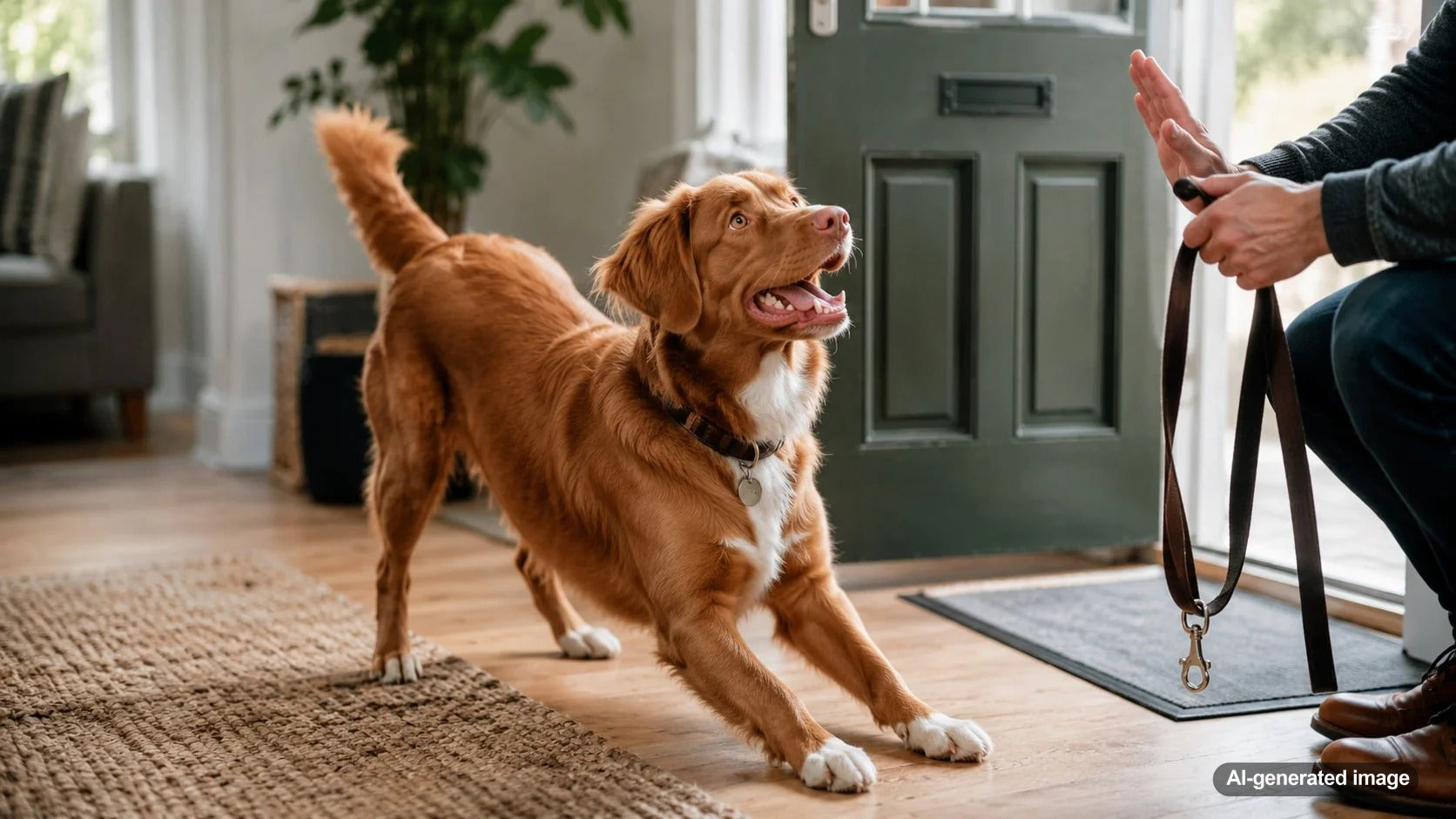
Walk time can turn even the sweetest dog into a spinning, barking, leash-grabbing blur of joy. Your pup sees the shoes, hears the keys, spots the leash, and suddenly the whole house feels like a starting line. If you are wondering how to help a dog that gets too excited before walks, the answer is not to cancel the walk or scold the excitement, but to teach a calmer pre-walk routine that your dog can repeat.
Pre-walk excitement is common because walks are packed with the best things in a dog's day: smells, movement, fresh air, people, squirrels, and time with you. The challenge is that too much arousal before you even open the door can lead to pulling, jumping, mouthing the leash, barking, or bolting. A calmer start helps your dog think better, listen better, and enjoy the walk with a little less chaos.
Quick answer: To help a dog that gets too excited before walks, slow down the routine, reward calm behavior, practice leash cues when you are not leaving, and only move to the next step when your dog can stay reasonably settled. Add short enrichment before the walk if your dog needs an outlet, and use small rewards to reinforce focus at the door, in the hallway, and outside.
Why Dogs Get So Worked Up Before Walks
Most dogs are not trying to be difficult. They are responding to a pattern. Shoes mean leash. Leash means door. Door means freedom. Over time, those tiny clues become exciting triggers, and your dog may start celebrating before the walk has actually begun.
Some dogs are more prone to this than others. Puppies may lack impulse control and get overwhelmed by anticipation. High-energy breeds may need more mental work before their bodies can relax. Small dogs may jump and spin because it has worked to get attention in the past. Larger dogs may become hard to manage simply because their excitement has more power behind it. Senior dogs can also become vocal or restless if walks are a favorite part of their routine, especially when they are feeling cooped up.
Start Before the Leash Comes Out
The easiest mistake is waiting until your dog is already bouncing off the walls to begin training. Instead, practice the calm parts of the walk routine when you are not actually going for a walk. Pick up the leash, pause, then put it back down. Touch your shoes, sit on the couch, and reward your dog for staying calm. Walk toward the door and then turn around. These tiny practice sessions help make the cues less explosive.
Keep your own energy boring in the best possible way. A high-pitched voice, fast movements, or repeating "walk, walk, walk" can accidentally pour fuel on the excitement. Move slowly, breathe normally, and make calm behavior the thing that opens the next door.
Teach a Pre-Walk Pause
A pre-walk pause gives your dog a job. Before clipping the leash, ask for a simple behavior your dog already knows, such as sit, hand target, or eye contact. Keep it easy. You are not looking for perfection, just a moment where your dog can bring their brain back online.
If your dog jumps, barks, or mouths the leash, pause without drama. Wait for a quieter second, then reward that. If your dog is too excited to respond at all, you may be moving too fast. Put the leash down, wait a minute, and try again with a smaller step.
Pick up the leash only when your dog has four paws on the floor.
Clip the leash during a calm second, not during jumping or barking.
Ask for a short pause at the door before opening it.
Reward focus outside before starting the walk.
Use Enrichment to Take the Edge Off
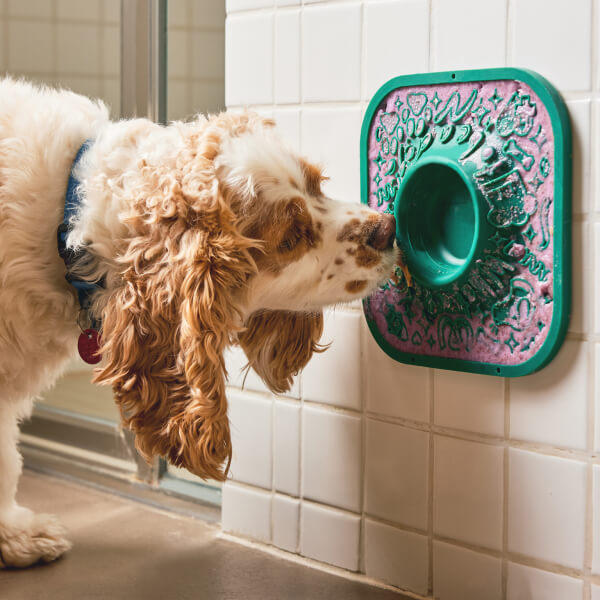
Some dogs are so physically excited that they need a small mental outlet before they can walk politely. A few minutes of licking, sniffing, or problem-solving may help lower the intensity without exhausting them. This can be especially useful for dogs who explode with excitement after a long workday, rainy weather, or a skipped morning outing.
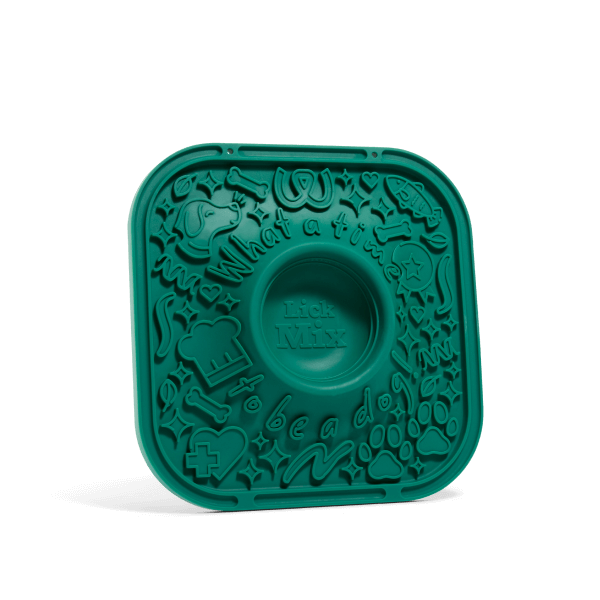
For a calm pre-walk reset, The LickMat can give your dog a soothing licking activity while you get ready. If your dog needs longer-lasting distraction before a busy outing, The Pupsicle can be part of a predictable enrichment routine that helps them settle before the leash appears. Use enrichment as support, not as a substitute for training.
Reward the Behavior You Want on the Way Out
Many dogs learn that pulling toward the door makes the walk happen faster. To change that, reward the small calm choices. Mark and reward when your dog looks at you, stands with a loose leash, or waits while the door opens. Tiny treats such as Love Nuggets can work well for quick rewards because you can reinforce good choices without turning the moment into a full snack break.
Try not to rush through the doorway. For some dogs, the threshold is the most exciting part of the walk. Open the door slightly, reward calm, close it if your dog surges, then try again. Once outside, pause for a few seconds before moving. This teaches your dog that calm behavior makes the adventure continue.
Common Mistakes That Make Pre-Walk Excitement Worse
Helpful tip: If your dog gets more excited every time you repeat a cue, stop repeating it. Say the cue once, wait, and make the next step of the routine depend on calmer behavior.
One common mistake is clipping the leash while the dog is jumping, then hoping the walk will calm them down. Sometimes it does, but often it teaches the dog that jumping is part of the launch sequence. Another mistake is using the walk as the only outlet for a dog who needs more daily enrichment. A dog who is bored, under-stimulated, or waiting all day for one big event may arrive at walk time already overloaded.
It can also backfire to punish excitement harshly. A firm, quiet reset is different from yelling, yanking, or scaring your dog. The goal is to lower arousal, not add stress. If your dog is barking, lunging, panicking, or reacting strongly to people, dogs, cars, or sounds, consider working with a qualified positive-reinforcement trainer.
When to Adjust the Plan
If your dog is mildly wiggly and happy, a pre-walk pause may be enough. If your dog is grabbing the leash, jumping on people, or dragging you outside, break the routine into much smaller pieces. Practice leash handling indoors. Reward calm near the door. Start with short, boring walks that are easy to succeed at.
If the behavior appears suddenly, comes with pain, limping, coughing, excessive panting, major anxiety, appetite changes, or unusual restlessness, ask your veterinarian for guidance. Big behavior changes can sometimes be connected to discomfort or health concerns, and it is always better to check if you are unsure.
Safety note: Use a secure leash and properly fitted walking gear, especially for strong dogs or dogs who bolt at the door. Supervise all treats, chews, and enrichment toys, and choose options that match your dog's size, chewing style, and dietary needs.
Dog Parent FAQs
Should I ignore my dog when they get excited before a walk?
You do not need to ignore your dog completely. Instead, calmly pause the routine and reward quieter behavior. Attention should arrive when your dog offers something calmer, such as four paws on the floor or a quick check-in.
Is it okay to make my dog sit before every walk?
Yes, if sitting is comfortable for your dog and does not create frustration. Some dogs do better with a hand target, eye contact, or simply standing still. Choose the calm behavior your dog can actually repeat.
How long will it take to calm pre-walk excitement?
It depends on your dog, your consistency, and how long the habit has been practiced. Many dogs improve with short daily repetitions, but dogs with intense arousal or reactivity may need help from a qualified trainer.
Should I give my dog enrichment before or after a walk?
Either can work. Before a walk, licking or puzzle play may help some dogs settle. After a walk, enrichment can help create a calm landing routine so your dog does not come home still buzzing.
The Bottom Line
Helping a dog that gets too excited before walks is about changing the beginning of the story. When the leash, door, and walk routine become calm and predictable, your dog has a better chance of starting the adventure with focus instead of frenzy. Keep the steps small, reward what you like, and remember that a calmer walk often begins long before you step outside.