






































































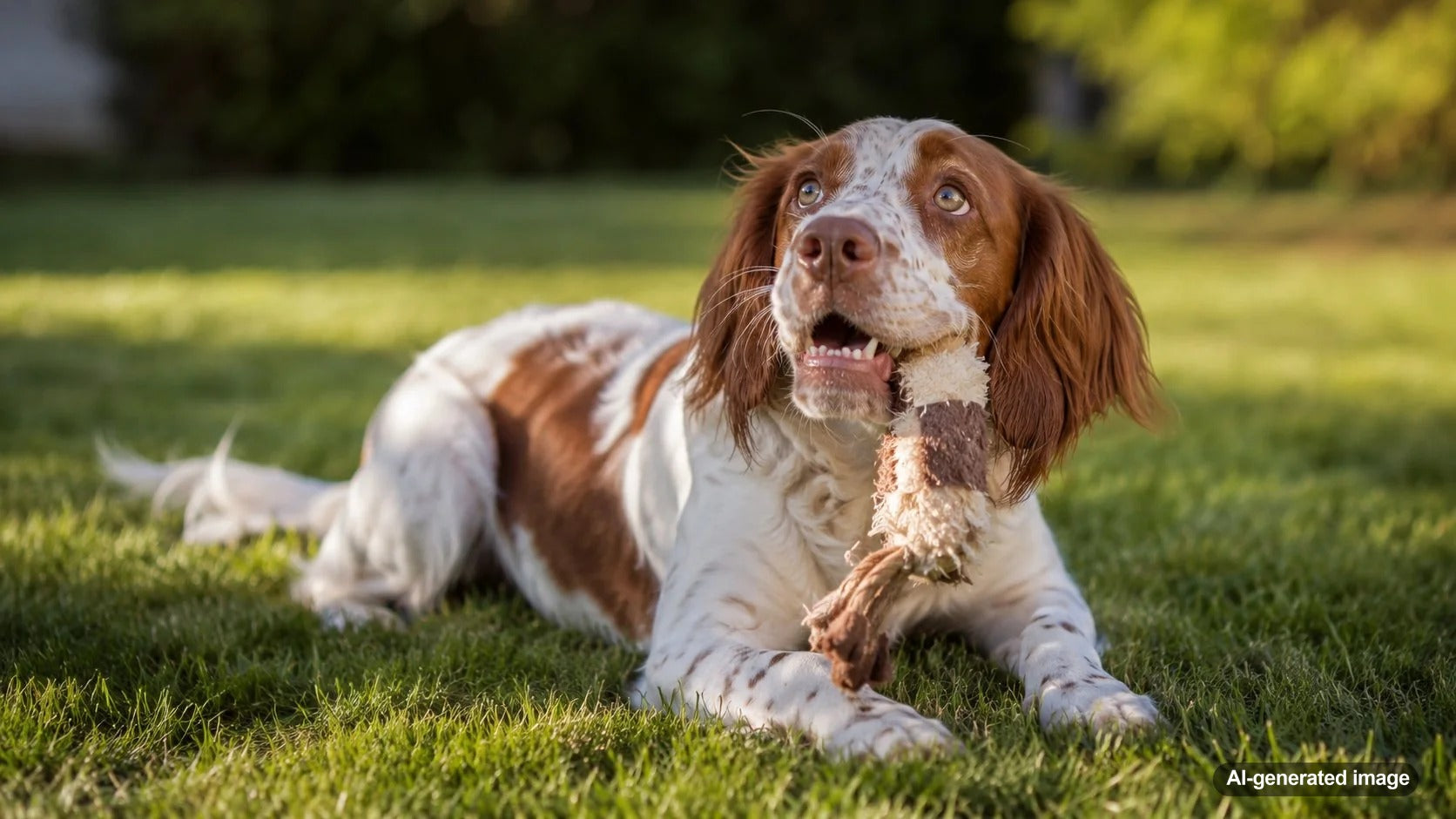
Every dog deserves a favorite toy, but sometimes favorite turns into absolutely, positively, do-not-touch-my-toy obsession. Your dog might carry it from room to room, search frantically when it disappears, ignore other activities, or become tense when someone approaches it. In many cases, you can help by gently expanding your dog's play options, teaching calm trades, and making different types of enrichment part of the daily routine.
The goal is not to convince your dog that their beloved toy is suddenly boring. Instead, you want to make life rewarding even when that specific toy is not available.
First, Figure Out What "Too Attached" Looks Like
Loving one particular ball, chew, or stuffed toy is not automatically a problem. Dogs have preferences just like people do. A dog who happily carries the same toy around the house but can put it down for dinner, a walk, a nap, or another game may simply have a favorite.
Attachment deserves more attention when the toy begins interfering with normal routines. Your dog might repeatedly demand that you throw it, pace or whine when it is put away, refuse other toys, have trouble settling without it, or become increasingly intense during play.
Watch body language closely. Freezing over the toy, hovering over it, turning the head away while keeping the toy close, hard staring, growling, snapping, or attempting to bite can indicate resource guarding. Do not punish the warning or challenge your dog by grabbing the item. If guarding is occurring, especially in a home with children or other pets, contact a qualified positive-reinforcement trainer, veterinary behavior professional, or your veterinarian for guidance.
Do Not Make the Favorite Toy More Valuable by Constantly Taking It Away
It can be tempting to solve the problem by repeatedly confiscating the toy. Unfortunately, if your dog learns that a person's approach predicts losing something wonderful, they may become even more determined to keep it.
When it is safe to do so, make your presence around valued items predict good things. For a dog who comfortably releases toys, you can practice trading a lower-value toy for a tasty reward or another fun activity. Once your dog lets go, reward the release. Sometimes give the toy back so "drop it" does not always mean the fun is permanently over.
If your dog already guards the favorite toy, skip do-it-yourself trading exercises with that item until you have professional guidance.
Create a Rotation Instead of an All-Day Toy Buffet
A simple toy rotation can make several objects more interesting. Rather than keeping every toy on the floor indefinitely, leave a small selection available and rotate choices regularly.
Your dog's favorite can still appear, but it no longer needs to be the only exciting event of the day. One session might involve the favorite toy, another might involve sniffing for hidden treats, and another might use a food puzzle or licking activity.
This is especially helpful for dogs whose obsession is partly driven by repetition. If the same ball is thrown dozens of times every evening, your dog may learn that intense ball-focused behavior is the fastest path to entertainment. Variety gives them more ways to have fun.
Offer a Different Kind of Enrichment, Not Just Another Similar Toy
If your dog is obsessed with one fetch ball, buying five more balls may not broaden their interests very much. Try changing the activity itself.
For example, rotate among sniffing games, short training sessions, licking, chewing, food puzzles, tug, and outdoor exploration. A dog who spends ten minutes solving a feeding puzzle is using different behaviors from a dog repeatedly chasing a ball down the hallway.
A treat-dispensing option such as the Flyball can introduce a puzzle element to play instead of making every interaction about repetitive fetching. For a completely different style of enrichment, The Pupsicle provides a licking and treat-focused activity that may help diversify your dog's daily routine.
Teach That Play Has a Beginning and an End
Predictability can make transitions easier. Create a consistent cue such as "all done" at the end of a play session, then move naturally into another activity.
For example, play fetch for a reasonable period, say your ending cue, put the toy away without drama, and head outside for a sniff walk. Another time, follow play with dinner or a quiet enrichment activity.
Keep the transition matter-of-fact. You are helping your dog learn that one enjoyable activity ending does not mean everything enjoyable has ended.
Reward Calm Behavior Around the Toy
Owners sometimes accidentally reward obsession by responding every time the dog shoves a toy into their lap, barks for another throw, or relentlessly drops it at their feet. Your dog quickly learns which behaviors restart the game.
Instead, look for moments of calm. Reward your dog for relaxing, choosing another activity, responding to a cue, or calmly disengaging from the toy. Rewards can include treats, attention, a walk, another enrichment activity, or sometimes another round of play.
You are not punishing enthusiasm. You are teaching your dog that calm choices work too.
Consider Your Dog's Age, Energy, and Play Style
Puppies and adolescent dogs can become intensely focused because excitement and impulse control are still developing. Short sessions with frequent changes of activity may work better than letting high-energy play continue until they are completely overstimulated.
High-drive adult dogs may need meaningful physical exercise plus mental challenges. Power chewers may naturally spend longer periods focused on chewing, so durable, appropriately sized chew options and supervision matter. Senior dogs may become attached to familiar routines and objects, and a sudden new fixation or major behavior change deserves a conversation with your veterinarian, especially if it appears alongside changes in sleep, appetite, movement, awareness, or temperament.
Know When It Is More Than a Favorite Toy
Seek professional help if your dog guards the toy aggressively, bites or threatens people or pets, cannot settle without it, becomes distressed when it disappears, or shows a sudden major change in behavior.
Pain, stress, environmental changes, and other factors can affect behavior, so your veterinarian is a good starting point when an intense fixation appears suddenly or is accompanied by other physical or behavioral symptoms.
And remember that growling is information. Do not punish your dog for communicating discomfort. Create space, manage access safely, and get qualified help.
A Favorite Toy Can Stay a Favorite
You do not have to eliminate the toy your dog loves. A healthier goal is flexibility. Your dog can adore one toy while also learning to sniff, lick, chew, explore, train, rest, and play in other ways.
By rotating activities, making toy exchanges positive, rewarding calm behavior, and respecting signs of discomfort, you can turn one-track toy obsession into a more balanced enrichment routine while keeping plenty of fun in your dog's day.
Dog Parent FAQs
Should I hide my dog's favorite toy?
Scheduled breaks can be useful if your dog handles them calmly. Avoid abruptly taking the toy from a dog who guards it or becomes highly distressed when someone approaches.
Is it normal for a dog to carry the same toy everywhere?
It can be. If your dog remains relaxed, participates in normal activities, and willingly disengages from the toy, having a strong favorite is not necessarily a concern.
Can rotating toys make them more interesting?
Yes. Keeping a smaller selection available and periodically rotating toys can renew interest and encourage your dog to engage with different activities.
What should I do if my dog growls when I reach for the toy?
Do not forcibly take it or punish the growl. Give your dog space, manage the situation safely, and ask a qualified behavior professional or veterinarian for guidance, particularly if there is any risk of biting.


