






































































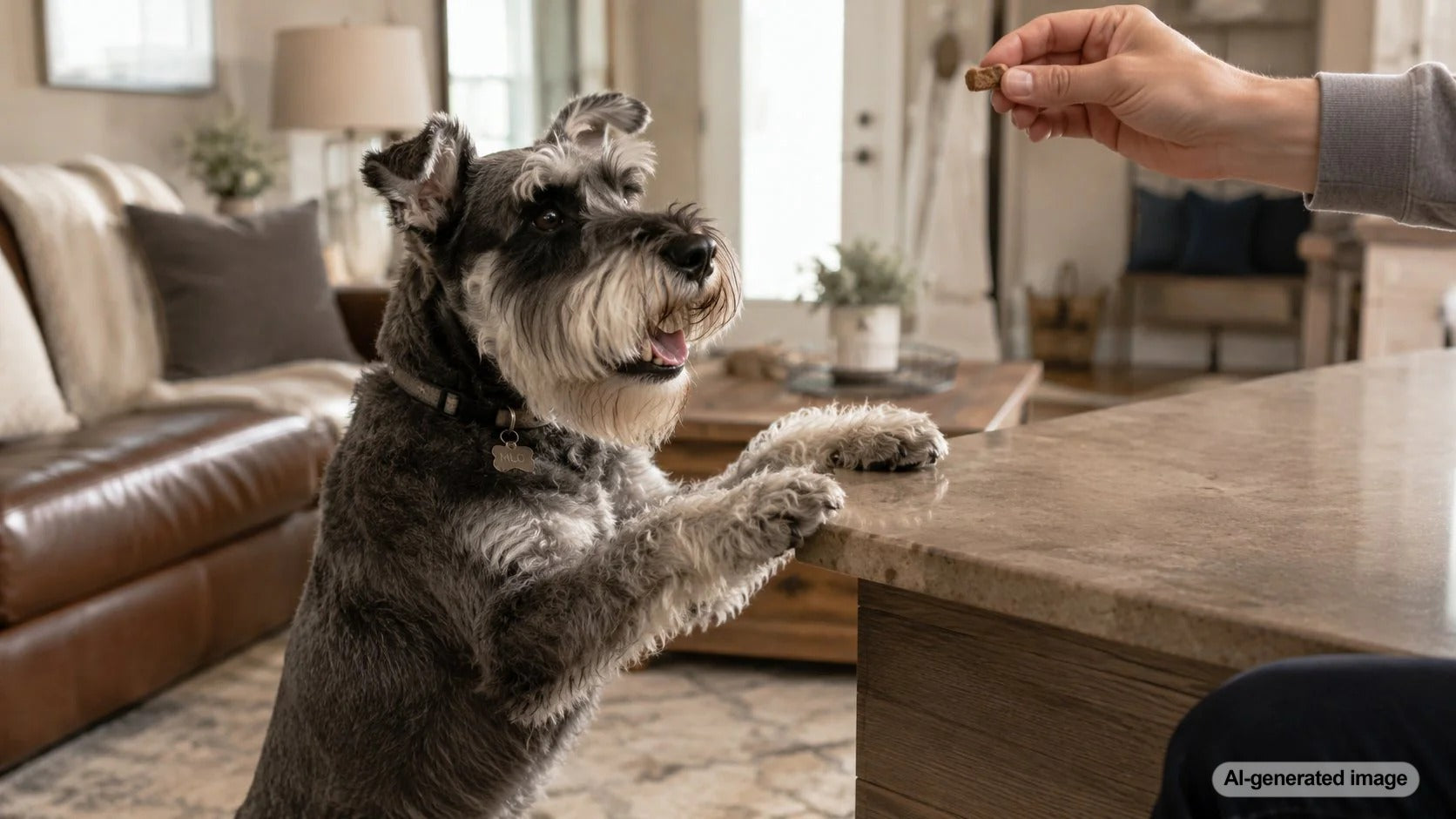
Snack time can turn surprisingly intense when your dog starts barking, pawing, jumping, nudging, whining, or staring holes through the treat cabinet. The most effective response is to stop rewarding the pushy behavior and teach your dog a calm action that reliably makes snacks appear. With consistent timing, clear household rules, and a little patience, most dogs can learn that quiet waiting works better than demanding.
Pushiness around food is usually not a sign that your dog is trying to be dominant. In many homes, it is simply a behavior that has worked before. If barking leads to a biscuit, pawing earns a bite, or pacing makes someone reach for the treat bag, your dog has learned an efficient snack-ordering system.
Figure Out What Pushy Snack Behavior Looks Like
Some dogs make obvious demands by barking, jumping, or grabbing at hands. Others are more subtle. Your dog might repeatedly nose your leg, pace between you and the pantry, block your path, whine softly, or perform every trick they know without being asked.
Watch what happens immediately before and after the behavior. Does your dog become demanding when you sit on the couch, open a kitchen drawer, finish dinner, or return from a walk? Does someone eventually give in? Identifying the trigger and the payoff makes the habit much easier to change.
It is also important to separate ordinary learned begging from a sudden change in appetite or behavior. Contact your veterinarian if your dog suddenly seems unusually ravenous, loses weight, drinks or urinates more than usual, raids food unexpectedly, develops digestive symptoms, or shows another significant change.
Stop Paying the Pushy Behavior
Dogs repeat actions that produce useful results. Even occasional success can keep demanding behavior going. A dog who gets a treat after barking ten times may learn that the tenth bark is the one that works.
When your dog becomes pushy, keep the snack out of reach and avoid arguing, repeatedly saying no, or waving the treat around. Wait for a brief pause in the behavior. The moment your dog has four paws on the floor and is quiet, mark that calm moment with a word such as "yes," then give the reward.
At first, you may only get one second of calm. That is enough to begin. Gradually wait for two seconds, then three, then five. Build duration slowly so your dog can succeed.
Teach a Specific Snack-Time Job
Telling a dog what not to do leaves an important question unanswered: What should they do instead? Give your dog one clear job that is easy to recognize and reward.
A sit can work, but a designated mat or bed is often even more useful because it creates physical space between your dog and the food. Start practicing when no snack-time excitement is happening. Toss a small treat onto the mat, praise your dog for stepping onto it, and gradually reward sitting or lying down there.
Once your dog understands the location, add a cue such as "place" or "mat." Practice for a few seconds at a time before asking your dog to stay there while you prepare a snack. Release your dog with a consistent word so they understand when the exercise is finished.
Use Treats Without Creating More Demands
Treats are useful training tools, but how they are delivered matters. Keep them out of sight until your dog performs the requested behavior. Reaching into the bag while your dog is barking can accidentally make the bag itself part of an exciting negotiation.
Use small pieces for training so you can reward several good choices without adding a large amount of food. Love Nuggets are bite-sized rewards that can fit naturally into short practice sessions. You can also reserve part of your dog's regular meal for training instead of continually adding extra calories.
Deliver rewards low and calmly. Holding food high above your dog's head can encourage jumping, while placing it near the dog's mouth or calmly dropping it between their paws can support steadier behavior.
Make Snack Time Predictable
Dogs often become more demanding when snacks appear randomly throughout the day. A simple routine can reduce constant guessing and monitoring.
- Choose one or two normal snack windows.
- Ask your dog to go to a mat or sit quietly.
- Prepare the snack only after calm behavior begins.
- Use a release cue before your dog gets the reward.
- End snack time clearly and put the food away.
Predictability does not mean feeding at the exact second every day. It means your dog learns that snacks follow a familiar sequence rather than relentless pestering.
Turn the Snack Into a Calm Activity
Some dogs finish a small treat in one second and immediately ask for another. Stretching the experience into an enrichment activity may help the reward feel more satisfying while giving your dog a constructive task.
For example, The Pupsicle can turn an appropriate treat into a longer-lasting licking and problem-solving session. Give it after your dog settles on the designated mat rather than using it to interrupt active barking or jumping. This keeps the enrichment tied to calm behavior.
Supervise treat toys, choose the correct size for your dog, follow feeding guidance, and account for the ingredients in your dog's daily food intake. Dogs who guard food or enrichment toys may need a separate management plan from a qualified trainer or behavior professional.
Get Everyone to Follow the Same Rules
Training becomes confusing when one person requires a quiet sit while another hands over snacks for pawing. Agree on the behavior that earns food, the cue everyone will use, and where snacks may be given.
Children and guests may find begging hard to resist, so give them a simple instruction: treats only happen when the dog is calm and an adult says it is time. During meals or gatherings, use a gate, mat, crate, or separate comfortable area if supervision is difficult.
Know When Pushiness Needs Professional Help
Ordinary begging is different from resource guarding or aggression. Do not reach toward food, grab a chew, or punish your dog if they stiffen, freeze, growl, snap, lunge, or guard the snack area. Give them space and contact a qualified reward-based trainer, veterinary behaviorist, or veterinarian for guidance.
Professional help is also worthwhile when the behavior feels unsafe, continues despite consistent training, involves children, or causes significant stress in the household.
Dog Parent FAQs
Should I ignore my dog when they beg for snacks?
Avoid rewarding the begging, but do not stop there. Teach and reward a specific alternative, such as sitting quietly or going to a mat.
Is my dog pushy because they are still hungry?
Possibly, but many dogs beg because the behavior has been rewarded before. Confirm that your dog's meals are appropriate for their age, size, activity level, and health with your veterinarian.
Can I give a treat after my dog stops barking?
Yes, but wait for a clear moment of quiet and calm posture. Rewarding immediately after the final bark can make the timing unclear, so mark the calm behavior precisely.
How long does it take to improve snack-time begging?
Some dogs show progress within several practice sessions, while long-standing habits may take weeks of consistent responses. Household consistency is often more important than speed.
A Calmer Snack Routine Starts With One Clear Rule
Your dog does not need to stop loving snacks. They simply need a better way to ask for them. Choose one calm behavior, reward it consistently, prevent demanding behavior from paying off, and keep the routine easy enough for everyone to repeat.
With practice, snack time can shift from a noisy negotiation into a predictable moment of training, enrichment, and connection.


