






































































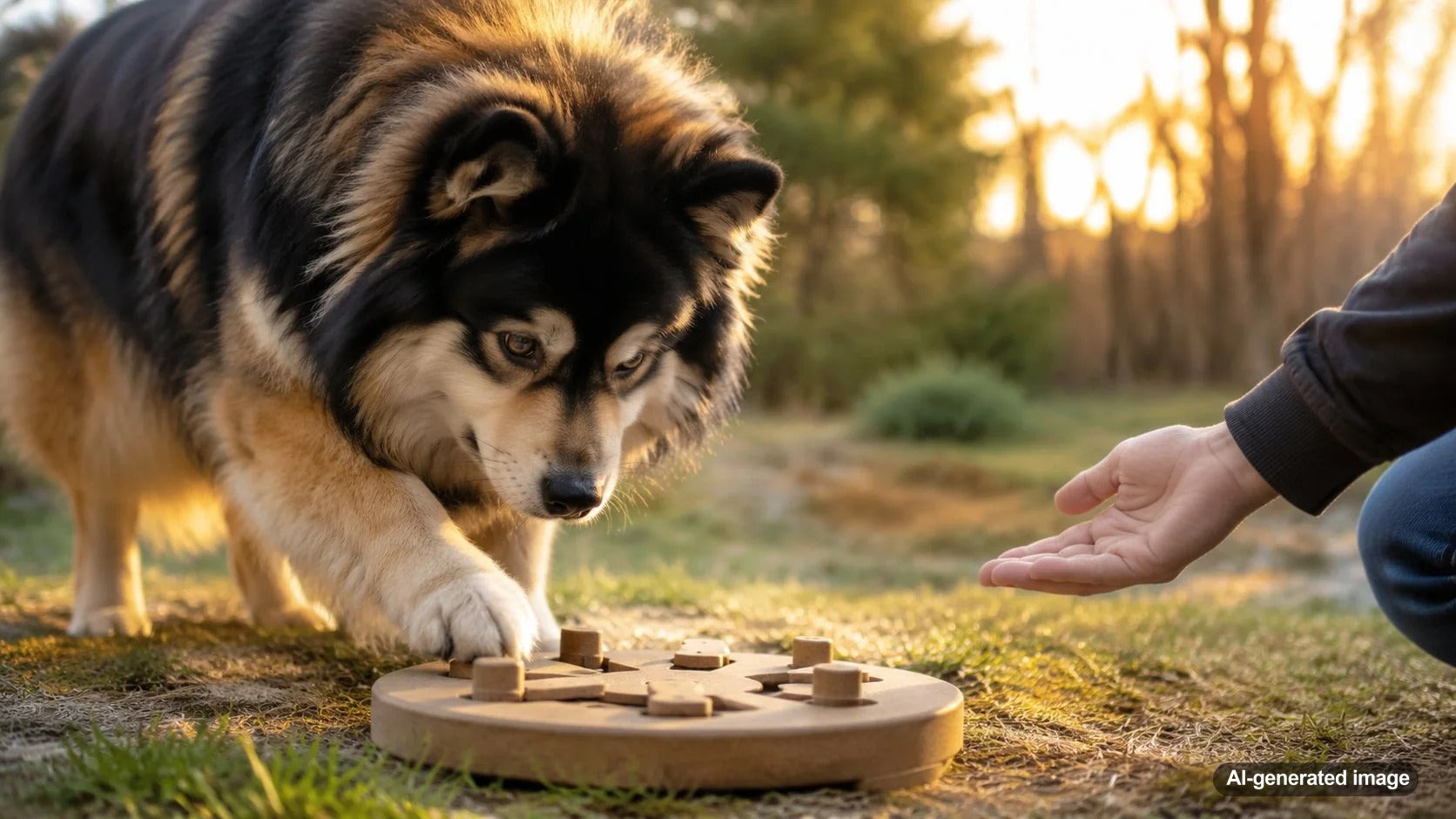
Puzzle toys are supposed to be fun, but some dogs respond by barking, pawing wildly, chewing the toy, or walking away in defeat. That does not mean your dog is stubborn, lazy, or bad at puzzles. It usually means the challenge is too difficult, the reward is not motivating enough, or your dog has not yet learned how the toy works.
The best response is not to let your dog struggle until they figure it out. Make the puzzle easier, show them one simple action, and create a quick success. Dogs are more likely to keep trying when they learn that calm investigation makes good things happen.
Quick Answer
When your dog gets frustrated with a puzzle toy, pause the session before the frustration escalates. Reset the toy at an easier level, leave several treats partly visible, and reward any calm interaction with it. Keep the next session short, and increase the difficulty only after your dog can solve the easier version confidently.
Recognize Frustration Before It Becomes a Meltdown
A little persistence is part of solving a puzzle. Your dog may sniff repeatedly, try different angles, or pause to think. Frustration looks more intense and less purposeful.
Common signs include sharp barking at the toy, frantic scratching, biting or shaking it, repeatedly flipping it over, pacing away and returning, or staring at you while whining. Some dogs simply stop participating. A dog that lies down, leaves the room, or refuses the treats may be communicating that the activity feels confusing or overwhelming.
Watch the pattern rather than one isolated behavior. A single paw swipe may be problem-solving. Rapid pawing combined with barking, hard chewing, and an inability to settle suggests that the session should be adjusted.
Start With a Puzzle Your Dog Can Almost Solve
The ideal beginner puzzle is not completely effortless, but the reward should be easy to discover. Load the toy generously and place some treats where your dog can see or smell them immediately. For a rolling dispenser, choose a setting that releases food frequently. For a toy with several compartments, leave covers open or partially moved aside.
You can also place a few treats around the outside of the toy. This encourages your dog to approach it without feeling that every reward is trapped. Once your dog is comfortable touching and investigating the puzzle, begin hiding the treats more completely.
Puppies may need help because they have limited experience using their paws and noses to manipulate objects. Senior dogs may prefer puzzles that do not require hard pushing, prolonged standing, or precise movements. Small dogs can struggle with heavy pieces, while large dogs and power chewers may need sturdier toys that cannot be swallowed or easily damaged.
Teach One Movement at a Time
Many puzzle toys require several skills, such as nudging, rolling, pulling, licking, or holding the toy in place. Asking a beginner to discover all of those steps at once can lead to frustration.
Break the activity into one easy movement. Roll the toy slightly so a treat falls out, then let your dog eat it. Point to an exposed compartment or gently move a cover halfway. You are not ruining the puzzle by helping. You are teaching your dog the basic rule of the game.
Reward calm curiosity, including sniffing, touching the toy with the nose, or placing one paw near it. Avoid pushing your dog's face toward the puzzle or repeatedly commanding them to solve it. The goal is to build voluntary engagement rather than pressure.
Use Rewards That Are Worth the Effort
Regular kibble may work for a food-motivated dog, especially when the puzzle replaces part of a meal. A cautious or easily discouraged dog may need a more appealing reward at first. Small, fragrant treats are often easier to detect and more motivating than large, dry pieces.
Woof Puzzle Treats are sized for Woof puzzle toys and can make each successful movement more rewarding without requiring a large piece of food. Count puzzle treats as part of your dog's daily food and treat allowance, particularly when practicing more than once a day.
Check that the reward can actually exit the toy. Pieces that are too large, sticky, or oddly shaped may become trapped, creating a problem your dog cannot solve no matter how hard they try.
Keep Early Sessions Short and Successful
A two-minute session that ends with success is more useful than a twenty-minute battle. For a beginner, load the toy so your dog earns several quick rewards, then put it away while they are still interested.
Repeat the easy version over several sessions. When your dog approaches eagerly and solves it without frantic behavior, increase only one element of difficulty. You might close one additional compartment, narrow a treat-dispensing opening slightly, or add a little more distance between rewards.
Helpful tip: Follow the three-success rule. After your dog completes the same setup calmly in three separate sessions, make the next setup slightly harder. If frustration returns, go back one step.
Match the Puzzle Style to Your Dog
Not every dog enjoys the same type of problem. A dog that loves chasing may prefer a rolling or wobbling toy. A scent-driven dog may enjoy searching through open compartments. A dog that settles through licking may do better with a spreadable enrichment activity before attempting a mechanical puzzle.
The Walkabout is a rolling slow-feeder puzzle ball with an adjustable dial for different kibble and treat sizes. Begin with the dial set for easier dispensing so your dog quickly learns that rolling the ball releases food. Make the opening smaller only after your dog understands the movement and remains relaxed during play.
A dog that repeatedly tries to destroy a puzzle instead of solving it may need a different enrichment category. Try a supervised licking, sniffing, training, or appropriate chewing activity, then revisit puzzle play another day.
Avoid These Common Puzzle Toy Mistakes
Do not begin with the hardest setting because your dog is clever or energetic. Intelligence does not replace experience. Even fast learners benefit from understanding the toy at an easy level first.
Avoid using puzzle toys only when you leave the house. Your dog should learn how the toy works while you are present and able to help. Do not scold barking, pawing, or rough handling during a confusing session. Calmly remove or reset the toy instead.
Inspect puzzle toys regularly for cracks, torn rubber, loosened components, or sharp edges. Choose an appropriate size and supervise use, especially with puppies and determined chewers. Remove the toy if your dog begins tearing off pieces or trying to swallow parts.
When to get help: Contact your veterinarian if a new reluctance to play appears with appetite changes, excessive drooling, limping, mouth sensitivity, vomiting, diarrhea, swelling, or other physical symptoms. A qualified reward-based trainer or veterinary behavior professional can help if puzzle activities trigger persistent panic, guarding, or aggressive behavior.
Dog Parent FAQs
Should I help my dog solve a puzzle toy?
Yes. Demonstrating one simple movement or exposing a treat can help your dog understand the game. Gradually reduce your help as confidence grows.
How long should a puzzle toy session last?
Begin with two to five minutes. End sooner if your dog becomes frantic, starts damaging the toy, or disengages completely.
Why does my dog bark at puzzle toys?
Barking may indicate excitement, demand behavior, or frustration. Make the puzzle easier and reward calm investigation rather than allowing the session to escalate.
What should I do if my dog chews the puzzle instead of solving it?
Remove the toy calmly and try a simpler setup under close supervision. Dogs that continue trying to destroy puzzle toys may be better suited to another type of enrichment.
Build Confidence, Not Just Difficulty
A good puzzle session should leave your dog satisfied, not defeated. Start below your dog's maximum ability, create frequent wins, and let difficulty increase gradually. When the challenge matches the dog's current skills, puzzle play can become an enjoyable routine that supports focus, curiosity, and everyday enrichment.


