






































































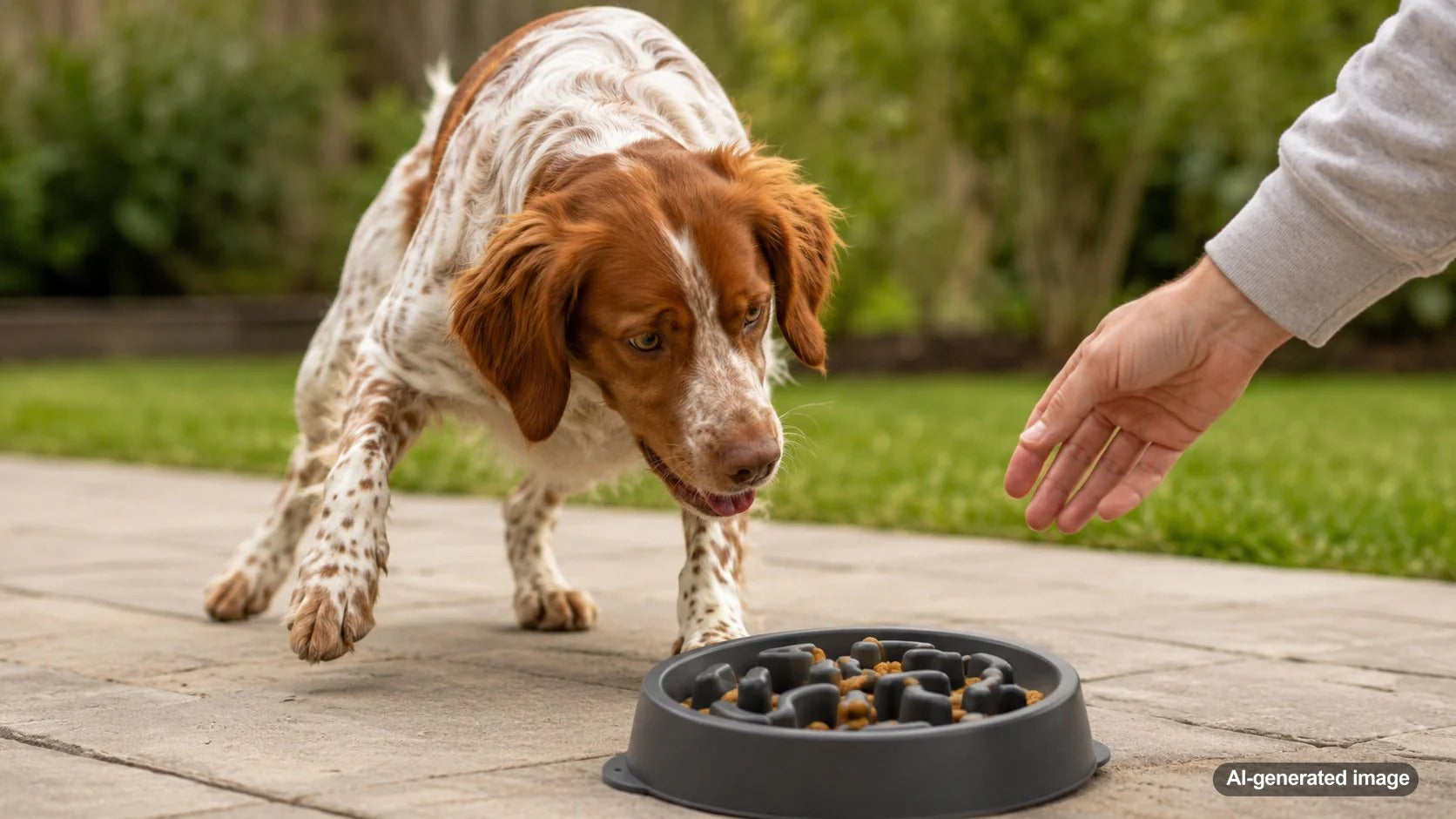
A slow feeder is supposed to make mealtime calmer, not turn dinner into a tiny emotional crisis. If your dog paws at the bowl, barks, flips it over, walks away, or looks personally offended by the maze in front of them, they may be frustrated rather than enriched. The goal is not to make food impossibly hard to reach. The goal is to slow the meal just enough that your dog gets a little brain work, a little satisfaction, and a lot less frantic gulping.
Some dogs love a challenge right away. Others need a slower introduction, a simpler design, softer food, or a different kind of enrichment altogether. When you match the feeder to your dog's confidence, mouth shape, age, and eating style, slow feeding can become a happy routine instead of a battle.
Quick answer
To help a dog that gets frustrated by slow feeders, make the feeder easier first. Use a shallower pattern, add fewer obstacles, mix in some easy-to-reach food, or switch to licking-based enrichment before moving back to a harder puzzle. Keep early sessions short, supervise your dog, and watch for stress signs like barking, chewing the feeder, giving up, guarding, or frantic pawing. If frustration appears suddenly or comes with appetite changes, drooling, vomiting, dental pain, or other health concerns, ask your veterinarian.
Why Some Dogs Get Frustrated by Slow Feeders
Slow feeders work by adding obstacles between your dog and their food. For a confident problem-solver, that can be fun. For a hungry dog who is used to inhaling dinner in 30 seconds, it can feel confusing, unfair, or physically awkward.
Frustration often happens when the feeder is too difficult too soon. Deep ridges, narrow channels, slippery kibble, or tiny pockets can make a dog work harder than they expected. Flat-faced dogs may struggle to reach food in deep grooves. Small dogs may find oversized bowls clumsy. Seniors may have neck, tooth, or vision challenges that make puzzle eating less comfortable. Puppies may simply lack patience and coordination.
There is also an emotional side. Dogs who have a history of food scarcity, competition with other pets, or fast eating may feel extra pressure around meals. For those dogs, the first step is not more challenge. It is more confidence.
Signs Your Dog Is Frustrated, Not Enriched
A little determination is normal. A dog may sniff, lick, nudge, and test different angles while learning. Frustration looks more intense and less thoughtful.
Watch for these signs:
- Barking at the feeder instead of eating from it
- Pawing hard enough to flip or shove the bowl across the room
- Trying to chew, crack, or destroy the feeder
- Walking away after only a few bites
- Guarding the feeder from people or other pets
- Frantic licking, whining, or pacing around the bowl
- Eating normally from a regular bowl but refusing the slow feeder
If your dog is simply learning, they should become calmer as they figure it out. If they escalate, shut down, or get more frantic, the setup needs to be easier.
Make the Slow Feeder Easier Before You Make It Harder
The biggest mistake dog parents make is treating slow feeders like a test. Your dog does not need to earn dinner through maximum difficulty. Start with success, then add challenge gradually.
Try sprinkling only part of the meal into the slow feeder and placing the rest in a regular bowl nearby. You can also put the easiest, highest-value pieces on top where your dog can reach them quickly. Once they understand that food is available and the puzzle is solvable, you can add more of the meal to the feeder.
If the feeder has very deep grooves, switch to a simpler pattern. If kibble gets trapped in tight corners, use larger pieces that are easier to grab or slightly soften the food with water if appropriate for your dog. For wet food, smear it thinly instead of packing it deeply into every groove.
Helpful tip: Aim for mildly slower, not painfully slow. A good beginner slow-feeding session should feel like a calm activity, not a locked treasure chest.
Match the Tool to Your Dog's Eating Style
Not every dog needs the same kind of slow feeder. Some dogs do best with ridged bowls. Others do better with lick mats, treat toys, or rolling puzzles. The right choice depends on how your dog naturally interacts with food.
| Dog behavior | What it may mean | What to try |
|---|---|---|
| Frantic gulping | Your dog may need slower access but still easy wins. | Use a shallow slow feeder or split the meal into smaller portions. |
| Pawing and flipping | The puzzle may be too hard or too light. | Try a sturdier design, use a non-slip base, or reduce the difficulty. |
| Giving up quickly | Your dog may not understand the game yet. | Start with treats visible on top and praise calm investigation. |
| Chewing the feeder | Your dog may need a chew outlet, not a harder meal puzzle. | Supervise closely and offer a safer chew routine separately. |
| Relaxed licking | Your dog may enjoy soothing, lower-pressure enrichment. | Use a lick mat or spreadable treat routine. |
Use Licking as a Lower-Frustration Option
Licking can be a great bridge for dogs who get annoyed by maze bowls. It is still enriching, but it often feels more natural and less like a puzzle your dog has to solve. Instead of chasing kibble through tight channels, your dog can settle into steady licking.
For dogs who need a gentler mealtime routine, Woof's FlipMat can be a useful option because it has two sides with different challenge levels. You can start with the easier side, spread food thinly, and build up only when your dog stays calm. For smaller dogs, travel days, or lighter portions, the FlipMat Mini offers a more compact version of the same style of enrichment.
Try using a small amount of plain, dog-safe wet food, soaked kibble, or an appropriate spread. Freeze it only after your dog understands the routine. Freezing too soon can make the challenge last longer than your dog is ready for.
Teach the Feeder Like a Game, Not a Chore
Your dog may need a few practice rounds outside of regular mealtime. When a dog is very hungry, patience drops fast. Use a calm moment and a few easy treats to introduce the feeder.
Place three or four treats in obvious spots. Let your dog find them. Praise calmly. Then end the session while they are still successful. The next time, tuck a few pieces slightly deeper. This small-step approach helps your dog learn, "I can do this," instead of, "Dinner is stuck."
If you have multiple dogs, separate them during slow-feeder time. Even a friendly housemate can add pressure. A dog who feels watched, rushed, or worried about food being stolen may become more frantic around any feeding tool.
Adjust for Puppies, Seniors, and Power Chewers
Puppies often need easy patterns, short sessions, and lots of supervision. They may chew the feeder because they explore with their mouths, not because they understand it. Keep sessions brief and redirect chewing to appropriate toys.
Senior dogs may need a raised surface, softer textures, or less neck strain. If your older dog suddenly dislikes a feeder they used to enjoy, consider whether dental discomfort, vision changes, joint stiffness, or nausea could be involved. A vet check is a smart move when eating behavior changes suddenly.
Power chewers need extra supervision. If your dog tries to break the feeder instead of eating from it, remove it and choose sturdier enrichment that is designed for chewing. Slow feeding should not create a chance to swallow pieces of a damaged bowl, mat, or toy.
Common Slow Feeder Mistakes to Avoid
- Starting too hard: Choose the easiest version first, even if your dog is smart.
- Using it for every meal immediately: Rotate it in slowly so meals still feel safe and predictable.
- Ignoring body shape: Flat-faced, tiny, large, and senior dogs may need different designs.
- Leaving frustrated dogs unsupervised: A stressed dog may chew, flip, or damage the feeder.
- Assuming refusal is stubbornness: Your dog may be confused, uncomfortable, or overwhelmed.
When to Pause and Ask for Help
Pause slow-feeder use if your dog becomes distressed, aggressive around food, or determined to destroy the feeder. Also check with your veterinarian if frustration appears with appetite loss, vomiting, diarrhea, coughing, excessive drooling, bad breath, pawing at the mouth, weight changes, or signs of pain.
If your dog guards food or becomes tense when people approach, a qualified positive-reinforcement trainer or veterinary behavior professional can help you create a safer plan. Food-related stress is not something you need to power through alone.
Dog Parent FAQs
Should I stop using a slow feeder if my dog hates it?
Stop for now, then reintroduce an easier version later. You can also try licking enrichment or smaller meal portions instead of forcing the same bowl.
How long should it take my dog to eat from a slow feeder?
There is no perfect time. The meal should be slower than usual but still calm. If your dog is stressed, barking, or giving up, the feeder is too hard.
Can slow feeders help with boredom?
They can be part of a boredom-busting routine because they add problem-solving to mealtime. For best results, rotate slow feeding with licking, sniffing, training, walks, and safe chewing.
Are slow feeders safe for all dogs?
Many dogs can use them safely with supervision, but they are not right for every dog. Choose the right size and difficulty, inspect for damage, and ask your vet if your dog has medical or eating concerns.
The Bottom Line on Slow Feeder Frustration
A frustrated dog is not failing the feeder. The feeder is probably asking for too much too soon. Make the challenge easier, keep early sessions short, and choose enrichment that fits your dog's body, confidence, and eating style. When mealtime feels solvable, slow feeding can become what it was meant to be: a calmer, more satisfying routine your dog actually enjoys.


