






































































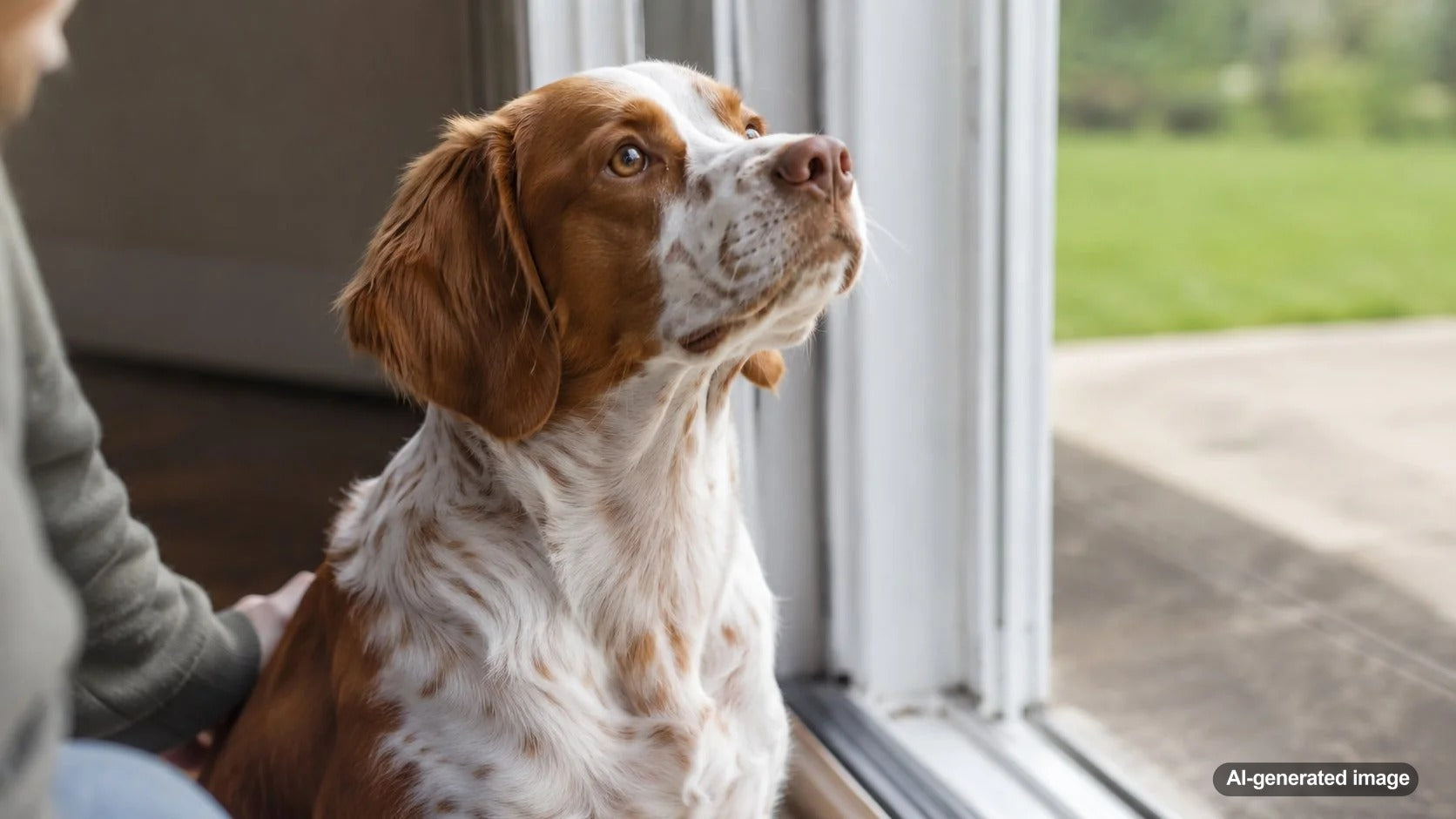
A dog that suddenly races to the window because someone is grilling, whines when a delivery driver carries takeout past the house, or obsessively sniffs the front door is not necessarily being stubborn. Food odors can be intensely interesting to dogs, even when the source is across the street, outside an apartment hallway, or drifting through an open window. You can help by reducing access to the trigger, teaching a simple alternative behavior, and giving your dog an appropriate way to sniff, lick, or search for food at home.
The goal is not to make your dog ignore every interesting smell. Sniffing is a normal and valuable part of canine life. Instead, you are teaching your dog that noticing a food smell does not require barking, pacing, scratching at the door, or launching onto the windowsill.
Why Outside Food Smells Can Be So Exciting
Dogs experience the world through scent. An odor that seems faint to you may give your dog a detailed trail of information about what is cooking, where it came from, and which direction it traveled.
Food smells can also trigger natural scavenging behavior. Your dog may begin checking the floor, circling the kitchen, staring through a fence, or pulling toward the source because searching for food has historically been rewarding. A dog that once found a dropped pizza crust near the sidewalk may become especially persistent when similar smells appear again.
Some dogs are more reactive than others. Puppies may have limited impulse control, adolescent dogs may become excited quickly, and scent-driven breeds may remain focused on an odor long after it has faded for you. Dogs that are hungry, bored, or under-stimulated may also have a harder time disengaging.
Manage the Environment Before Training
Training is difficult when your dog is already barking, jumping, or pulling hard enough to ignore you. Start by changing the setup so your dog can stay under control.
Close the window, draw a curtain, turn on a fan, or move your dog to a room farther from the hallway, patio, restaurant vent, or neighboring grill. In an apartment, a rolled towel near the bottom of the door may reduce some odors entering from the corridor. During walks, cross the street or turn around before your dog reaches the discarded food or outdoor dining area.
This is not avoiding the problem. It is preventing your dog from practicing the same frantic response over and over. Every successful repetition of barking at the window or dragging you toward a food smell can make that pattern more familiar.
Teach a Calm Place to Go
A mat, bed, or specific rug gives your dog a clear alternative to pacing around the house. Practice when no exciting food smells are present.
Stand near the mat and reward your dog for looking at it, stepping onto it, and eventually lying down. Keep sessions short. Once your dog understands the location, add a cue such as "place" or "bed." Gradually practice while you prepare your own meals, open the front door, or create other mild distractions.
When an outside food smell appears, cue the mat early. Reward your dog for moving away from the window or door and settling. Deliver several small treats calmly between the dog's paws rather than tossing them excitedly across the room.
Use Food Without Rewarding the Frenzy
Food can be an effective training reward, but timing matters. Avoid presenting a treat while your dog is actively jumping, screaming, or scratching. First create a small pause or guide your dog away from the trigger. Mark and reward the moment they turn toward you, place four paws on the floor, or move to the mat.
You can also teach a "leave it" cue during calm practice sessions. Begin with a low-value item in your closed hand. Reward your dog from the other hand when they stop sniffing, licking, or pawing at the closed fist. Progress gradually to food on the floor, covered food, and eventually real-life situations. Never practice with dangerous street food, cooked bones, medications, or anything your dog could swallow before you intervene.
For dogs that remain interested in searching, scatter a small portion of their regular kibble in a safe room or place it in a simple puzzle. The search should begin after your dog disengages from the outside smell, not during the peak of frantic behavior.
Build a Predictable Enrichment Routine
A dog with appropriate daily outlets for sniffing and foraging may find it easier to recover from tempting smells. Try relaxed sniff walks, hide-and-seek with kibble, food puzzles, or supervised licking activities.
For a longer-lasting indoor redirection, The Pupsicle can hold a treat refill and give your dog a focused licking activity away from the door or window. A FlipMat can also turn part of a meal or spread into slower, engaging enrichment. Introduce any new activity when your dog is already calm so it becomes part of a settling routine rather than an emergency distraction.
Count enrichment food as part of your dog's daily intake, especially for small dogs or dogs following a weight-management plan. Supervise toys and choose options appropriate for your dog's size and chewing style.
Avoid These Common Mistakes
Repeatedly shouting your dog's name can add energy to the situation. Chasing your dog away from the window may turn the event into a game. Opening the door so the dog can investigate may reward whining or scratching, especially if it brings them closer to the food smell.
Avoid punishing your dog for sniffing. The scent itself is not the problem. Focus on teaching what your dog should do after noticing it.
Do not increase difficulty too quickly. A dog that can settle near a mildly interesting kitchen smell may not yet be ready to relax beside an outdoor food festival or restaurant patio. Distance is a useful training tool, not a failure.
Dog Parent FAQs
Should I let my dog smell the food outside?
Calm sniffing from a safe distance is usually fine. Move away if your dog begins pulling, barking, scavenging, or losing the ability to respond to you.
Why does my dog keep sniffing after the food is gone?
Odor can linger on surfaces and in the air. Your dog may also be following the path the person or food took rather than smelling only the original source.
Will feeding my dog before a walk stop the behavior?
It may reduce hunger-related interest for some dogs, but it will not replace training. Use management, distance, reinforcement, and enrichment together.
How long does it take to improve this habit?
Progress depends on how intense the response is and how often your dog encounters the smell. Consistent short practices usually work better than occasional long sessions.
Turn the Smell Into a Training Cue
Outside food smells do not have to start a daily battle. With repetition, the smell of a neighbor's dinner or a passing delivery can become a cue for your dog to check in, move to a mat, and enjoy a calmer activity. Manage the strongest triggers, reward small moments of self-control, and give your dog healthy opportunities to use that impressive nose.


