






































































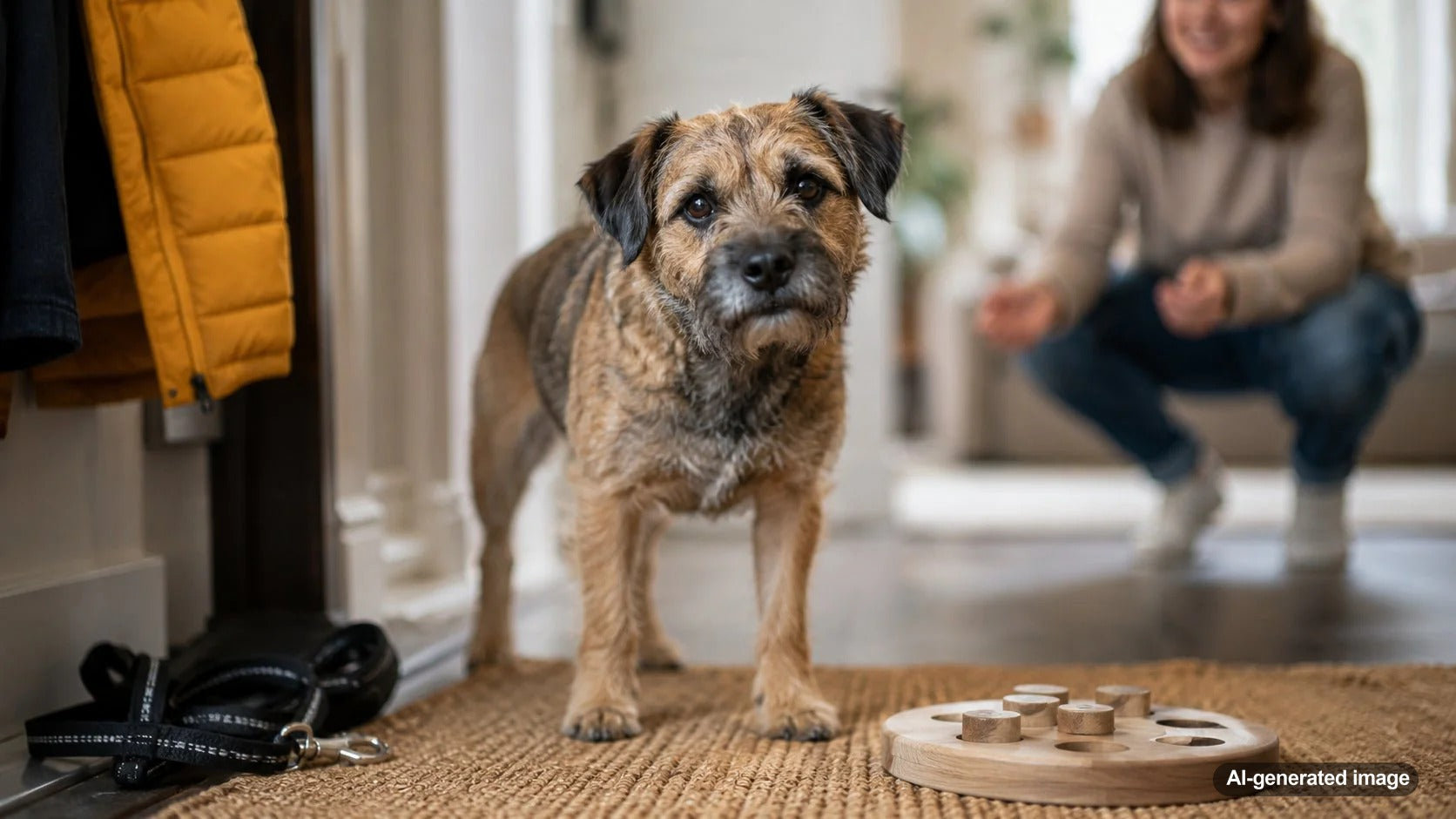
You clip off the leash after a good walk, expecting your dog to curl up for a nap. Instead, your pup starts pacing, stealing socks, barking at the window, or staring at you as if the real entertainment has not even started. When a dog gets bored after walks, the answer is usually not to keep adding more miles. Many dogs need a better mix of sniffing, problem-solving, chewing, licking, play, and practice settling before they feel truly satisfied.
A walk can meet several needs, but not every walk is equally enriching. A fast loop around the block may provide physical movement while leaving a curious dog mentally underwhelmed. Other dogs come home overstimulated rather than relaxed, especially after a busy route filled with traffic, dogs, people, and exciting smells.
First, Decide Whether Your Dog Is Bored or Overstimulated
Boredom and overstimulation can look surprisingly similar. A bored dog may wander around looking for something to do, bring you toys repeatedly, raid trash cans, chew household items, or bark for attention. An overstimulated dog may pant, pace, jump, mouth hands, grab the leash, react to small sounds, or seem unable to lie down.
Watch what happens during the first 10 to 20 minutes after the walk. A dog who calmly searches for hidden treats may simply need another appropriate activity. A dog who becomes frantic when offered an exciting game may need a quieter transition, such as water, dimmer surroundings, gentle licking, and rest.
A sudden behavior change deserves attention. Contact your veterinarian if post-walk restlessness appears alongside limping, excessive panting, coughing, appetite changes, vomiting, diarrhea, swelling, pain, or unusual fatigue.
Make the Walk More Mentally Satisfying
Distance is only one measure of a walk. Dogs experience much of the outdoors through scent, so a shorter walk with time to investigate grass, trees, and familiar scent spots may be more satisfying than a brisk march that never allows exploration.
Try dividing walks into two modes. Use a cue such as "let's go" when you need purposeful movement and another cue such as "go sniff" when your dog can explore safely. Even adding five or ten minutes of unhurried sniffing can change how your dog behaves when you get home.
You can also vary the route, practice a few easy cues, scatter several pieces of kibble in clean grass, or pause for a calm observation break. Keep the challenge appropriate. Puppies, seniors, and dogs recovering from illness may benefit from shorter outings with gentle mental enrichment rather than strenuous exercise.
Use a 10-Minute Post-Walk Enrichment Routine
A predictable routine helps your dog understand that coming home does not mean instant chaos or endless attention. Keep it simple enough to repeat every day.
Offer fresh water and allow your dog to cool down.
Choose one quiet activity, such as licking, chewing, or searching for food.
Guide your dog to a bed or mat and reward relaxed behavior.
For licking enrichment, spread a dog-safe food your dog already tolerates across a textured surface. The FlipMat offers two levels of challenge, so you can use the simpler side for dogs who frustrate easily and the more detailed side for experienced lickers. Supervise the activity and count any added food toward your dog's daily intake.
Give Your Dog a Job Instead of More Exercise
Some dogs return from a walk physically warmed up and ready to think. Giving them a small job can meet that need without turning the living room into a high-energy play zone.
Try hiding five treats around one room, rolling kibble inside a towel, practicing three familiar cues, or asking your dog to find a named toy. Keep training sessions short and successful. Two minutes of focused practice can be more useful than 20 minutes of repeating cues after your dog has lost interest.
Food-dispensing toys can also encourage natural searching and problem-solving. The Pupsicle can be used as a post-walk activity when your dog benefits from longer-lasting licking and treat play. Choose a filling that suits your dog's diet, select the correct toy size, and supervise until you know how your dog interacts with it.
Match the Activity to Your Dog
Not every boredom solution fits every dog. A young herding breed may enjoy scent searches and training games. A power chewer may prefer a durable, appropriately sized chew. A small senior dog may be satisfied by a gentle sniff walk followed by an easy licking activity.
Puppies often need help switching from activity to rest. Their wild post-walk behavior can sometimes mean they are overtired, much like a tired toddler. Keep walks age-appropriate and follow them with a calm routine rather than another burst of wrestling or fetch.
Senior dogs may still crave mental stimulation even when their bodies cannot handle long outings. Use easy food searches, familiar tricks, slow sniffing, and low-effort enrichment. Adjust activities for vision, hearing, dental, mobility, or dietary needs with guidance from your veterinarian.
Avoid the Endless Exercise Trap
Adding more exercise every time your dog seems restless can accidentally build an athlete who requires increasingly long workouts. Physical activity matters, but dogs also need opportunities to think, explore, chew appropriately, interact socially, and rest.
Also make sure you are not rewarding demanding behavior by immediately launching into entertainment whenever your dog barks or paws at you. Wait for a brief moment of calm, then offer the planned activity. This helps your dog learn that relaxed behavior opens the door to good things.
Teach Your Dog How to Settle
Rest is a skill for many dogs, not an automatic response. Place a comfortable mat in a quiet area and reward your dog for stepping onto it, sitting, lying down, and remaining relaxed. Deliver treats calmly between the front paws so your dog does not have to pop back up.
Begin when your dog is already somewhat calm. Gradually increase the amount of time between rewards. Over time, pair the mat with your post-walk enrichment routine so it becomes a familiar signal that the active part of the day is winding down.
Dog Parent FAQs
Why is my dog still energetic after a long walk?
The walk may have provided physical exercise without enough sniffing or problem-solving. Your dog may also be overstimulated, physically conditioned for long exercise, or in need of help transitioning into rest.
Should I play fetch after every walk?
Not necessarily. Fetch can be useful, but it may increase arousal in some dogs. Rotate it with calmer options such as scent games, licking, chewing, or short training sessions.
How long should post-walk enrichment last?
Start with five to ten minutes. The right duration depends on your dog's age, energy level, diet, health, and ability to settle afterward.
When should I talk to a professional?
Ask your veterinarian or a qualified trainer or behavior professional for help if restlessness is intense, sudden, destructive, paired with distress, or difficult to manage despite a consistent routine.
Build a Better Finish to Every Walk
A satisfying walk does not always end at the front door. For many dogs, the best finish is a short sequence of water, gentle mental enrichment, and guided rest. By balancing movement with sniffing, licking, chewing, thinking, and settling, you can help your dog feel fulfilled without spending the entire day trying to wear them out.


