






































































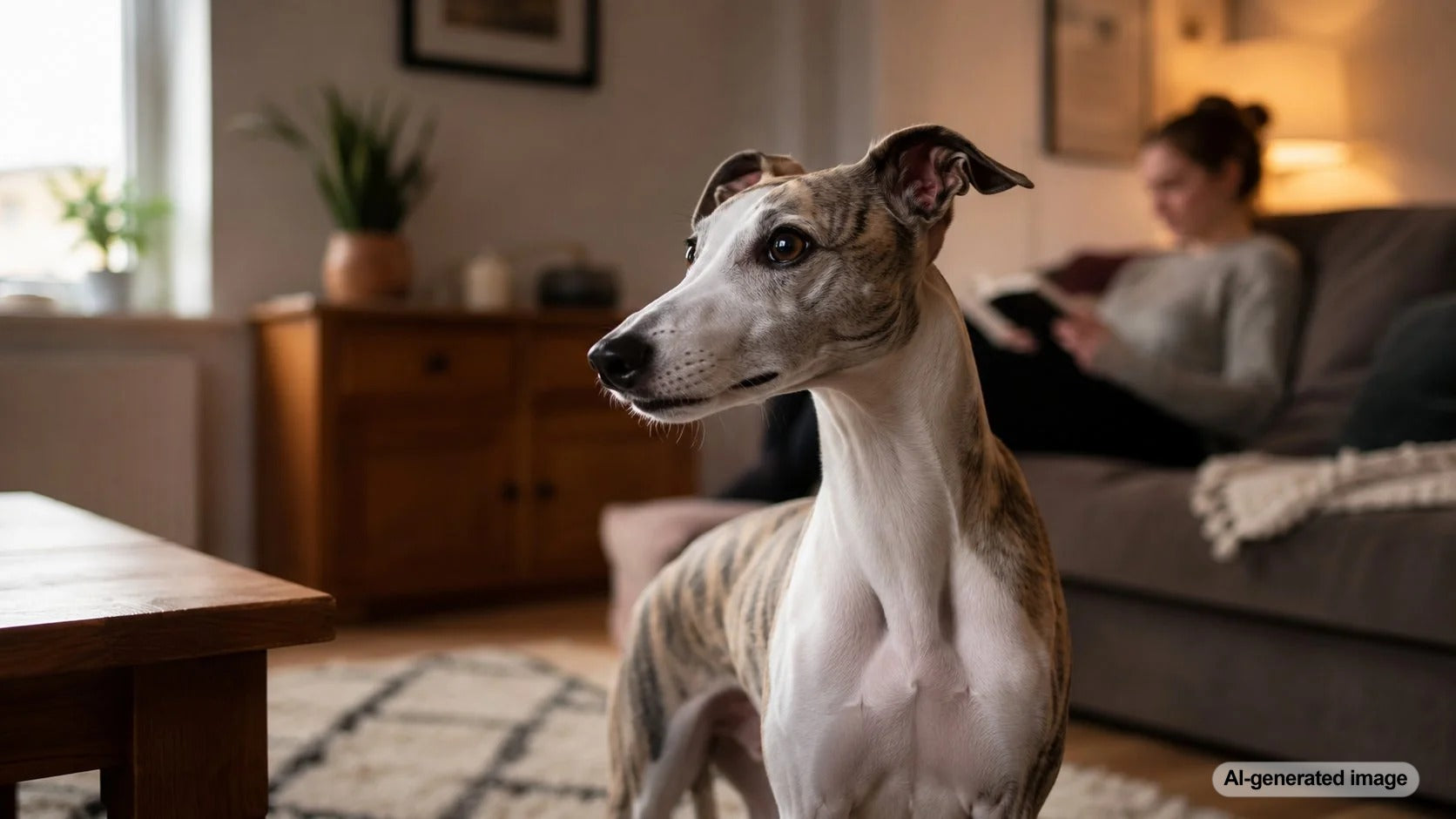
When the television turns off, conversations stop, and everyone settles down, some dogs suddenly seem unable to relax. They may pace from room to room, stare at their people, whine, bring toys repeatedly, or jump at every tiny sound. Helping a dog that becomes restless when the household is quiet usually involves meeting any unfinished physical needs, providing a predictable transition activity, and teaching that calm periods are safe and rewarding.
The goal is not to exhaust your dog or keep them entertained every minute. It is to help them shift from active family time into a calmer state without feeling confused, under-stimulated, or worried.
Why Does Quiet Time Make Some Dogs Restless?
Dogs often use household activity as a guide for what happens next. Footsteps, cooking sounds, conversations, and people moving between rooms provide stimulation and predictability. When everything stops abruptly, a dog who has not learned a clear settling routine may begin searching for the next activity.
Boredom is one possibility, especially if the dog spent much of the day resting or had little opportunity to sniff, explore, train, or play. Restlessness can also come from an unmet need, such as needing to go outside, feeling hungry, being too warm, or wanting a more comfortable place to lie down.
In other cases, quietness makes a dog more aware of faint sounds outside. Apartment hallways, wildlife, heating systems, or distant traffic can keep an alert dog listening and patrolling. Puppies may simply lack impulse control, while adolescent dogs often have energy left late in the day. Senior dogs deserve extra attention because nighttime pacing, altered sleep patterns, increased clinginess, or confusion can sometimes be connected to discomfort, sensory changes, or cognitive decline.
Look at the Whole Pattern, Not Just the Pacing
Before changing the routine, notice what your dog is actually doing. A bored dog may bring toys, paw for attention, investigate counters, or settle once given an appropriate activity. A worried dog may pant without being hot, tremble, drool, repeatedly lick their lips, stay unusually close to a person, or struggle to engage with food.
Also consider when the behavior starts. Does it happen immediately after the family sits down? Only after dark? When one particular person leaves the room? After a low-activity day? A simple log of the time, preceding activity, behavior, and what helped can reveal a pattern within several days.
Build a Predictable Transition Into Quiet Time
Dogs often settle more easily when calm time has a recognizable beginning. About 20 to 30 minutes before you want the household to relax, move through the same basic sequence.
- Take your dog outside for a bathroom break.
- Allow several minutes of unhurried sniffing rather than relying only on fast exercise.
- Offer a drink and check that the room is comfortable.
- Spend two or three minutes practicing easy cues such as touch, place, or down.
- Provide a quiet enrichment activity in the dog's resting area.
- Lower the activity level and reward calm choices.
Sniffing and simple problem-solving can be especially useful because they provide mental engagement without starting a high-energy game. A hard session of fetch immediately before bedtime may leave some dogs more activated rather than ready to sleep.
Use Licking, Chewing, and Searching Wisely
Quiet enrichment gives a dog something appropriate to do while the rest of the home becomes still. You might scatter part of dinner across a snuffle-friendly area, hide several treats around one room, or offer a supervised chew that matches your dog's size and chewing style.
Licking can also become a consistent signal that busy time is ending. A tool such as FlipMat can hold a dog-safe spread or part of a meal while providing two levels of licking challenge. For dogs who prefer a longer interactive treat session, The Pupsicle can provide focused enrichment as the family settles down.
Count enrichment foods as part of your dog's daily intake, choose ingredients appropriate for your dog, and supervise new activities. Remove any item that becomes damaged, develops sharp edges, or can be swallowed in unsafe pieces.
Teach Your Dog What Settling Looks Like
Many people accidentally reward restlessness by responding only after the dog whines, paws, barks, or circles the room. Instead, begin noticing small calm behaviors. Quietly place a treat between your dog's paws when they lie down, soften their body, rest their head, or remain on their bed while someone walks through the room.
You can also teach a place cue using a mat or bed. Start during an easy part of the day. Reward your dog for looking at the mat, stepping onto it, sitting, and eventually lying down. Keep early sessions brief and release your dog before they become frustrated. Gradually add duration and normal household distractions.
Avoid These Common Quiet-Time Mistakes
Do not assume every restless dog needs more intense exercise. Physical activity matters, but endless high-energy play can create a dog who expects constant action. Balance walks and play with sniffing, training, food puzzles, chewing, and opportunities to practice doing nothing.
Avoid scolding pacing or whining when fear may be involved. Punishment can increase uncertainty without addressing the reason the dog cannot settle. It is also unhelpful to introduce several new calming tools at once. Change one or two parts of the routine, observe the result, and adjust gradually.
Background sound may help dogs who react to every hallway creak or outdoor noise. A fan, white noise machine, or low, steady audio can soften sudden sounds, but it should not be used to mask persistent distress that needs professional attention.
When Restlessness Needs Professional Attention
Arrange a veterinary visit if the behavior begins suddenly, becomes progressively worse, or occurs with limping, repeated position changes, excessive panting, coughing, vomiting, diarrhea, appetite changes, increased thirst, excessive drooling, swelling, or sensitivity to touch. Urgent help may be needed if your dog appears unable to breathe comfortably, has a swollen abdomen, repeatedly tries to vomit without producing anything, collapses, or seems severely distressed.
Senior dogs who pace at night, become stuck in corners, stare at walls, forget familiar routines, or reverse their sleep schedule should also be evaluated. If the restlessness is linked to being alone or separated from a specific person and includes vocalizing, destruction, escape attempts, or house soiling, ask a veterinarian or qualified behavior professional about separation-related distress.
Dog Parent FAQs
Should I ignore my dog when they pace at night?
First check for bathroom needs, discomfort, fear, temperature problems, or unusual symptoms. Once those needs are addressed, calmly reinforce settling rather than repeatedly turning pacing into playtime.
Will a longer walk make my dog settle?
It may help when under-stimulation is the cause, but longer is not always better. A moderate walk with time to sniff can be more settling than intense exercise immediately before bed.
Why does my senior dog suddenly wander at night?
Possible reasons include pain, needing to eliminate, anxiety, sensory changes, medication effects, or cognitive changes. A veterinarian should evaluate new nighttime wandering in an older dog.
How long does it take to teach a dog to settle?
Some dogs improve within days of receiving a consistent routine, while puppies and highly alert dogs may need several weeks of short, positive practice. Progress is usually easier when the household responds consistently.
Create Calm Through Consistency
A dog who becomes restless when the home gets quiet is not necessarily being stubborn. They may need clearer signals, more appropriate mental activity, or help feeling secure during low-stimulation periods. Meet basic needs first, create a repeatable wind-down sequence, reward small moments of relaxation, and make adjustments based on your dog's age, health, and individual behavior.
With practice, household quiet can become a familiar cue to sniff, lick, chew, curl up, and rest rather than an empty space your dog feels responsible for filling.


