






































































Some dogs wake up ready for a hike, a fetch marathon, and a full neighborhood sniff tour. Other days, your dog is tired, recovering from a busy weekend, moving a little slower, or simply not in the mood for big activity. How to Create a Low-Energy Enrichment Day for Tired Dogs starts with one simple idea: enrichment does not have to be exhausting to be meaningful.
A low-energy enrichment day gives your dog outlets for sniffing, licking, chewing, problem-solving, and quiet connection without pushing their body too hard. It is especially useful after travel, daycare, a long walk, a vet visit, a playdate, hot weather, or any day when your dog seems mentally awake but physically worn out.
What Counts as Low-Energy Enrichment?
Low-energy enrichment is any activity that meets your dog's natural needs while keeping movement gentle. Dogs are built to explore the world through scent, taste, texture, chewing, foraging, and problem-solving. When those needs are met in a calm way, many dogs are better able to relax.
This is different from simply skipping activity. A tired dog may still become restless, barky, mouthy, or clingy if their brain has nothing to do. Low-energy enrichment gives them a job that fits the day.
Good examples include a slow sniff walk, a stuffed enrichment toy, a frozen lick session, a towel treat search, a short brushing routine if your dog enjoys it, or a quiet chew on a dog-safe option. For some dogs, even sitting outside and watching birds from a shady spot can count.
Start With a Tired Dog Check-In
Before planning activities, look at why your dog seems tired. Normal tiredness after exercise, travel, training, or social time is common. Your dog may nap more, move slowly, or choose a quiet corner.
Pause and call your veterinarian if tiredness appears suddenly, lasts longer than expected, or comes with vomiting, diarrhea, limping, coughing, excessive panting, appetite changes, swelling, pain, disorientation, or unusual behavior. Enrichment is not a replacement for medical care.
Also adjust for age and personality. Puppies may get overtired and wild when they actually need sleep. Senior dogs may want enrichment that is softer on joints. Power chewers may need sturdier choices and closer supervision. Tiny dogs may need smaller portions and easier setups.
Build the Day Around Sniffing, Licking, and Chewing
The easiest low-energy enrichment plan uses three calm behavior outlets: sniffing, licking, and chewing. These are natural dog behaviors that can help turn a busy brain toward a steadier rhythm.
Let your dog explore smells at their pace instead of walking for distance.
Use a spreadable treat or mix on a textured surface for slow, focused engagement.
Offer a supervised, appropriate chew to satisfy mouthy energy without high-impact play.
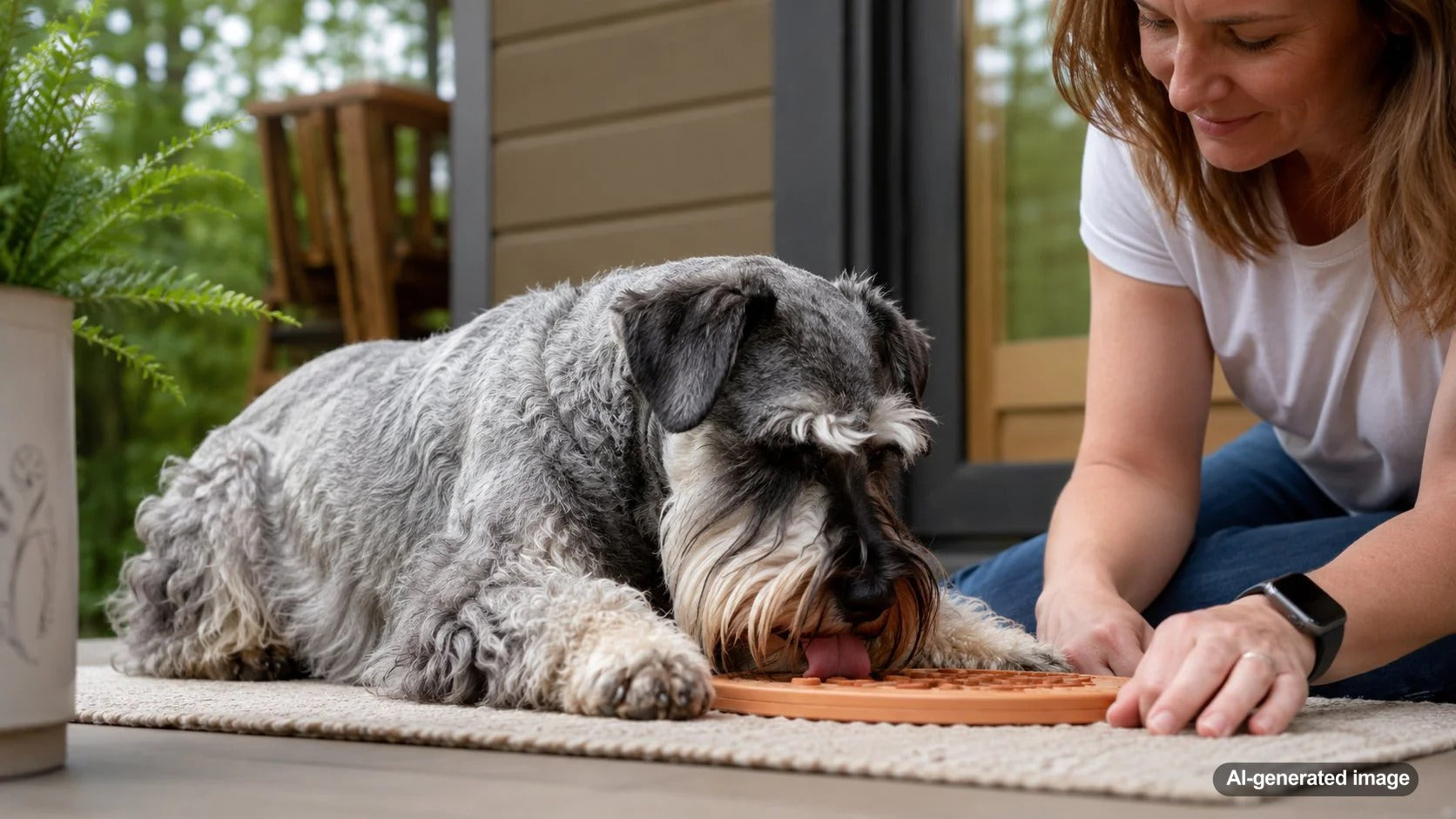
A helpful Woof option for lick-based enrichment is the FlipMat, a dual-sided lick mat and slow feeder with two levels of challenge. On a low-energy day, you can use the easier side with a thin layer of dog-safe spread or a Woof LickWells option, then save the more challenging side for days when your dog has more stamina.
A Gentle Low-Energy Enrichment Schedule
You do not need a complicated plan. In fact, tired dogs often do best with short sessions and long breaks. Here is a simple rhythm you can copy.
Morning: Take a slow 10 to 20 minute sniff walk, letting your dog choose safe sniff stops instead of focusing on speed.
Late morning: Offer a lick mat or slow feeder activity, then encourage a nap in a quiet space.
Afternoon: Try a five-minute treat search using a towel, cardboard box, or a few hidden treats around one room.
Evening: Give your dog a supervised chew or a long-lasting enrichment toy, followed by calm couch time or a bedtime potty stroll.
If your dog loses interest, that is information. Make the activity easier, use a smaller portion, or stop and let them rest. Enrichment should not feel like a test.
Easy Activities for Dogs Who Are Tired but Bored
A tired-but-bored dog may pace, stare at you, lick their paws, steal socks, bark at small noises, or keep getting up and lying down. They may not need more exercise. They may need a calming outlet.
Try a towel roll-up. Sprinkle a few treats or pieces of kibble in a towel, loosely roll it, and let your dog sniff and nudge it open. Keep it easy for beginners and supervise dogs who may shred fabric.
Try a lazy scent trail. Place a few treats in a short path across one room, then let your dog follow their nose. For seniors or dogs with mobility issues, keep treats close together and avoid slippery floors.
Try a frozen enrichment session. A chilled or frozen treat toy can stretch out lick time and make the activity last longer. The Pupsicle is a useful fit for this kind of day because it is designed for long-lasting treat play that keeps dogs busy without asking them to run, jump, or wrestle.
Common Mistakes to Avoid
One common mistake is assuming a tired dog needs to be worn out even more. If your dog is physically drained, high-energy fetch, rough tug, or a long power walk may backfire and create more stress.
Another mistake is making puzzles too hard. If your dog starts barking at the toy, pawing frantically, walking away, or chewing the wrong part, simplify the activity. Enrichment works best when it is challenging enough to be interesting but not so hard that it becomes annoying.
Portion size matters too. If you are using treats, spreads, chews, or frozen refills, account for them in your dog's daily food intake. Small dogs, puppies, and dogs with sensitive stomachs may need smaller amounts. Check with your veterinarian if your dog has dietary restrictions, allergies, or a medical condition.
How to Know the Day Is Working
A successful low-energy enrichment day usually looks quiet. Your dog may sniff slowly, lick steadily, chew calmly, take breaks, stretch out, nap deeply, or follow you less intensely around the house.
You do not need to see dramatic excitement. In fact, calm engagement is the point. If your dog settles after the activity, chooses rest, or seems less restless, you are on the right track.
If your dog becomes more agitated, shorten the session next time. Some dogs need very simple enrichment at first, especially rescue dogs, anxious dogs, puppies, and dogs who are new to puzzle toys.
Dog Parent FAQs
Can enrichment replace a walk?
Sometimes enrichment can replace a big walk for a day, especially when your dog is tired, the weather is unsafe, or your dog needs a lower-impact routine. Most dogs still benefit from potty breaks and gentle movement, so think of enrichment as support, not a permanent substitute for all walks.
How long should a low-energy enrichment session last?
Many dogs do well with 5 to 20 minutes at a time. Watch your dog. If they are relaxed and engaged, you can let the session continue safely. If they seem frustrated or exhausted, end it sooner.
Is licking good for tired dogs?
Licking can be a soothing, focused activity for many dogs. A lick mat, slow feeder, or treat toy may help give your dog something calm to do, especially on rest days. Always use dog-safe ingredients and supervise as needed.
What if my dog sleeps most of the day?
Extra sleep after a busy day can be normal. If the sleepiness is unusual, extreme, or paired with appetite changes, pain, vomiting, diarrhea, limping, coughing, or behavior changes, contact your veterinarian.
The Bottom Line on Low-Energy Enrichment Days
A low-energy enrichment day is not a lazy day in the bad sense. It is a thoughtful reset. By giving your dog calm ways to sniff, lick, chew, solve, and rest, you can help them feel cared for without overloading their body.
Start simple. Choose one sniff activity, one licking or chewing activity, and plenty of downtime. Your dog does not need a packed schedule to have a good day. Sometimes the best enrichment is gentle, quiet, and perfectly matched to the energy they actually have.


