






































































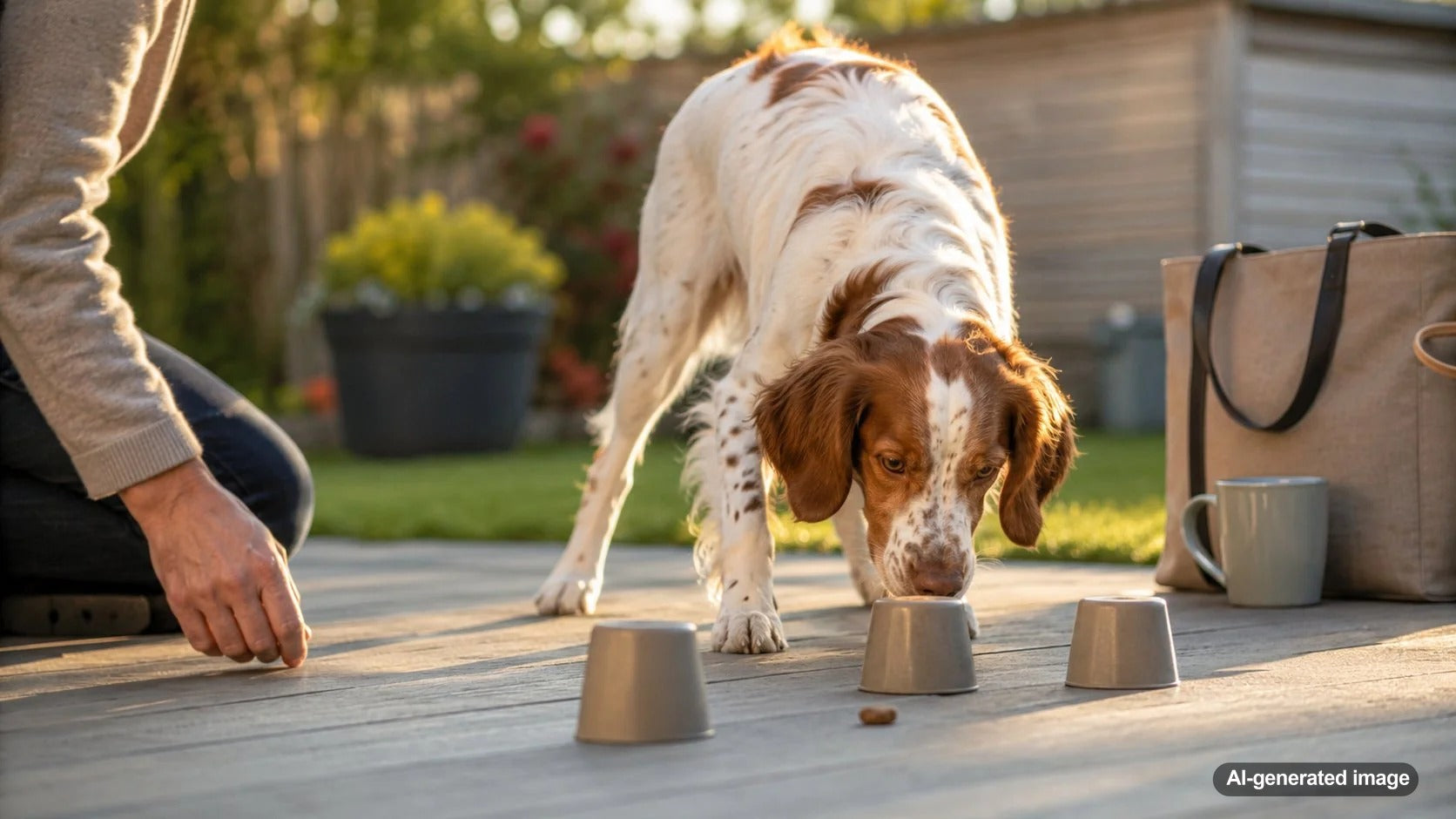
A busy morning does not leave much room for an elaborate dog enrichment session, but five focused minutes can still make a meaningful difference. The best before-work brain game is simple: ask your dog to sniff, search, and solve a small food puzzle using part of breakfast or a few tiny treats. It gives your dog a satisfying job while helping you create a calmer, more connected start to the day.
You do not need a complicated setup or a living room full of puzzle toys. A short search game, an easy treat puzzle, or a lick-based activity can encourage natural foraging behaviors and make an ordinary morning feel more interesting.
Why a Five-Minute Brain Game Works
Dogs naturally use their noses to investigate their surroundings and locate resources. When you turn breakfast into a search instead of placing every piece in a bowl, your dog has to make decisions, follow scent, and work toward a reward.
This kind of activity may support mental engagement without requiring a long walk or a high-energy game of fetch. It can be especially useful on rushed mornings, rainy days, or days when your dog will spend several hours resting while you work.
The goal is not to exhaust your dog in five minutes. It is to provide a small, satisfying challenge that fits naturally into a repeatable routine.
The Five-Minute Find-It Game
- Measure a small portion of your dog's breakfast or choose six to ten tiny training treats.
- Ask your dog to wait in another room or behind a baby gate.
- Place the food in three to five safe, accessible hiding spots.
- Release your dog with a consistent cue such as "Find it."
- Let your dog search independently, offering encouragement without pointing out every reward.
For a beginner, place food where it is partly visible, such as beside a chair leg, near the edge of a dog bed, or on an open section of floor. Once your dog understands the game, move treats behind a table leg, under the edge of a towel, or inside an open cardboard box.
A sniffing dog may move slowly, pause, circle back, or investigate the same spot more than once. That is part of the process. Avoid rushing your dog simply because you can see the hidden treat.
Match the Difficulty to Your Dog
A good brain game should feel challenging but solvable. If your dog wanders away, paws frantically at furniture, barks at you, or looks increasingly frustrated, the hiding spots may be too difficult.
Puppies and first-time players
Use obvious locations and only a few pieces of food. Puppies have short attention spans and may start chewing the towel, box, or container instead of solving the intended puzzle. Keep the session supervised and redirect calmly if the game turns into destructive play.
Confident adult dogs
Vary the height and location of the rewards while keeping everything within safe reach. You can place treats on different floor surfaces, behind open doors, or inside a loosely folded towel.
Senior dogs
Keep the search area small and avoid slippery floors, stairs, deep bending, or locations that require awkward movement. Senior dogs can still enjoy scent games, but the physical setup should match their mobility and comfort.
Large dogs and power chewers
Skip flimsy containers that can be crushed or swallowed. Choose durable, appropriately sized puzzle toys and inspect them regularly for damage. A dog who destroys objects quickly should not be left alone with a new puzzle.
Use Breakfast Instead of Adding Extra Calories
One of the easiest ways to make morning enrichment sustainable is to use part of your dog's normal meal. Set aside a small scoop of kibble before filling the bowl, then use that portion for the game.
If you prefer training treats, choose small pieces and account for them in your dog's daily intake. The rewards do not need to be large. For many dogs, the fun comes from finding several tiny prizes rather than receiving one oversized treat.
Try a Ready-to-Go Puzzle on Extra-Busy Days
Some mornings are too hectic for hiding treats around the house. A food-dispensing toy can provide the same search-and-solve idea in a more contained format.
The Walkabout is a rolling slow-feeder puzzle ball with an adjustable opening for kibble or treats. Your dog has to move and investigate the toy to release the food, making it useful for a quick breakfast brain game.
For dogs who prefer licking to rolling or chasing, a prepared FlipMat can create a calm, focused activity. Spread a dog-safe food across the textured surface the night before, refrigerate it, and bring it out when you begin your morning routine.
Introduce any new toy while you are present. Confirm that the size and durability match your dog's body size, chewing habits, and play style before considering it for independent use.
Common Morning Brain Game Mistakes
Making the first game too difficult can cause frustration instead of engagement. Using too much food can quietly add unnecessary calories. Hiding treats near cords, medications, cleaning products, trash cans, or delicate furniture can also encourage unsafe searching.
Another common mistake is turning the game into a test. Your dog does not need to perform perfectly or finish every puzzle. Help by making the next reward easier to find, then end on a successful moment.
Do not use enrichment as a substitute for exercise, bathroom breaks, social time, training, or veterinary care. A five-minute game is one helpful part of a balanced routine.
How to Make the Habit Stick
Keep the game attached to something you already do every morning. You might set it up while coffee brews, after your dog returns from a bathroom break, or immediately before you open your laptop.
Rotate among three simple formats: a treat search on Monday, a folded-towel puzzle on Tuesday, and a food toy on Wednesday. Small changes keep the routine interesting without creating more work for you.
Stop after about five minutes, even if a little food remains. A short, successful session is easier to repeat than an ambitious routine that makes you late for work.
Dog Parent FAQs
Can five minutes of enrichment really help my dog?
Five minutes will not replace a walk or longer play session, but it can add valuable sniffing, problem-solving, and positive interaction to your dog's morning.
Should I play the game before or after breakfast?
Use part of breakfast during the game, then serve the remaining portion afterward. This can help prevent accidental overfeeding.
Can I leave my dog alone with a puzzle toy?
Supervise all new toys first. Only consider independent use after confirming that the toy is appropriately sized, durable, and safe for your dog's chewing style.
What if my dog does not understand the game?
Place one treat in plain sight, praise your dog for finding it, and gradually increase the challenge. Some dogs need several easy sessions before they begin searching confidently.
When should I stop the activity?
Stop if your dog becomes frustrated, starts destroying the materials, guards the food, or shows discomfort. Ask your veterinarian or a qualified trainer for guidance if you notice a sudden or significant behavior change.
A Smarter Start to the Morning
A useful brain game does not need to be lengthy, complicated, or expensive. A handful of breakfast, a few safe hiding places, and five focused minutes can give your dog a positive outlet for sniffing and problem-solving before the day gets busy.
Keep the first sessions easy, adjust the challenge for your dog's age and abilities, and prepare ahead whenever possible. The best enrichment routine is not the fanciest one. It is the one you can safely repeat.


