






































































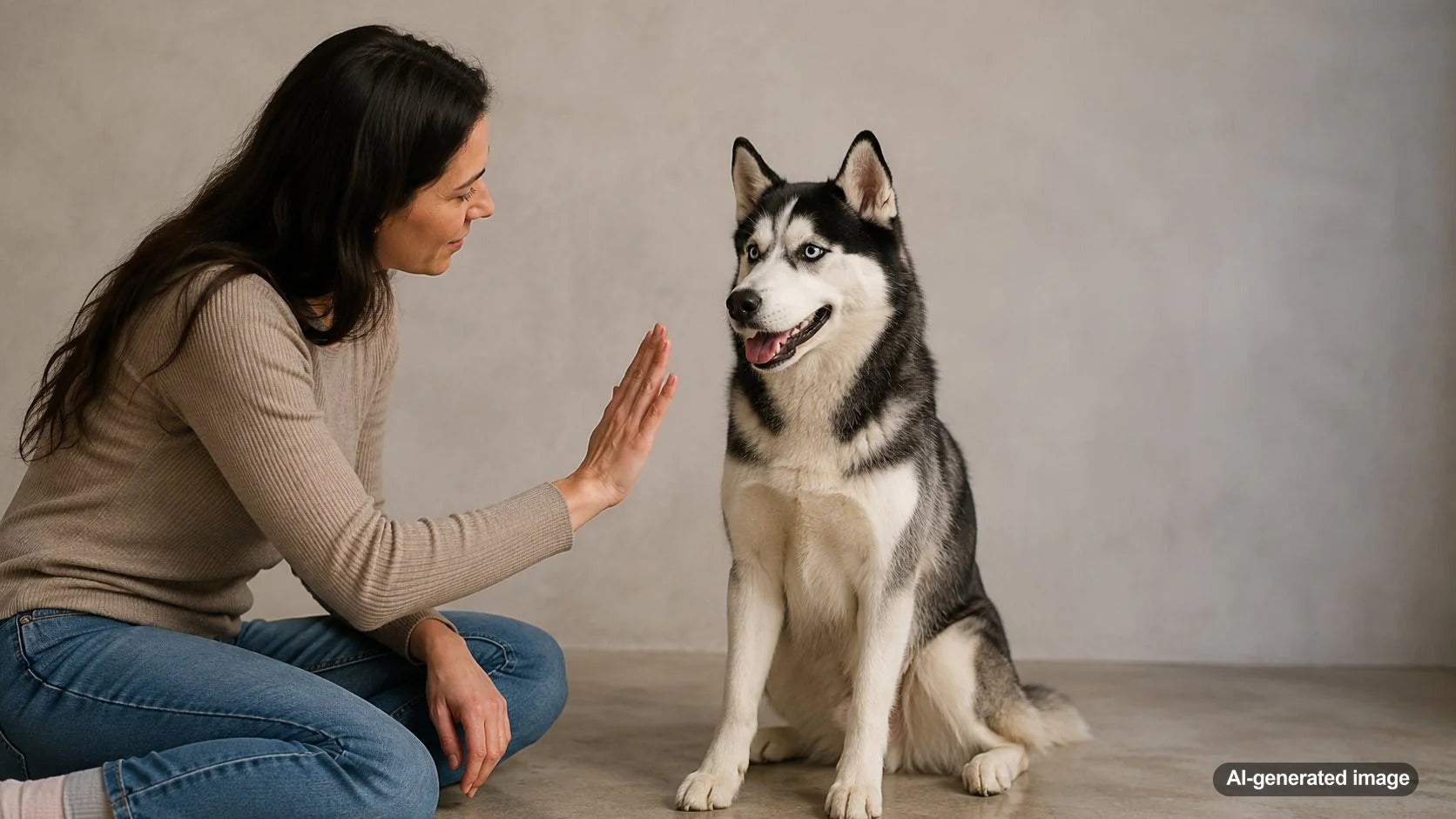
A talkative Husky can make everyday life feel like you are living with a furry commentator, opera singer, alarm system, and best friend all in one. The goal is not to silence your Husky or erase their personality. A calm routine helps your dog know when it is time to move, think, chew, lick, rest, and ask for attention in more manageable ways.
Huskies are energetic, social, intelligent working dogs, so random bursts of talking often show up when they are bored, frustrated, overtired, under-exercised, or trying a behavior that has worked before. If your Husky yodels at the leash, argues at dinner, sings during work calls, or narrates every household movement, structure can make a big difference.
Quick answer
To build a calm routine for a talkative Husky, combine predictable daily exercise, short training sessions, mental enrichment, chew and lick outlets, scheduled rest, and consistent responses to attention-seeking vocalizing. Reward quiet moments, teach useful cues, and give your Husky enough appropriate work so their big feelings have somewhere healthy to go.
Why Huskies Talk So Much
Huskies are famously vocal, but not every sound means the same thing. Some vocalizing is playful conversation. Some is excitement. Some is frustration, especially when a dog can see something they want but cannot reach it. Some is learned behavior: if howling makes the human look up, laugh, open the door, grab the leash, or start dinner faster, the Husky has just discovered a very effective button.
A calm routine works because it reduces uncertainty. Instead of your dog guessing when fun, food, exercise, and attention will happen, the day starts to follow a pattern. For many Huskies, predictability takes the pressure off and makes it easier to settle.
Start With a Morning Energy Outlet
A Husky who wakes up full of energy may not be ready for a quiet household right away. Start the day with movement before asking for calm. This could be a brisk walk, structured sniff walk, jog, hiking loop, safe backyard fetch, or training walk with lots of reward breaks.
The key is not just distance. A calm-building walk should include some thinking. Ask for simple skills like eye contact, hand targeting, waiting at curbs, or checking in when another dog passes. Physical exercise drains some energy, but mental effort often helps a busy Husky feel more satisfied.
Helpful tip: If your Husky comes home from walks more wound up than before, try ending with 5 minutes of slow sniffing, then a water break, then a lick or chew activity. That transition teaches the body to come down instead of crashing straight from high excitement into indoor chaos.
Use a Predictable Calm-Down Sequence
Many dog parents accidentally jump from activity to stillness too quickly. Huskies often need a bridge between action and rest. Build a simple sequence you can repeat after walks, play, guests, training, or mealtime excitement.
Offer water, remove gear, and keep your own energy low.
Scatter a few treats in a towel or safe area so your dog uses their nose.
Give a calm licking activity to encourage slower, focused behavior.
Guide your Husky to a bed, crate, pen, or quiet room with a familiar cue.
Licking can be especially useful because it gives your Husky something repetitive and absorbing to do. A tool like FlipMat can fit well here because it works as both a lick mat and slow feeder, so you can turn part of the routine into calm enrichment instead of another burst of excitement.
Reward Quiet Before the Talking Starts
One common mistake is waiting until the Husky is already yelling before trying to train. Instead, look for tiny quiet moments and pay them. If your dog sits quietly while you pick up the leash, reward that. If they pause between dramatic yodels, calmly mark and reward the pause. If they lie down while you work, drop a treat gently near their paws.
This teaches your dog that quiet behavior has value. Keep your rewards calm. Tossing treats across the room may restart the party. For vocal dogs, quiet praise, slow treat delivery, or a chew placed near the bed can work better than excited celebration.
Give the Mouth a Job
Some Huskies talk more when they do not have enough acceptable outlets for chewing, licking, shredding, carrying, or problem-solving. Giving the mouth a job is not spoiling your dog. It is channeling normal dog behavior into something safer and easier to live with.
Try rotating activities instead of leaving everything out all day. A morning lick mat, afternoon puzzle, evening chew, and short training treat session can feel more interesting than a pile of forgotten toys. For longer-lasting distraction during a work block or post-walk reset, The Pupsicle can be part of the routine because it gives dogs a focused treat toy activity that encourages licking, problem-solving, and staying busy.
Always supervise chew and treat toy time, especially with strong chewers. Choose the right size for your dog, remove damaged items, and check with your veterinarian if your dog has dental issues, diet restrictions, or a history of swallowing non-food objects.
Teach a Calm Cue That Actually Means Something
Words like "quiet" or "settle" only help if you teach them before your dog is already over the top. Start when your Husky is mildly alert, not mid-concert. Say the cue once, wait for a small calm behavior such as looking at you, closing their mouth, sitting, or lowering their body, then reward.
Keep sessions short. Three minutes of calm practice repeated daily is often more useful than one long session after everyone is frustrated. You can practice while making coffee, before meals, after walks, and before opening the door. Over time, the cue becomes part of a familiar pattern instead of a desperate request.
Do Not Accidentally Reward the Concert
If your Husky talks and you immediately give the thing they want, the behavior may grow. That does not mean ignoring every sound. Dogs should be able to communicate needs. The distinction is between responding thoughtfully and becoming a vending machine for yelling.
For example, if your Husky barks at the treat cabinet, wait for a breath of quiet before opening it. If they howl when you touch the leash, pause until they offer a calmer moment, then continue. If they vocalize because they need to potty, take them out calmly without turning it into playtime. Consistency matters more than perfection.
Build Rest Into the Schedule
Some Huskies are not under-exercised. They are overtired and wired. A dog who gets more and more dramatic as the day goes on may need better rest, not endless activity. Use a crate, pen, gated room, or bed area where your dog has practiced relaxing.
Keep the rest zone boring in a good way. Soft bedding, water, safe enrichment, and low household traffic can help. If your dog panics when separated, cannot settle at all, injures themselves, or shows sudden behavior changes, talk with your veterinarian or a qualified positive-reinforcement trainer. Vocalizing connected to anxiety, pain, or distress needs more support than a basic routine can provide.
A Simple Daily Routine for a Talkative Husky
Here is a practical starting point you can adjust to your dog's age, health, fitness level, and household schedule:
Morning: Movement first, then sniffing, breakfast enrichment, and a rest block.
Midday: Short potty walk, 3 to 5 minutes of training, and a quiet chew or lick activity.
Afternoon: Puzzle play, scent game, or structured play session before your Husky starts inventing their own entertainment.
Evening: Longer walk or active outing, dinner in a slow-feeding format, then a calm-down sequence.
Before bed: Final potty break, low excitement, lights down, and the same sleep routine each night.
Make calm easier to repeat. If your Husky does best with predictable enrichment, a simple rotation of licking, chewing, puzzle play, and slow feeding can help turn calm behavior into a daily habit instead of a once-in-a-while win.
Dog Parent FAQs
Can I train my Husky to stop talking completely?
Probably not, and that should not be the goal. Huskies are naturally expressive. A better goal is teaching when vocalizing works, when quiet gets rewarded, and how to settle after excitement.
Why does my Husky talk more at night?
Nighttime vocalizing can happen when a Husky is bored, under-exercised, overstimulated, hungry, uncomfortable, or responding to sounds outside. If it starts suddenly or comes with pacing, pain signs, appetite changes, or distress, contact your veterinarian.
Should I ignore my Husky when they howl?
It depends on why they are howling. Do not ignore signs of fear, pain, potty needs, or distress. For attention-seeking vocalizing, wait for a small quiet moment, then reward the calmer behavior.
How long does it take to build a calmer routine?
Some dogs respond within days, while others need several weeks of consistency. Huskies are smart and persistent, so keep the routine simple, repeatable, and fair.
Are lick mats and treat toys enough to calm a Husky?
They can be helpful tools, but they are not the whole plan. A talkative Husky usually needs movement, training, mental work, rest, and consistent human responses too.
The Bottom Line on Calmer Husky Days
A talkative Husky is not being dramatic just to make your day harder, even when it feels that way. They are communicating, experimenting, releasing energy, and looking for patterns. When you build a routine that includes exercise, enrichment, reward-based training, and real rest, your Husky gets clearer answers about what to do with all that personality.
Start small. Pick one calm-down sequence, one quiet behavior to reward, and one enrichment tool to use at the same time each day. Once your Husky understands the rhythm, calmer moments become easier for both of you to find.


