






































































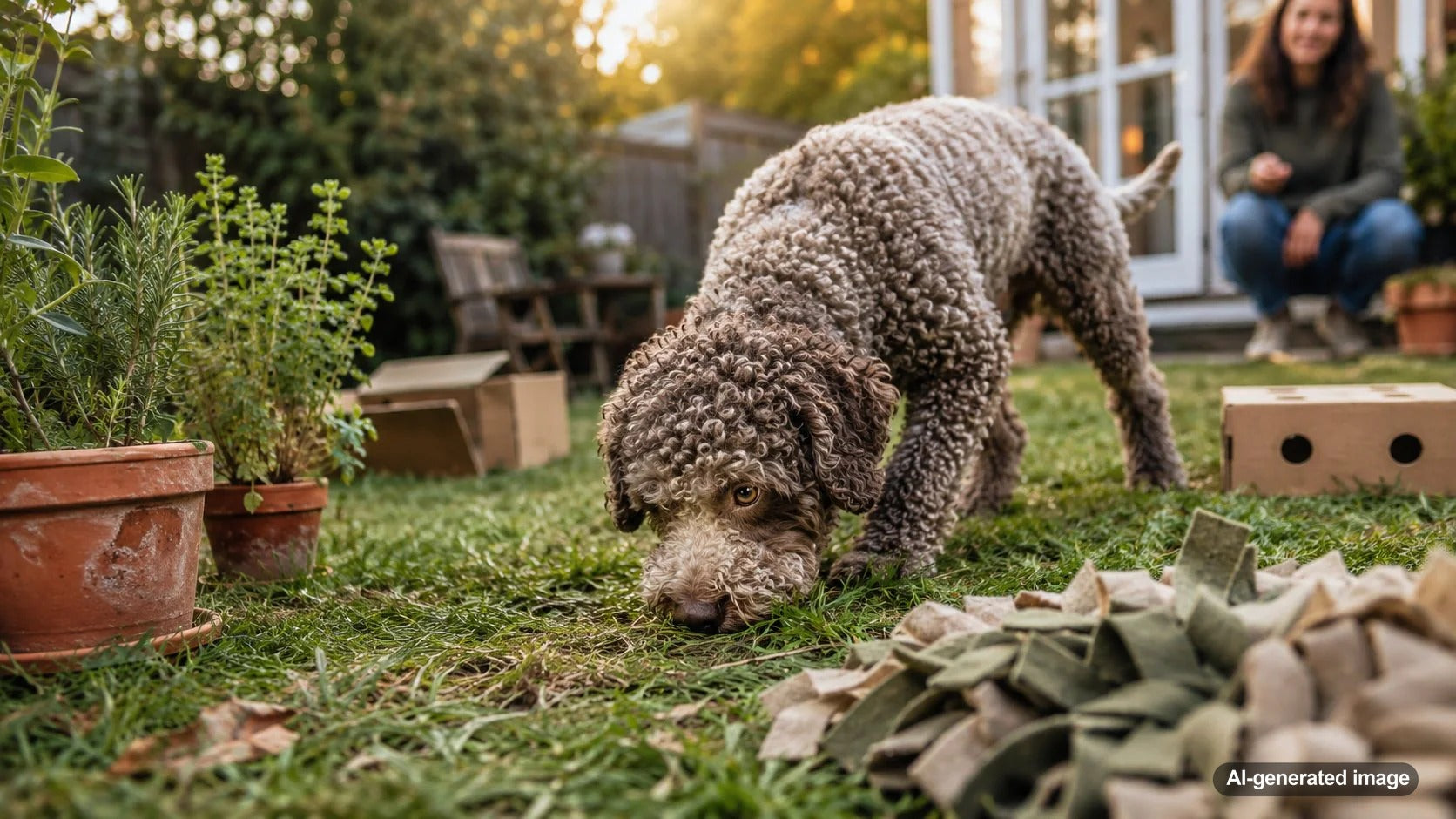
A backyard sniff safari is one of the easiest ways to turn an ordinary patch of grass, patio, or side yard into a satisfying adventure for your dog. Instead of asking your pup to run laps or chase the same ball again, you are inviting them to use their nose, make choices, solve tiny puzzles, and explore at their own pace. It can be especially helpful for dogs who seem bored after walks, puppies who need safe outlets, seniors who prefer low-impact fun, and busy households that need enrichment ideas that do not require a full afternoon.
Think of it as a mini scent walk without leaving home. You hide safe smells, treats, toys, or feeding stations around your yard, then let your dog investigate like a tiny detective with paws. The goal is not speed. The goal is calm curiosity, confidence, and a happy kind of mental tired.
Quick answer: How to build a backyard sniff safari
Start with a safe, enclosed area. Scatter a few high-value treats or pieces of kibble in easy-to-find spots, add one or two scent stations, and let your dog search while you supervise. Keep the first safari short, around 5 to 10 minutes, then slowly increase difficulty by changing hiding places, adding textured surfaces, or using a treat toy like Walkabout to turn searching and snacking into a rolling backyard puzzle.
Why sniffing is such powerful enrichment
Dogs experience the world through scent in a way humans simply do not. A patch of grass can tell them who visited, what blew in on the breeze, where a squirrel paused, and which corner has the most interesting story. Sniffing lets dogs gather information, follow patterns, and use natural foraging instincts.
That is why a sniff safari can feel more satisfying than plain exercise for many pups. A high-energy dog may still need physical activity, but nose work adds a different kind of challenge. For shy dogs, sniffing can build confidence because they get to make low-pressure choices. For older dogs, it can offer gentle stimulation without asking for big jumps or hard running. For power chewers or dogs who get into trouble when bored, it gives their brain a job before they go looking for your shoes.
Step 1: Choose a safe safari zone
Before you hide a single treat, do a quick yard check. Pick up sticks that could splinter, remove unsafe plants, close gates, and make sure there are no lawn chemicals, sharp objects, mushrooms, or mystery leftovers your dog might grab. If your dog eats everything first and asks questions later, use a smaller section of the yard or set up the game on a patio with containers, towels, and puzzle toys.
For puppies, keep the space very simple. For senior dogs, avoid slippery surfaces and long stretches of stairs. For small dogs, hide items low and easy. For large dogs, make sure containers are sturdy enough that enthusiastic paws will not collapse them.
Step 2: Pick your safari rewards
The easiest reward is your dog's regular kibble, especially if you are using the safari as part of breakfast or dinner. For a more exciting game, mix in a few small training treats, soft treats, or tiny pieces of a favorite safe food your dog already tolerates. Keep pieces small so your dog can search for more without overdoing it.
You can also use toys, chews, or lickable stations as destination points. For example, you might let your dog find a shady relaxation station with Fly n' Feed, which works as a flying disc for active play and a textured lick mat for slower, calming enrichment afterward. That makes the safari feel less like a treat scatter and more like a whole backyard adventure.
Helpful tip: If your dog has allergies, a sensitive stomach, dental pain, appetite changes, vomiting, diarrhea, or sudden behavior changes around food, check with your veterinarian before changing treats or routines.
Step 3: Start with easy hides
Begin where your dog can win. Let them watch you place a few treats in the grass, beside a planter, near a chair leg, or under the edge of a towel. Then say a simple cue like "find it" and step back. Praise calmly when they search, but try not to point out every reward. The confidence comes from figuring it out.
For the first few sessions, avoid making the game too tricky. A dog who cannot find anything may get frustrated and start digging, barking, or giving up. Easy wins teach the rules. Once your pup understands that the yard now contains hidden treasures, you can slowly add challenge.
Step 4: Add scent stations and textures
After your dog understands the basics, create little safari stops. Place treats in a muffin tin, tuck kibble into a rolled towel, sprinkle pieces around a snuffle-safe patch of grass, or hide a favorite toy behind a garden pot. You can also use dog-safe scent sources like a small amount of treat smell on a cloth, but skip essential oils unless your veterinarian or qualified trainer has confirmed they are safe for your specific dog.
Texture changes make the game richer. Grass, a rubber mat, a cardboard box, a shallow basket of towels, and a sturdy toy all hold scent differently. Some dogs love pushing through crinkly paper. Others prefer neat, quiet searches. Watch your dog's body language. Loose movement, soft eyes, and steady sniffing usually mean they are enjoying it. Stiff posture, frantic gulping, guarding, or repeated frustration means it is time to simplify.
Step 5: Build a repeatable sniff safari routine
Scatter part of breakfast in three easy zones before the day gets busy.
Use a 10-minute sniff search to help your dog shift from excited greeting to calmer evening mode.
Set up a covered patio version with towels, boxes, and one lick station.
Add a new route, one puzzle toy, and a final shady rest spot.
Keep sessions short enough that your dog finishes wanting more. Many dogs do best with 5 to 15 minutes, especially at first. Hot weather, humidity, age, flat-faced breeds, and health conditions can all shorten the safe window. Always provide water and shade, and bring the safari inside if the yard is too hot, icy, noisy, or distracting.
Common mistakes to avoid
Making it too hard too fast: Your dog should succeed early and often.
Using too many treats: Small pieces keep the game rewarding without turning it into a snack overload.
Leaving dogs unsupervised: Backyard enrichment still needs an adult human nearby.
Ignoring body language: Calm sniffing is great. Stress, guarding, frantic eating, or obsessive digging means adjust the setup.
Another common misunderstanding is thinking sniff games are only for high-drive working dogs. In reality, the setup can be adjusted for almost any dog. A puppy might search for kibble in plain sight. A senior might enjoy three soft, easy scent stops. A confident adult dog might work through multiple zones with a puzzle feeder at the end.
Dog Parent FAQs
Can I do a sniff safari every day?
Yes, many dogs can enjoy a short sniff safari daily as long as the rewards fit their diet, the weather is safe, and the game stays relaxed. Rotate the setup so it continues to feel fresh.
What should I hide for my dog?
Start with kibble or small treats your dog already eats comfortably. You can also hide favorite toys or set up a lick mat or puzzle toy as a final station.
Is a sniff safari good for anxious dogs?
It may support a calming routine for some dogs because sniffing is low-pressure and choice-based. If your dog has severe anxiety, panic, aggression, or sudden behavior changes, work with your veterinarian or a qualified trainer.
How do I stop my dog from digging up the yard?
Keep rewards on top of the ground at first, use containers or towels instead of burying treats, and redirect digging into approved search zones. If digging becomes intense or compulsive, simplify the game and ask a professional for guidance.
The bottom line on backyard sniff safaris
How to Build a Backyard Sniff Safari is really about giving your dog a richer way to enjoy a place they already know. With a few safe hiding spots, small rewards, and a little supervision, your backyard can become a confidence-building, boredom-busting enrichment zone. Start simple, follow your dog's pace, and let that amazing nose lead the way.


