






































































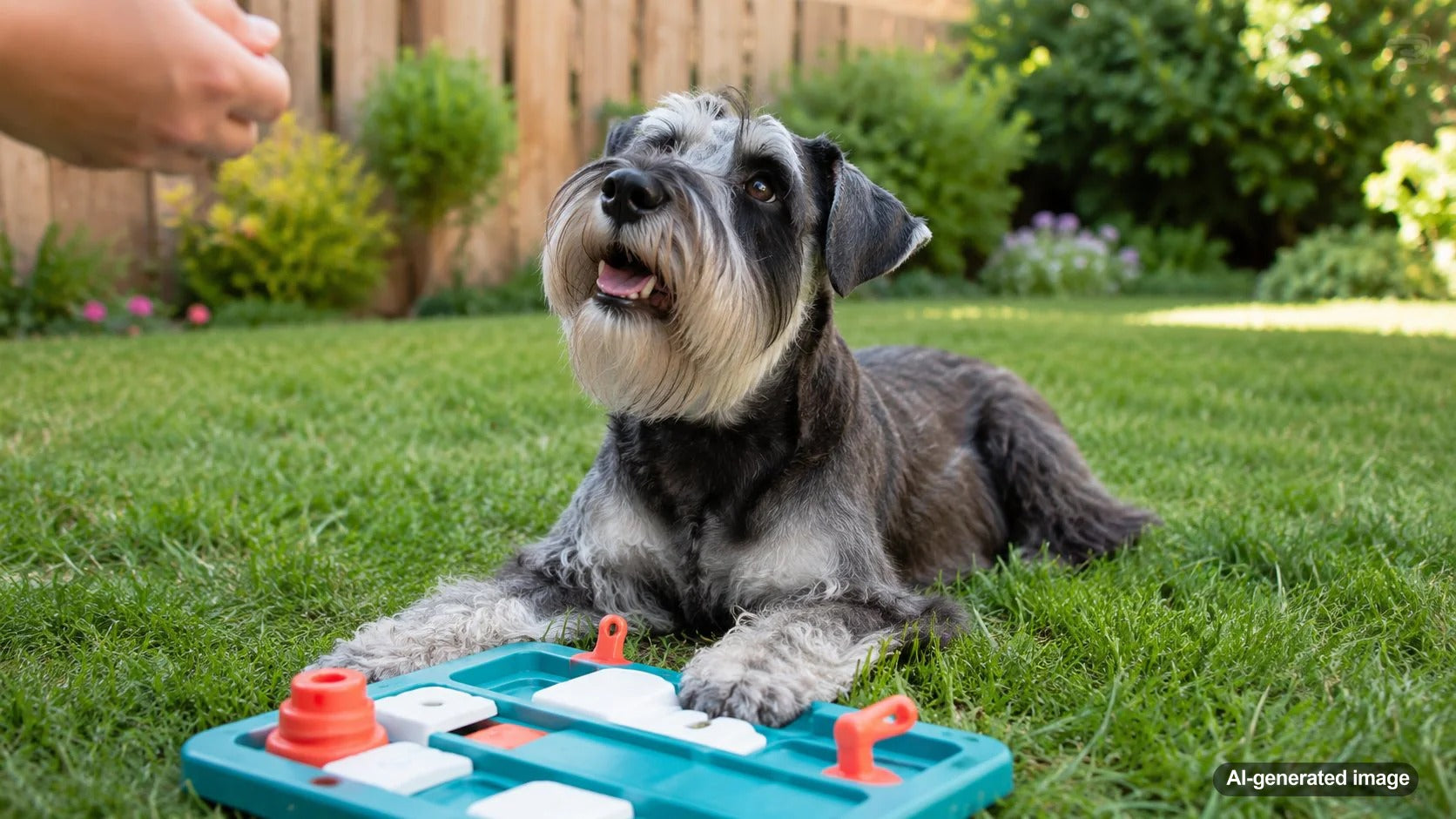
A bored dog rarely sends a polite request for more entertainment. Instead, you may find a shredded pillow, a freshly excavated flower bed, nonstop barking, stolen laundry, or a dog following you from room to room looking for something to do. You cannot permanently cure boredom with one toy or one long walk, but you can prevent most boredom-related trouble by giving your dog a balanced routine of movement, sniffing, problem-solving, chewing, licking, training, and rest.
The goal is not to keep your dog busy every minute. Dogs also need to learn how to settle. The most effective routine gives them meaningful outlets for natural behavior, then makes quiet downtime easier.
First, Make Sure It Is Actually Boredom
Boredom can look like chewing furniture, digging, raiding the trash, pestering family members, barking for attention, pacing, stealing objects, or repeatedly bringing you toys. These behaviors often happen when a dog has energy and curiosity but no appropriate outlet.
However, destructive behavior is not always simple boredom. A dog that panics shortly after you leave, scratches frantically at doors, drools excessively, has accidents despite being house-trained, or attempts to escape may be experiencing separation-related distress. Sudden restlessness, irritability, appetite changes, limping, excessive licking, or unusual behavior can also have a medical cause. Contact your veterinarian or a qualified behavior professional when the behavior is intense, sudden, or accompanied by signs of distress.
1. Turn Walks Into Sniffing Adventures
A fast walk around the block provides movement, but a slower sniff walk gives your dog more information to process. Let your dog investigate grass, trees, mailboxes, and safe new scents instead of asking for a perfect heel the entire time.
You can also vary the route, walk in the opposite direction, visit a quiet new area, or scatter a few treats in the grass for a supervised search. Even a short sniff-heavy outing may be more satisfying than covering the same distance at top speed.
2. Stop Serving Every Meal In A Plain Bowl
Food is one of the easiest enrichment resources because it is already part of your dog's day. Use a portion of your dog's measured meal for a scavenger hunt, slow feeder, rolling puzzle, training session, or treat-stuffable toy.
The Walkabout turns kibble or appropriately sized treats into a rolling slow-feeder game. Begin with an easy setting so your dog quickly discovers how food comes out. Once your dog understands the game, increase the challenge gradually rather than making the first attempt frustrating.
3. Use Licking For Calm, Focused Enrichment
Not every boredom buster needs to involve running. Licking activities can provide a quieter project during rainy afternoons, family meals, grooming sessions, or the transition from playtime to rest.
Spread a dog-safe food your dog already tolerates across a textured surface, supervise the session, and count the food toward the day's intake. A FlipMat offers two levels of licking and slow-feeding challenge, making it useful when you want to vary the difficulty without introducing an entirely new activity.
4. Schedule Tiny Training Sessions
Training is mental exercise, and it does not need to last 30 minutes. Two to five focused minutes can be enough to make your dog think while strengthening useful skills.
Practice touch, place, wait, find it, spin, paws up, toy cleanup, or going to a mat. End while your dog is still engaged. Puppies may benefit from especially short sessions, while experienced dogs may enjoy learning multi-step behaviors.
5. Give Chewers An Appropriate Job
Chewing is normal dog behavior, particularly for puppies, adolescents, and dogs that enjoy using their mouths. The goal is not to eliminate chewing. It is to direct it toward safer, approved items instead of table legs, shoes, or remote controls.
Choose chews that suit your dog's size, jaw strength, and chewing style. Supervise closely, inspect items for damage, and remove pieces that become small enough to swallow. Power chewers often need more durable options and more frequent safety checks than gentle nibblers.
6. Rotate Toys Instead Of Leaving Everything Out
A floor covered with the same toys every day can become background scenery. Keep a small selection available and rotate the rest every few days. When a familiar toy returns, it may feel interesting again.
Rotate by activity type, not just appearance. Offer one toy for tugging, one for chewing, one for food puzzles, and one for interactive play. This creates more variety than placing six similar plush toys in a basket.
7. Play Games That Use Natural Instincts
Many dogs become more satisfied when play resembles activities they are naturally motivated to perform. Try hide-and-seek, scent searches, fetch, tug with clear start-and-stop cues, supervised digging in an approved box, or finding a named toy.
Adapt the game to the dog. A senior dog may enjoy easy scent searches without sharp turns. A puppy may need soft surfaces and brief play periods. A large athletic dog may need more movement, while a small dog can still enjoy complex puzzles and challenging nose work.
8. Add Variety Without Overwhelming Your Dog
Novelty is useful, but constant excitement can create an overtired dog that struggles to settle. Introduce one new route, puzzle, scent game, or training task at a time. Give cautious dogs space to investigate new objects without pressure.
If your dog walks away, becomes frantic, barks at the puzzle, or starts biting the toy aggressively, the challenge may be too difficult. Make it easier, use higher-value rewards, or demonstrate the first step.
9. Build A Repeatable Daily Rhythm
The best boredom plan is one you can maintain. You do not need a packed schedule or a new activity every day. Create a simple rhythm that alternates engagement with rest.
- Morning: Sniff walk and breakfast through a slow feeder or puzzle.
- Midday: Three minutes of training followed by a chew or licking activity.
- Evening: Interactive play, another walk, or a scent game.
- After activity: Quiet time in a comfortable resting area.
Common Boredom-Busting Mistakes
One common mistake is trying to solve every problem with more intense exercise. Physical activity matters, but repeatedly exhausting a high-energy dog may simply build greater stamina. Mix movement with sniffing, training, chewing, and calm enrichment.
Another mistake is starting with puzzles that are too hard. Dogs need early wins. Begin with visible food and easy access, then add difficulty as your dog becomes confident.
Finally, avoid adding unlimited treats on top of normal meals. Use part of your dog's daily food allowance for enrichment, choose appropriately sized rewards, and ask your veterinarian about calorie needs if you are unsure.
Dog Parent FAQs
How can I tell if my dog is bored or tired?
A bored dog often seeks attention, steals objects, wanders, barks, or creates a game. A tired dog is more likely to settle when given a comfortable, quiet place. Overtired dogs can also act wild, so include predictable rest after activity.
Do dogs get bored when they are home alone?
Many dogs do, especially when they have no safe activity and their physical or mental needs were not met beforehand. A walk, food puzzle, and appropriate supervised or veterinarian-approved enrichment routine may help, but panic or escape behavior requires professional guidance.
Can mental exercise tire a dog out?
Mental work can be very satisfying and may help a dog settle, particularly when it involves sniffing, problem-solving, or learning. It should complement age-appropriate physical activity rather than replace movement completely.
How often should I change my dog's enrichment activities?
You can rotate activities every few days while keeping a few familiar favorites. Change the route, hiding place, filling, difficulty, or game rules to create novelty without buying something new every time.
The Bottom Line
You cure a dog's boredom by creating a life that gives natural behavior an appropriate place to go. Combine movement, sniffing, food puzzles, training, chewing, licking, interactive play, and real downtime. Start with one or two changes you can repeat consistently, watch how your dog responds, and adjust the routine to fit their age, health, personality, and energy level.


