






































































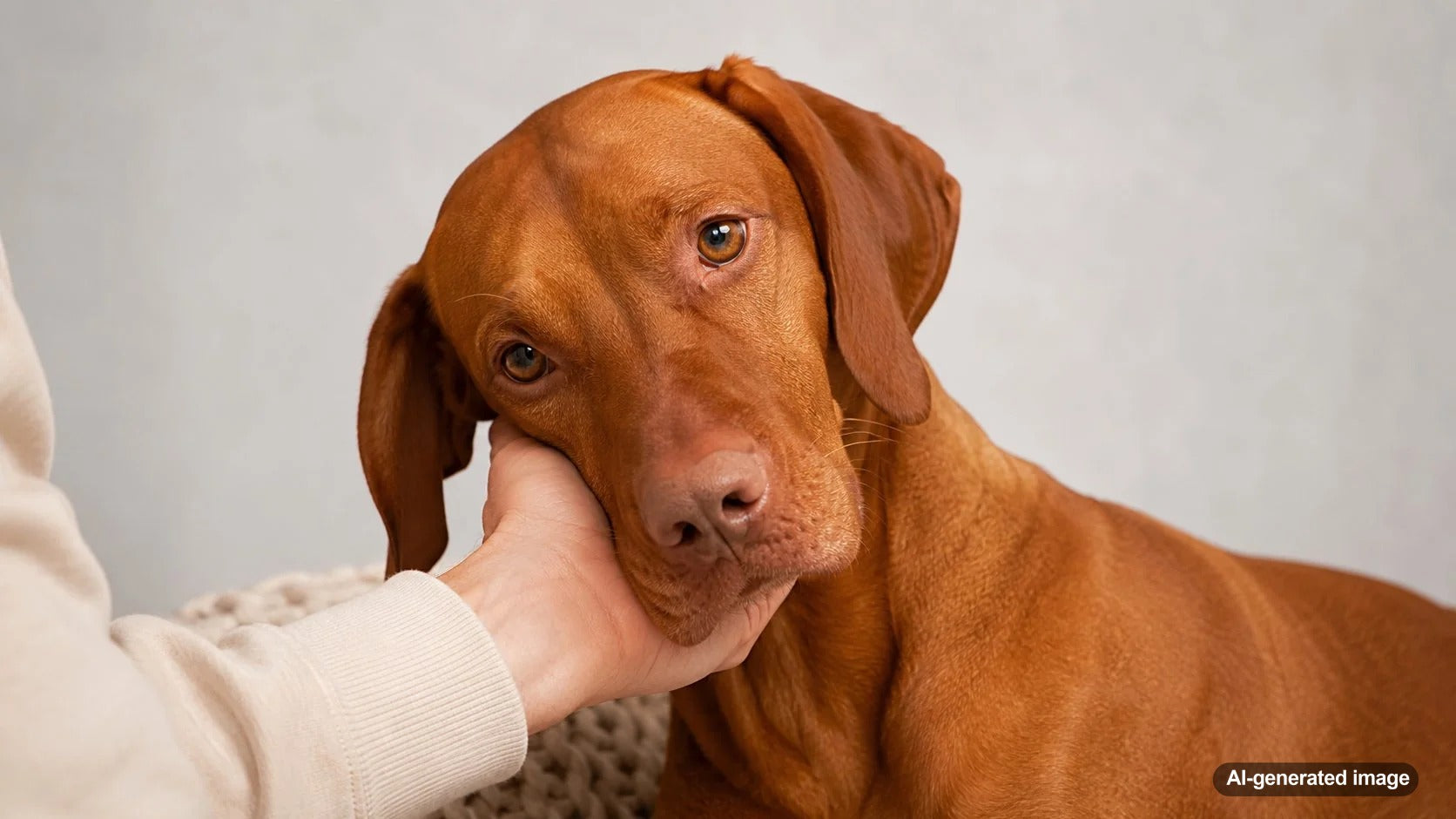
Dogs cannot say the words, but they have plenty of ways to communicate love. Your dog may lean against your leg, bring you a favorite toy, follow you from room to room, or simply fall asleep nearby with every muscle relaxed. These behaviors often reflect trust, attachment, and the wonderful feeling that you are their safe person.
Of course, every dog has a different personality. One pup may greet you with a full-body wiggle, while another quietly rests a chin on your knee. The clearest message comes from observing your dog's whole body, the situation, and the patterns that repeat over time.
1. Your Dog Chooses to Be Near You
A dog who regularly settles beside your chair, naps near your feet, or follows you into another room is choosing your company. This does not mean your dog must shadow you every second. Many confident dogs alternate between together time and independent rest.
Pay attention to voluntary closeness. A dog who can leave but decides to curl up nearby is showing that your presence feels comfortable and rewarding.
2. You Get the Full-Body Welcome
Some dogs greet a favorite person with more than a wagging tail. Their hips sway, their body curves, their face softens, and the tail may sweep in broad, loose movements. This relaxed, whole-body wiggle is very different from a stiff posture with a fast, high tail.
A wag alone does not always mean happiness. Read the entire dog, including the eyes, mouth, ears, posture, and movement.
3. Your Dog Makes Soft Eye Contact
Relaxed eye contact can be an intimate form of canine connection. Your dog may look at you with soft eyes, blink slowly, and then glance away. This is not the same as a hard, motionless stare, which may signal tension or concern.
Never hold an unfamiliar dog's gaze or move your face close to theirs. Let eye contact happen naturally, especially with shy or newly adopted dogs.
4. Your Dog Leans, Nudges, or Rests Against You
A shoulder pressed against your leg, a head placed in your lap, or a gentle nose nudge can be a request for closeness. Some dogs love long petting sessions. Others prefer a brief chest scratch before moving away.
Try a simple consent check: pet your dog for a few seconds, stop, and see what happens. Leaning back in or nudging your hand may mean "more, please." Turning away, licking the lips, freezing, or walking off means it is time to give your dog space.
5. Your Dog Brings You a Favorite Toy
When your dog drops a treasured ball, chew, or stuffed animal at your feet, the message may be an invitation to play. In a dog's world, shared activity is an important part of bonding.
Some dogs want you to throw the object. Others parade it proudly but do not want to surrender it. Respect the difference instead of grabbing. A short game, training session, or supervised enrichment activity with The Pupsicle can become a predictable way to enjoy focused time together.
6. Your Dog Checks In With You
During a walk or backyard adventure, a connected dog often glances back to locate you. They may return briefly, respond to their name, or adjust their pace when you change direction.
These check-ins are worth reinforcing. A cheerful "yes," warm praise, or a small reward such as Love Nuggets can encourage your dog to keep paying attention without turning the walk into constant drilling.
7. Your Dog Sleeps Soundly Near You
Sleep makes animals vulnerable. A dog who sprawls out, sighs deeply, or sleeps with a loose body near you is showing a meaningful level of trust. Some dogs sleep pressed against their people, while others choose the opposite end of the couch or a bed across the room.
Distance does not automatically mean less love. Senior dogs may seek a cooler surface, large dogs may need more space, and puppies may become restless when overtired.
8. Your Dog Seeks You When Unsure
A dog may move closer during thunder, an unfamiliar noise, or a visit to a new place. Looking to you for information can reflect a strong bond. Your calm behavior may help the situation feel more predictable.
Comforting a worried dog does not mean forcing contact. Offer access to a quiet area and let the dog choose whether to sit beside you, hide in a familiar spot, or use a calming activity. If fear is intense, frequent, or worsening, ask your veterinarian or a qualified behavior professional for help.
9. Your Dog Responds to Your Voice
Your dog's ears may perk up when you speak, even if you are not giving a command. Some dogs trot over when they hear their name. Others thump a tail from across the room or tilt their head when you use a familiar phrase.
This response develops through thousands of everyday interactions. Feeding, walking, playing, training, and calmly meeting your dog's needs all help your voice become associated with safety and good things.
10. Your Dog Feels Safe Being Themselves
One of the strongest signs of love is not dramatic at all. It is a dog who can relax, explore, play, communicate boundaries, and recover after excitement because life with you feels dependable.
Real connection does not require constant cuddling. Independent breeds, former strays, and dogs with limited early socialization may express affection subtly. A quiet check-in or choosing the same room can be just as meaningful as climbing into your lap.
Ways to Say "I Love You" Back
- Keep meals, walks, bathroom breaks, and bedtime reasonably predictable.
- Offer daily sniffing, play, chewing, licking, and problem-solving opportunities.
- Use rewards to teach useful behaviors instead of relying on intimidation.
- Respect your dog's signals when they want a break from touching or play.
- Schedule routine veterinary care and respond to sudden physical or behavioral changes.
- Give your dog focused time without expecting every interaction to be exciting.
Be cautious with human-style hugs. Some dogs tolerate them, but many feel restrained when arms wrap around their body. Dog-friendly affection is usually easier to recognize: a gentle scratch, a game, a sniff-filled walk, a comfortable place to rest, or a shared routine your dog chooses to join.
Dog Parent FAQs
Does my dog love me if they do not cuddle?
Yes. Many dogs prefer nearby companionship, play, walks, or brief contact instead of prolonged cuddling. Look at the full pattern of trust and voluntary interaction.
Why does my dog follow me everywhere?
Your dog may enjoy your company, expect something rewarding, or feel uncertain when separated. If the behavior includes panic, destruction, nonstop barking, or an inability to settle alone, consult your veterinarian or a qualified trainer.
Do dog kisses mean love?
Licking can be affectionate, but it may also be attention-seeking, exploratory, or soothing. Consider what happened immediately before the licking and whether your dog's body appears relaxed.
Can a dog's behavior change when they are in pain?
Yes. Pain or illness may cause withdrawal, irritability, restlessness, reduced appetite, or unusual clinginess. Contact your veterinarian about sudden or significant changes.
The Bottom Line
Dogs say "I love you" through choices: choosing your company, inviting you to play, trusting you enough to sleep, and looking to you when the world feels uncertain. The best way to understand the message is to notice your dog's unique patterns and respect what makes them feel secure. Love may look like a spectacular welcome at the door, but it can also be the quiet sound of a contented dog settling beside you.


