






































































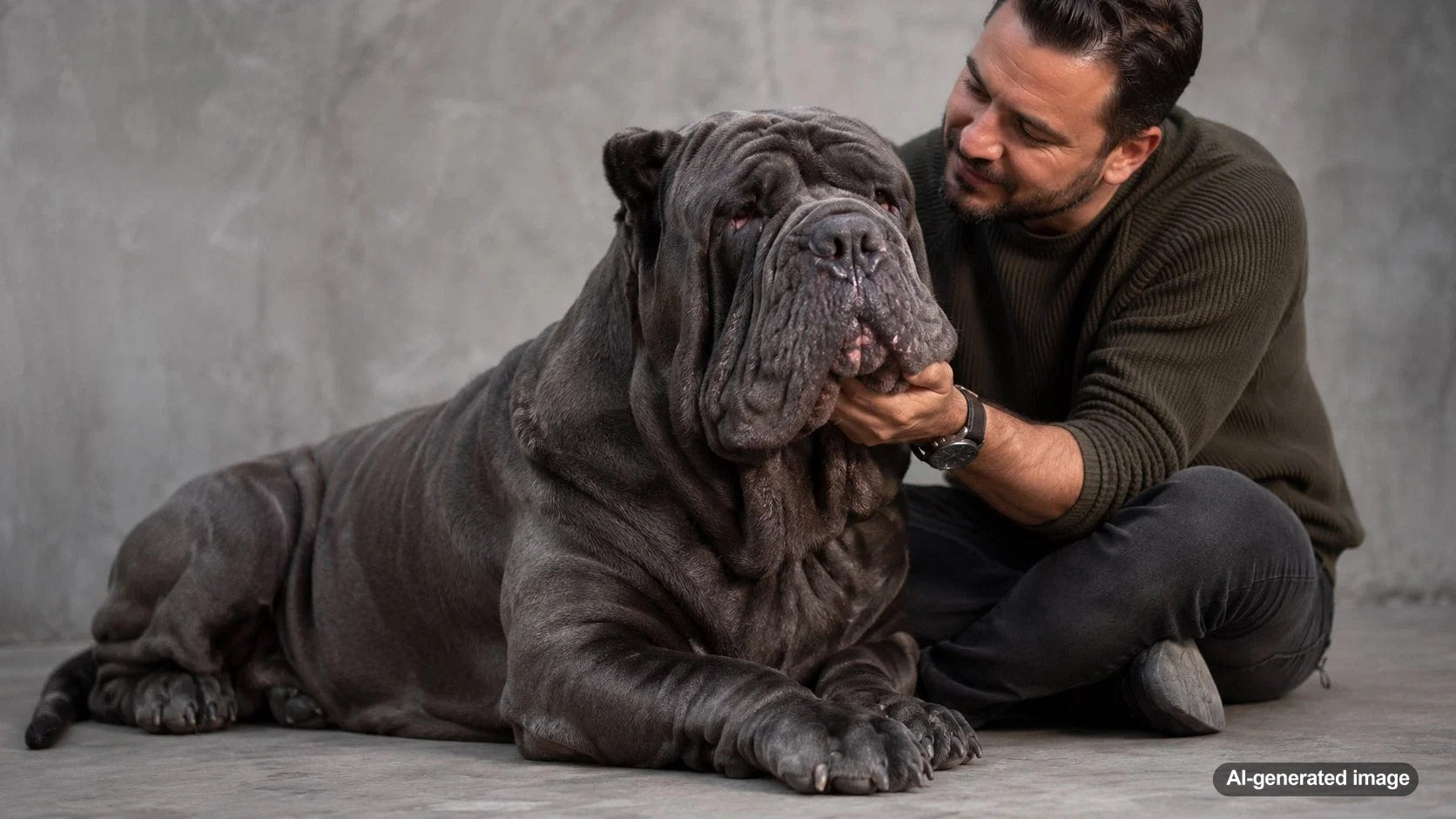
The Neapolitan Mastiff looks like a dog carved to guard an ancient castle, complete with massive bones, deep wrinkles, and a quietly watchful expression. Behind that imposing appearance is often a devoted, steady companion who wants to remain close to the people they trust. Living successfully with this breed, however, requires thoughtful training, plenty of space, and a realistic appreciation for drool, strength, and giant-dog care.
Also known as the Mastino Napoletano or simply the Neo, this Italian guardian is not an oversized version of an easygoing family dog. A well-bred and carefully socialized Neo can be affectionate and calm at home, but the breed's protective instincts, physical power, and reserved nature make experienced ownership especially valuable.
Neapolitan Mastiff at a glance: This is a giant, loyal, naturally protective dog with moderate exercise needs, a short coat, substantial grooming around the skin folds, and an expected lifespan commonly around 7 to 9 years. Adult dogs may weigh roughly 110 to 150 pounds or more, so training should begin long before the dog reaches full size.
History of the Neapolitan Mastiff
The Neapolitan Mastiff was developed in Italy as a property and estate guardian. Its roots are associated with ancient mastiff-type dogs, while the modern breed took shape around Naples. The dramatic loose skin, enormous head, and powerful frame created a dog whose appearance alone could discourage an intruder.
The breed remained relatively uncommon outside Italy until the twentieth century. Today, the Neo belongs to the Working Group and still carries the instincts of a serious guardian. That history helps explain why many Neapolitan Mastiffs are deeply attached to family but cautious when unfamiliar people enter their space.
Temperament: Loyal, Watchful, and Independent
A typical adult Neo is often calm indoors, observant, and less interested in constant activity than many working breeds. These dogs tend to form intense bonds with their households. They may follow family members from room to room, lean their considerable weight against a favorite person, or settle where they can monitor the front door.
Protectiveness should not be confused with uncontrolled aggression. A stable Neapolitan Mastiff should be confident and manageable, but natural suspicion means early socialization is essential. Puppies need positive, carefully paced exposure to different people, surfaces, sounds, vehicles, handling, and everyday visitors. The objective is not to make the dog greet everyone enthusiastically. It is to teach calm neutrality and reliable responses around unfamiliar situations.
Because an adult Neo can be physically difficult to redirect, reward-based leash skills, recall, place training, and polite doorway behavior should start during puppyhood. Short sessions usually work better than repetitive drills. High-value, bite-sized rewards such as Love Nuggets can make everyday practice easier without turning training into a full meal.
Exercise and Enrichment Without Overdoing It
Neapolitan Mastiffs generally need consistent movement rather than intense endurance exercise. Leisurely walks, sniffing opportunities, controlled yard time, and brief training games can support physical and mental wellness. Adult dogs may enjoy several shorter outings more than one demanding adventure.
Growing puppies require extra care because their joints are carrying a rapidly increasing amount of weight. Avoid forced running, repeated jumping, slippery floors, and long sessions on hard surfaces. Ask your veterinarian for exercise guidance suited to your puppy's age, body condition, and development.
Heat also deserves attention. A giant dog can overheat quickly, so schedule walks during cooler hours, provide water and shade, and stop if your dog begins struggling, slowing down, or panting unusually hard. Indoor scent games and food puzzles can provide engagement when the weather makes outdoor exercise uncomfortable.
Make enrichment appropriately challenging: Start with an easy food puzzle and supervise the entire session. A rolling slow feeder such as the Walkabout can turn part of a meal into a brain game, but confirm that any toy is appropriately sized for your dog and remove it if your Neo begins crushing, tearing, or swallowing pieces.
Grooming the Wrinkles, Coat, and Drool
The short coat is relatively simple to brush, but the famous wrinkles require regular attention. Check facial folds for trapped moisture, food, redness, odor, or irritation. Gently clean them with a veterinarian-approved method and dry them thoroughly. Moisture left between folds may encourage skin problems.
Loose lips also mean drool is part of daily life. Keep washable cloths near water bowls, furniture, and doors. Placing an absorbent mat beneath the water station can reduce slippery floors and make cleanup more manageable.
Trim nails regularly, check ears, and introduce toothbrushing early. Drooling does not automatically mean poor dental health, but sudden excessive drooling, difficulty eating, strong new mouth odor, bleeding gums, or facial swelling warrants a call to your veterinarian.
Health Considerations for a Giant Guardian
Responsible breeders should discuss health screening for hips, elbows, eyes, and the heart. Neapolitan Mastiffs may be affected by orthopedic problems, cardiac disease, eyelid concerns, and skin-fold irritation. Maintaining an appropriate body condition can help reduce unnecessary stress on the joints.
Owners should also understand gastric dilatation-volvulus, commonly called GDV or bloat. This life-threatening emergency can occur in large, deep-bodied dogs. Warning signs may include a suddenly swollen abdomen, restlessness, repeated unsuccessful attempts to vomit, heavy drooling, weakness, or rapid breathing. Do not wait to see whether these symptoms improve. Seek emergency veterinary care immediately.
Discuss meal size, feeding frequency, exercise around meals, and preventive options with your veterinarian. A slow-feeding routine may help a dog who gulps food, but no bowl, puzzle, supplement, or feeding method can guarantee protection from GDV.
Is a Neapolitan Mastiff Right for Your Home?
- You are comfortable managing a giant, exceptionally strong dog.
- You can provide early socialization and consistent reward-based training.
- You accept drool, wrinkle care, higher food costs, and potentially significant veterinary expenses.
- You can supervise interactions with children, visitors, and other animals.
- You want a calm, devoted guardian rather than a highly social dog-park regular.
Neos may live successfully with respectful children, but their size alone can knock over a small child. Every interaction should be supervised, and children should never climb on, hug, or disturb a resting or eating dog. Compatibility with other dogs varies, so careful introductions and professional guidance may be needed.
This breed is rarely the easiest choice for a first-time dog owner. For the prepared household, however, the Neapolitan Mastiff can be a deeply loyal companion whose quiet presence fills both the room and the heart.
Dog Parent FAQs
Are Neapolitan Mastiffs good family dogs?
They can be devoted family companions in experienced homes that provide early socialization, clear routines, and supervised interactions. Their size and guarding instincts require responsible management.
How much exercise does a Neapolitan Mastiff need?
Most adults benefit from moderate daily movement, including shorter walks, sniffing, and gentle enrichment. Puppies and dogs with health concerns need veterinarian-guided exercise that protects their developing or sensitive joints.
Do Neapolitan Mastiffs drool a lot?
Yes. Their loose lips commonly produce substantial drool, particularly after drinking, eating, or becoming excited. Washable cloths and an absorbent water-bowl mat are practical household essentials.
A Remarkable Dog for the Right Person
The Neapolitan Mastiff combines an unforgettable appearance with loyalty, independence, and a serious guardian's instincts. Success comes from starting training early, respecting the breed's limits, protecting growing joints, maintaining skin-fold hygiene, and working closely with a veterinarian. Give a well-suited Neo calm leadership and dependable routines, and this imposing guardian may reveal an extraordinarily tender side reserved for the people they call family.


