






































































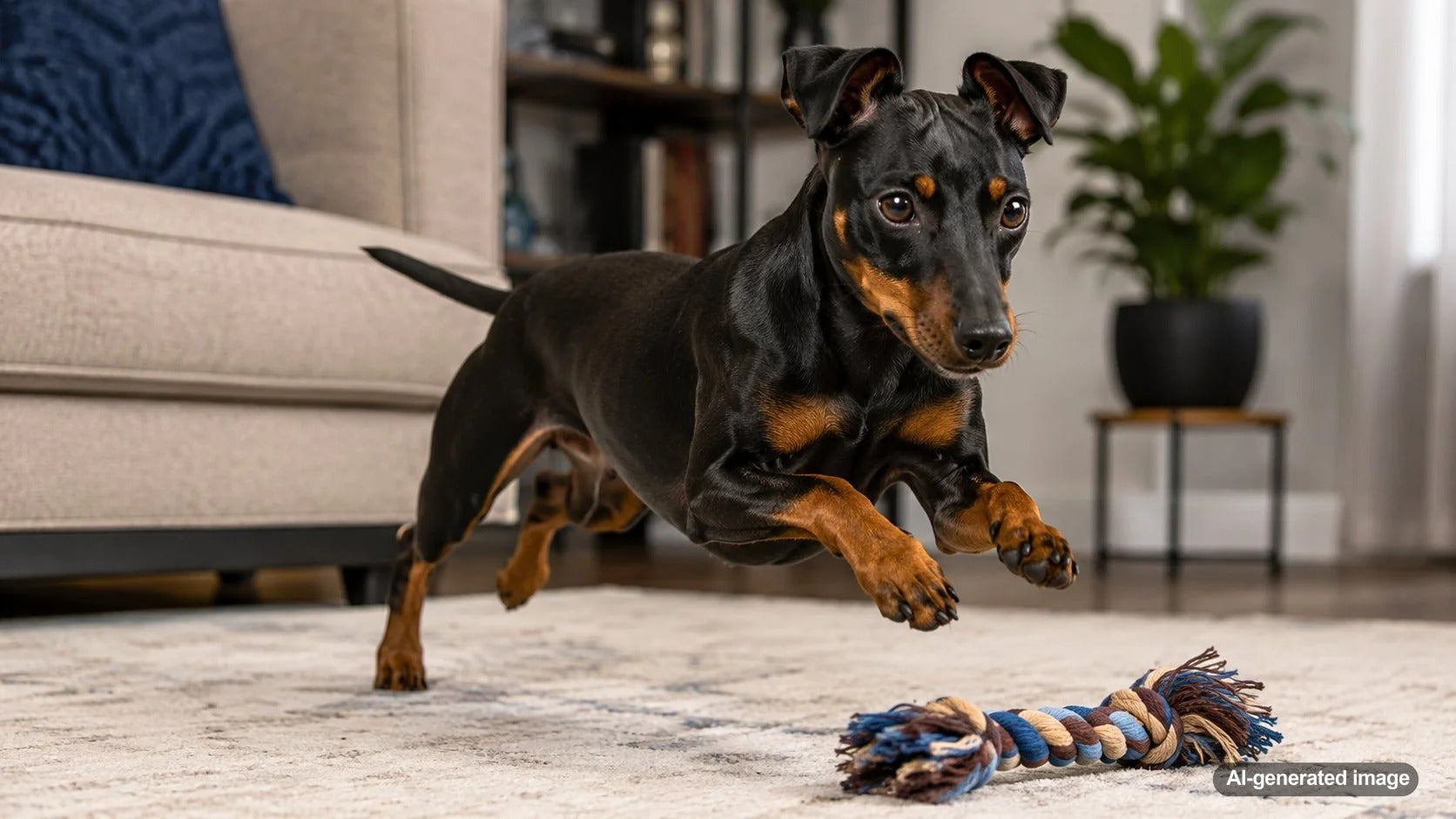
The Manchester Terrier may look polished and elegant, but beneath that glossy black-and-tan coat is a quick-thinking athlete with unmistakable terrier spirit. These dogs are alert, devoted, playful, and often ready to investigate the smallest movement in the yard. For the right dog parent, a Manchester can be an affectionate companion who brings intelligence, energy, and plenty of personality into daily life.
Manchester Terriers are sometimes mistaken for miniature versions of larger sleek breeds, but they have a history and temperament all their own. Originally developed in England as capable vermin hunters, they combine the speed and graceful outline of a small coursing dog with the determination of a working terrier.
Expect a bright, athletic, sensitive dog with a short coat, strong prey drive, and a close attachment to family. The breed comes in Toy and Standard varieties, with both sharing the same lively personality and streamlined appearance.
Two Varieties, One Distinctive Breed
In the United States, the Manchester Terrier is recognized in two varieties. Toy Manchesters weigh no more than 12 pounds, while Standard Manchesters weigh more than 12 pounds and no more than 22 pounds. Toy dogs commonly stand around 10 to 12 inches tall, while Standards are generally around 15 to 16 inches.
Both varieties have a close, glossy coat with sharply defined black and rich tan coloring. Their long, wedge-shaped heads, bright eyes, and athletic bodies create an elegant appearance. The most noticeable structural distinction beyond size involves the ears, which are handled differently in the breed standards for the two varieties.
Despite their refined outline, these are not fragile decorative dogs. A healthy Manchester is muscular, agile, and capable of moving with impressive speed.
What Is a Manchester Terrier's Personality Like?
Manchester Terriers tend to be deeply loyal to their people. Many enjoy curling up beside a family member after exercise, but they are usually observant even while resting. A passing squirrel, unfamiliar sound, or delivery at the door can switch them from relaxed to fully alert in seconds.
They are intelligent and often learn new behaviors quickly. That intelligence can also make them inventive. A bored Manchester may decide that barking at the window, digging in the yard, stealing household items, or patrolling the kitchen is a perfectly reasonable personal project.
Many are reserved with unfamiliar people rather than instantly social. Early, positive exposure to different people, dogs, surfaces, sounds, and environments can help a puppy develop confidence. Socialization should not mean forcing interaction. Calm observation, rewarding relaxed behavior, and allowing the dog appropriate space can be more productive.
Exercise and Enrichment Needs
A walk around the block may not fully satisfy this breed. Most Manchester Terriers benefit from a combination of physical activity, sniffing opportunities, training, and problem-solving. The exact amount will depend on age, health, and individual temperament, but consistency matters more than trying to exhaust the dog occasionally.
- Take brisk walks that include time for sniffing.
- Practice short reward-based training sessions.
- Play fetch, tug, or structured chase games in secure areas.
- Use food puzzles or slow-feeding activities for mental work.
- Rotate toys so familiar items regain some novelty.
Manchester Terriers can enjoy activities such as agility, rally, scent work, obedience, barn hunt, and lure sports. Even without formal competition, simple household games can provide useful challenges. Hide a few treats around one room, practice sending the dog to a mat, or teach the names of individual toys.
For a longer quiet-time activity, The Pupsicle can turn an appropriate treat into a supervised licking challenge. Begin with an easy setup so your dog learns how the toy works, then reserve it for moments when you want to encourage calm engagement.
Training a Fast, Sensitive Thinker
Positive, reward-based training usually suits the Manchester Terrier well. These dogs may shut down, become defensive, or lose trust when handled with harsh corrections. Clear cues, small rewards, and brief sessions help keep training productive.
Recall deserves special attention because the breed's hunting background can produce a powerful urge to chase squirrels, rabbits, rodents, or other fast-moving animals. Practice in fenced spaces or on a long line rather than testing an unfinished recall in an open area. A Manchester that is normally responsive may seem to forget everything when prey appears.
Small, easy-to-deliver rewards can help maintain momentum during training. Love Nuggets are bite-sized treats that can be used for reinforcing check-ins, leash manners, settling, and other everyday skills. Account for training treats when considering the dog's overall daily food intake.
Keep sessions short enough that your Manchester still wants more. Three focused minutes of successful practice can be more useful than a long session that ends in frustration.
Living With Children and Other Pets
Manchester Terriers can live successfully with respectful children, especially when the dog has been thoughtfully socialized. Adults should supervise interactions and teach children not to grab, chase, corner, or disturb a resting dog. The smaller Toy variety may be particularly vulnerable to accidental injury from rough handling.
The breed's prey drive can complicate life with hamsters, rabbits, guinea pigs, or other small animals. Some Manchesters can coexist with cats or dogs when carefully introduced, but individual behavior varies. Use secure barriers, supervise interactions, and never assume that peaceful behavior indoors guarantees safety during an exciting chase.
Grooming and Everyday Care
The short coat is relatively easy to maintain. A weekly brushing or wipe-down can remove loose hair and keep the coat looking polished. Routine care should also include nail trims, ear checks, and dental hygiene.
Because the coat provides limited insulation, some Manchester Terriers appreciate a well-fitted jacket during cold walks. They may also seek warm blankets and sunny resting spots indoors. Their lean bodies can make them less tolerant of cold weather than heavier-coated breeds.
Feed an age-appropriate diet and monitor body condition rather than relying only on the number on the scale. Extra weight can place unnecessary strain on a small athletic frame. Contact your veterinarian if you notice appetite changes, unusual fatigue, limping, eye changes, persistent coughing, digestive problems, pain, or a major shift in behavior.
Is a Manchester Terrier Right for You?
A Manchester Terrier may be a strong match for someone who enjoys an active, attentive dog and is willing to provide daily mental engagement. They can adapt to different home sizes when their exercise and enrichment needs are met, but access to a yard does not replace interaction or training.
This breed may be challenging for a household that wants a highly social dog with little interest in chasing, alerting, or solving its own problems. Prospective owners should be prepared for sensitivity, speed, persistence, and a strong desire to participate in family life.
With patient training, secure management, and enough productive activity, the Manchester Terrier can be a loyal and entertaining companion. The goal is not to eliminate the breed's terrier instincts, but to give that intelligence and drive safe, rewarding outlets.
Dog Parent FAQs
Do Manchester Terriers bark a lot?
Many are alert watchdogs and may bark at unfamiliar sounds or movement. Training, visual barriers, exercise, and rewarding quiet behavior may help manage excessive alert barking.
Are Manchester Terriers easy to train?
They are intelligent and can learn quickly, especially with positive reinforcement. Their independent thinking and prey drive mean that consistency is important.
Do Manchester Terriers shed?
They do shed, but their short, smooth coats are generally straightforward to maintain with regular light brushing.
Can a Manchester Terrier live in an apartment?
Yes, many can adapt to apartment living when given sufficient exercise, mental stimulation, and help learning when to settle quietly.


