






































































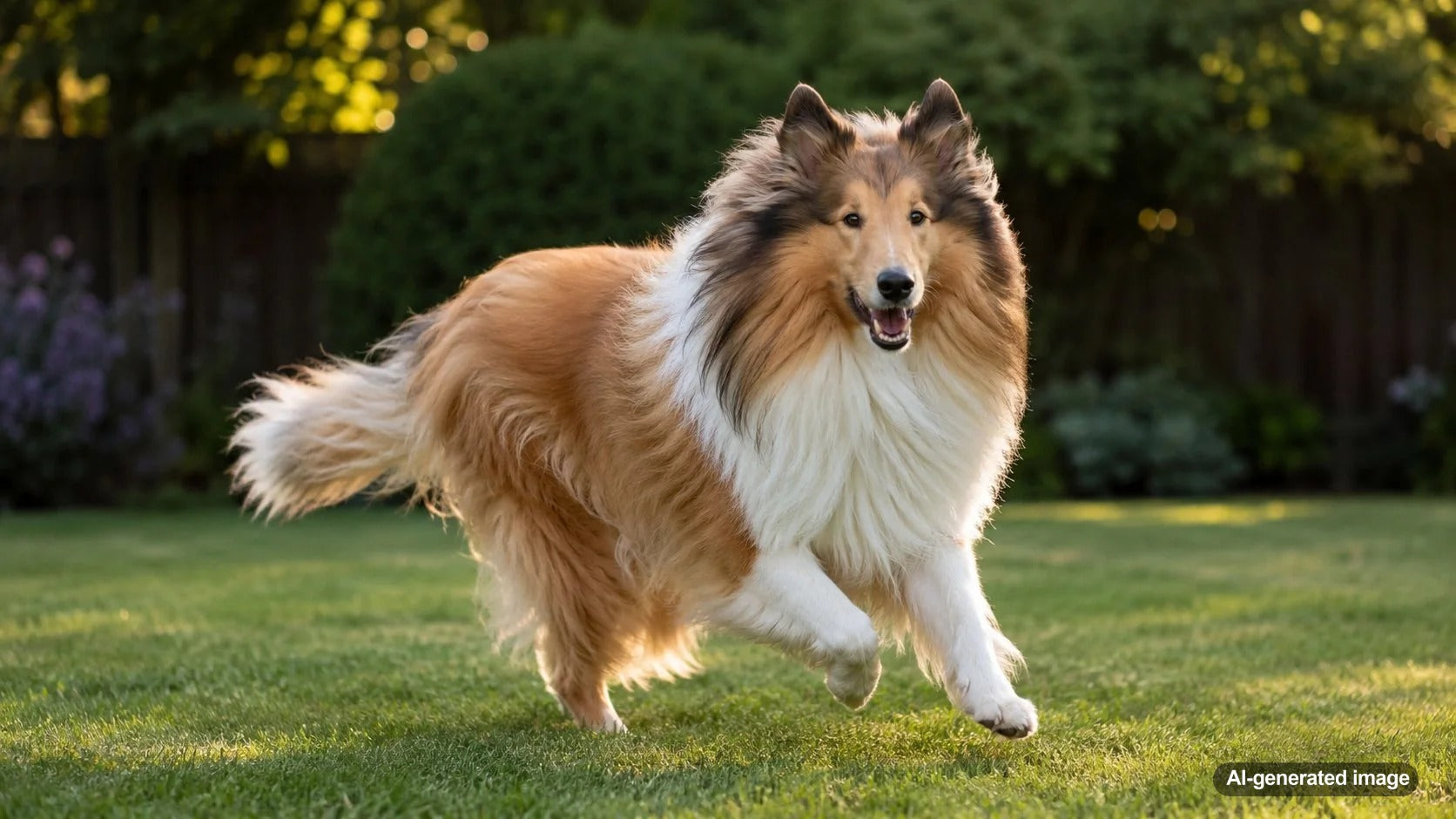
With an elegant outline, bright expression, and famous flowing coat, the Collie can look almost too polished to be a playful family dog. Behind that graceful appearance is an intelligent, sensitive herding breed that usually wants to participate in whatever its people are doing. A well-matched Collie can be an affectionate companion, enthusiastic walking partner, alert household watchdog, and patient student.
Collies need more than a pretty backyard and an occasional stroll. They thrive on companionship, predictable routines, training, and activities that engage their observant minds. On a rainy day, a food-filled The Pupsicle can add a supervised enrichment session while giving a Collie a constructive way to stay occupied.
Collie at a glance: The Collie is a medium-to-large herding dog available in Rough and Smooth varieties. Both are typically intelligent, responsive, family-oriented, and moderately active. The main difference is coat length, not personality or breed type.
Rough Collie Versus Smooth Collie
The Rough Collie has the abundant outer coat, mane, and feathering most people recognize. The Smooth Collie has a short, dense, flat coat. They are two varieties of the same breed and share the same general structure, temperament, and need for exercise and companionship.
| Feature | Rough Collie | Smooth Collie |
|---|---|---|
| Coat | Long, harsh outer coat with a soft, dense undercoat | Short, hard, dense, flat coat with an undercoat |
| Grooming | Thorough brushing is essential, especially behind the ears, around the legs, and through the undercoat | Less brushing time, though regular grooming still helps manage shedding |
| Temperament | Generally similar to the Smooth variety | Generally similar to the Rough variety |
Recognized colors include sable and white, tricolor, blue merle, and white. Adult males are commonly 24 to 26 inches at the shoulder, while females are commonly 22 to 24 inches. A Collie is not the same breed as a Border Collie, even though both have herding ancestry.
What Is a Collie's Personality Like?
Collies are often gentle, loyal, perceptive, and highly connected to their families. Many seem to notice changes in tone, movement, and household routines before their owners do. Their sensitivity can make them wonderful companions, but it also means harsh corrections may cause confusion or reluctance rather than better behavior.
They are frequently good with considerate children and can live successfully with other pets when introductions and supervision are handled thoughtfully. Every dog is an individual, however. Early socialization should include calm exposure to different people, friendly dogs, household sounds, surfaces, grooming tools, and everyday handling.
Collies may bark to announce visitors, wildlife, delivery drivers, or unusual activity. Barking is not necessarily a sign that the dog needs more physical exercise. Sometimes the trigger is visual access to a busy window, uncertainty about a sound, or the rewarding experience of watching the perceived intruder leave. Blocking the view, teaching a quiet cue, and rewarding disengagement can be more effective than repeatedly telling the dog to stop.
Exercise and Enrichment Needs
A Collie is active and athletic, but most do not require nonstop high-intensity exercise. Many healthy adults enjoy roughly 45 to 60 minutes of daily activity divided among walks, play, training, and opportunities to sniff. Individual needs vary with age, health, and temperament.
Mental work matters just as much as mileage. Try hiding kibble around one room, practicing directional cues, teaching toy names, playing gentle fetch, or asking for simple behaviors during a walk. Herding, rally, obedience, scent work, and agility can also channel the breed's responsiveness and problem-solving ability.
Make enrichment repeatable: Keep three easy activities in rotation. For example, use a sniffing walk one morning, a short training game the next, and a supervised food puzzle on a busy evening. Reliable variety is more useful than an elaborate activity that rarely happens.
Puppies need short play and training sessions rather than forced runs or repetitive jumping. Senior Collies may prefer slower sniffing walks, easy searches, and activities performed on nonslip flooring. Ask your veterinarian about suitable exercise if your dog has pain, stiffness, limping, or a major change in stamina.
Training a Sensitive, Intelligent Dog
Collies usually learn quickly, including lessons their owners did not intend to teach. If barking at the door always produces attention, or pulling always gets the dog to an interesting smell faster, those patterns can become strong habits.
Use brief, upbeat sessions with clear cues and rewards. Bite-sized treats such as Love Nuggets can be useful for reinforcing check-ins, loose-leash walking, settling on a mat, and calm behavior around distractions. Count training treats as part of the dog's daily food intake, and choose reward sizes that can be eaten quickly.
A Collie that seems stubborn may actually be distracted, worried, physically uncomfortable, or unclear about the task. Lower the difficulty, reduce distractions, and reward a smaller step. A qualified reward-based trainer can help with persistent fear, reactivity, separation-related behavior, or guarding.
Grooming and Everyday Care
A Rough Collie's coat requires a thorough, section-by-section brushing that reaches the undercoat. Simply smoothing the surface can leave tangles hidden near the skin. Pay particular attention behind the ears, beneath the collar, in the armpits, and around the feathering. Never pull forcefully through a mat, since this can hurt and make future grooming harder.
Smooth Collies need less coat maintenance, but both varieties shed. Nail trims, ear checks, dental care, and routine veterinary visits remain important. Introduce grooming in small steps, pairing the sight and touch of tools with rewards before attempting a long session.
Health Considerations for Collies
Collies can be affected by inherited eye conditions, including Collie eye anomaly. Some also carry a change in the MDR1 gene that can make them unusually sensitive to certain medications. Tell any veterinarian treating your Collie about the breed, discuss genetic testing when appropriate, and never change or avoid prescribed medication without veterinary guidance.
When working with a breeder, ask for documented health screening rather than relying on statements that the parents look healthy. Responsible breeding decisions also avoid merle-to-merle pairings because puppies from those pairings have an increased risk of serious vision and hearing problems.
Contact a veterinarian if your Collie develops eye changes, excessive drooling, vomiting, diarrhea, swelling, limping, appetite loss, unusual weakness, or a sudden behavior change. Online breed information cannot diagnose an individual dog.
Is a Collie Right for Your Home?
A Collie may be a strong match for someone who wants an affectionate, trainable dog and can provide daily interaction, moderate exercise, mental enrichment, and regular grooming. A large yard can be helpful, but it does not replace walks, training, or time with the family.
This breed may be a more difficult fit for a household that wants an independent outdoor dog, cannot tolerate alert barking, or has little time for coat care. Prospective owners should meet adult Collies of both coat varieties and speak with responsible breeders or breed-specific rescue volunteers before deciding.
Dog Parent FAQs
Are Collies good family dogs?
Many Collies are affectionate, gentle family companions. Children should learn respectful dog interaction, and all child-dog play should be supervised.
Do Collies shed a lot?
Yes. Rough and Smooth Collies both shed, although the longer Rough coat makes loose hair and undercoat more noticeable.
Are Collies easy to train?
Collies are typically intelligent and responsive. Clear, reward-based training works especially well with their sensitive nature.
Can a Collie live in an apartment?
A Collie may adapt to apartment living if given sufficient exercise, enrichment, companionship, and training for barking. Individual temperament and the building environment matter.
A Thoughtful Companion With a Working Mind
The Collie's beauty may attract attention first, but the breed's devotion, awareness, and willingness to learn are what make life together memorable. Give a Collie kind training, meaningful activity, careful grooming, and plenty of family time, and you will have the foundation for a deeply connected partnership.


