Dog Breed Profile: Airedale Terrier is a perfect title for a dog with a big personality, a bigger brain, and a beard that makes every photo look important. Known as the King of Terriers, the Airedale Terrier is the largest terrier breed and one of the most versatile dogs you can welcome into an active home. This is not a couch decoration with eyebrows. This is a clever, athletic, problem-solving companion who wants a job, a game, a walk, a chew, and preferably your full attention.
Airedales can be wonderful family dogs for the right people, but they are not usually the easiest choice for a first-time dog parent who wants a low-effort pet. They are smart, spirited, independent, and often hilarious. They can learn quickly, but they can also learn the wrong thing just as fast if boredom, inconsistency, or under-exercise take over.
What Is an Airedale Terrier?
The Airedale Terrier originated in England and was developed as a versatile working terrier. That history still shows up in modern Airedales. They tend to be bold, alert, curious, and ready to investigate anything that moves, squeaks, smells interesting, or appears to be hiding snacks.
Physically, Airedales are sturdy and athletic. Many males stand around 23 inches at the shoulder, with females usually slightly smaller. Their classic look includes a long head, dark eyes, folded ears, a wiry tan coat with black or grizzle markings, and that signature mustache-and-beard expression that makes them look both wise and mischievous.
They are often called the King of Terriers because they are the largest of the terrier breeds. But the nickname fits their attitude, too. Airedales tend to carry themselves like they know exactly what is going on, even when what is going on is that they have stolen a sock and invented a new living room obstacle course.
Airedale Terrier Personality: Smart, Brave, and Busy
Airedales are affectionate with their families, but they are not usually clingy in a soft, delicate way. They are more like enthusiastic partners in crime. They want to be involved, challenged, and respected. Many enjoy play, training games, hikes, fetch, scent games, and anything that lets them use both body and brain.
They can also be independent. That does not mean they are untrainable. It means they often want training to make sense. Repeating the same cue twenty times in a dull tone may not impress an Airedale. Short sessions, upbeat rewards, clear boundaries, and variety usually work better.
Common real-life Airedale behaviors may include alert barking at new sights and sounds, digging, chasing small animals, grabbing household items for attention, or inventing their own entertainment when under-stimulated. These behaviors are not proof that the dog is bad. They are often signs that a smart terrier needs better outlets.
Exercise Needs: Airedales Are Not Weekend-Only Dogs
An Airedale Terrier generally needs daily exercise and mental stimulation. A quick potty stroll around the block is usually not enough for an adult Airedale in good health. Many do best with a mix of brisk walks, safe running or hiking, training games, sniff time, tug, fetch, and puzzle-style enrichment.
Think of exercise in layers. Physical movement helps take the edge off. Sniffing and problem-solving help tire the brain. Chewing and licking can support settling after activity. When those needs are balanced, many Airedales are much easier to live with indoors.
Training an Airedale Terrier Without Turning It Into a Battle
Airedales often respond best to reward-based training that feels clear, fair, and interesting. They are clever enough to notice loopholes, so consistency matters. If jumping on guests works once, counter surfing works twice, or barking earns attention every evening, an Airedale may add those behaviors to the official household rulebook.
Start with practical skills: recall, leave it, drop it, loose-leash walking, waiting at doors, settling on a mat, and calmly trading stolen items. Keep sessions short and successful. Use high-value rewards when distractions are high, and avoid turning training into a wrestling match. If your Airedale is guarding items, reacting intensely, or showing major behavior changes, work with a qualified trainer or behavior professional.
Because Airedales may have a strong chase instinct, off-leash freedom should be handled carefully. A fenced area, long line, or structured recall practice can help protect your dog, wildlife, and your nerves.
Chewing, Boredom, and Enrichment for Airedales
A bored Airedale can be creative in ways that do not benefit your furniture. Chewing, shredding, digging, barking, and stealing objects often become more likely when an intelligent dog does not have enough appropriate outlets. For this breed, enrichment is not a luxury. It is part of daily care.
Helpful enrichment options include food puzzles, sniff walks, hide-and-seek with treats, safe chew sessions, lick mats, training games, and rotating toys so everything does not become boring at once. For dogs who love a longer-lasting challenge, The Pupsicle can be a useful tool for treat-based distraction and licking enrichment after exercise or during quiet time.
If your Airedale is a strong chewer, match the chew to the dog and supervise. Some dogs are gentle nibblers. Some are determined engineers. Always inspect toys and chews regularly, remove damaged items, and ask your veterinarian if you are unsure what is appropriate for your dog.
| Need | What It May Look Like | What to Try |
|---|---|---|
| Too much unused energy | Zoomies, pacing, rough play, barking | Brisk walk, training walk, fetch, hike, tug with rules |
| Underworked brain | Stealing socks, counter surfing, pestering | Puzzle toy, scent game, short trick session, food scatter |
| Trouble settling | Restless evenings, whining, attention-seeking | Licking activity, calm mat routine, predictable wind-down |
| Chew drive | Gnawing furniture, shoes, or household items | Supervised chew time with durable, appropriate chews |
Grooming and Coat Care
The Airedale coat is dense, wiry, and lower-shedding than many other coat types, but it still needs regular care. Weekly brushing helps remove dead hair and keep the coat tidy. Many Airedales also benefit from professional grooming, and some owners choose hand-stripping to maintain the traditional coat texture.
That beard can collect water, food, and outdoor debris, so face cleanup may become part of daily life. Nails, ears, and dental care matter too. If your dog resists handling, practice slowly with rewards: touch a paw, treat; lift an ear, treat; show the brush, treat. Cooperative care works especially well when you start before there is a problem.
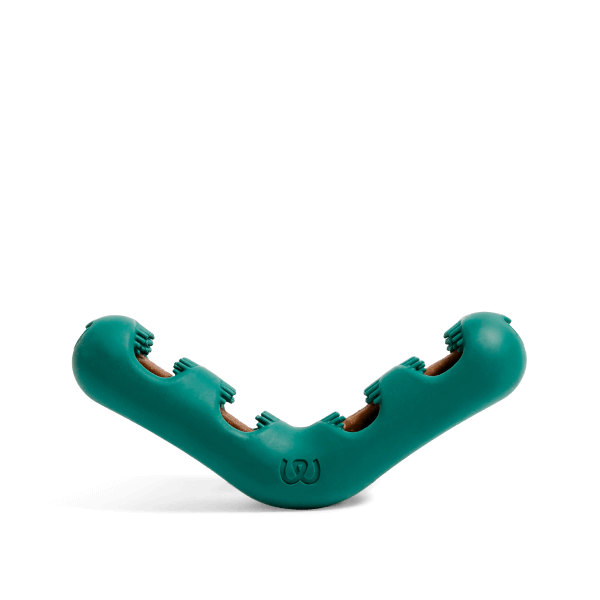
For dental routines, some Airedales enjoy a play-based approach. The Bite n' Brush is a reusable dental chew toy designed to make teeth-supporting play more engaging. It is not a replacement for veterinary dental care or brushing advice from your vet, but it can be part of a more consistent daily routine for dogs who like to chew.
Health and Wellness Considerations
Airedales are generally active, sturdy dogs, but like all breeds, they can be prone to certain health concerns. Dog parents should keep up with regular veterinary care and ask about issues such as hip health, skin or allergy concerns, thyroid health, eye conditions, digestive changes, and any unusual lumps, limping, pain, vomiting, diarrhea, appetite changes, or sudden behavior changes.
Because Airedales are athletic and enthusiastic, it is easy to overlook discomfort until it becomes obvious. Watch for subtle changes: slower rising, reluctance to jump, new irritability, excessive licking, changes in coat or skin, or a sudden drop in stamina. Your veterinarian is the right person to evaluate symptoms and guide care.
Is an Airedale Terrier a Good Family Dog?
An Airedale can be a fantastic family dog in the right home. They are often playful, loyal, and fun-loving. Many enjoy respectful children, especially when raised with clear rules and positive experiences. Still, their size, strength, and terrier enthusiasm mean supervision is important around kids, smaller pets, and visitors.
Teach children not to climb on the dog, grab the beard, bother the dog during meals, or take toys from the dog. Teach the dog calm greeting skills, trade games, and where to settle when the household gets busy. Airedales thrive when everyone in the family follows the same rules.
Who Is the Best Match for an Airedale?
The best Airedale parent usually enjoys an active, smart, slightly cheeky dog. This breed may be a great fit if you like training, outdoor time, grooming upkeep, and daily enrichment. An Airedale may be harder if you want a low-energy dog, dislike terrier independence, have no time for training, or expect automatic off-leash reliability.
Puppies need patient socialization, bite inhibition practice, and lots of appropriate chew outlets. Adults may still need structured exercise and training refreshers. Seniors often benefit from gentler movement, joint-friendly routines, and softer enrichment options. At every age, the Airedale brain wants something to do.
Dog Parent FAQs
Are Airedale Terriers good for first-time dog owners?
They can be, but they are often better for dog parents who are ready to learn. Airedales are smart, energetic, and independent, so they need consistent training, exercise, and enrichment.
Do Airedale Terriers shed a lot?
Airedales are usually considered lower-shedding, but their wiry coats still need brushing and grooming. Many owners use a professional groomer to keep the coat neat and manageable.
Are Airedales good with children?
Many Airedales can do well with respectful children, especially when socialized and trained. Because they are strong, playful dogs, all interactions with young kids should be supervised.
How much exercise does an Airedale Terrier need?
Most healthy adult Airedales need daily physical exercise plus mental stimulation. Walks, training games, sniffing, safe play, and enrichment can all help meet their needs.
Do Airedale Terriers chew a lot?
Many Airedales enjoy chewing, especially when young or bored. Provide appropriate chew options, supervise chew time, and redirect household chewing early before it becomes a habit.