






































































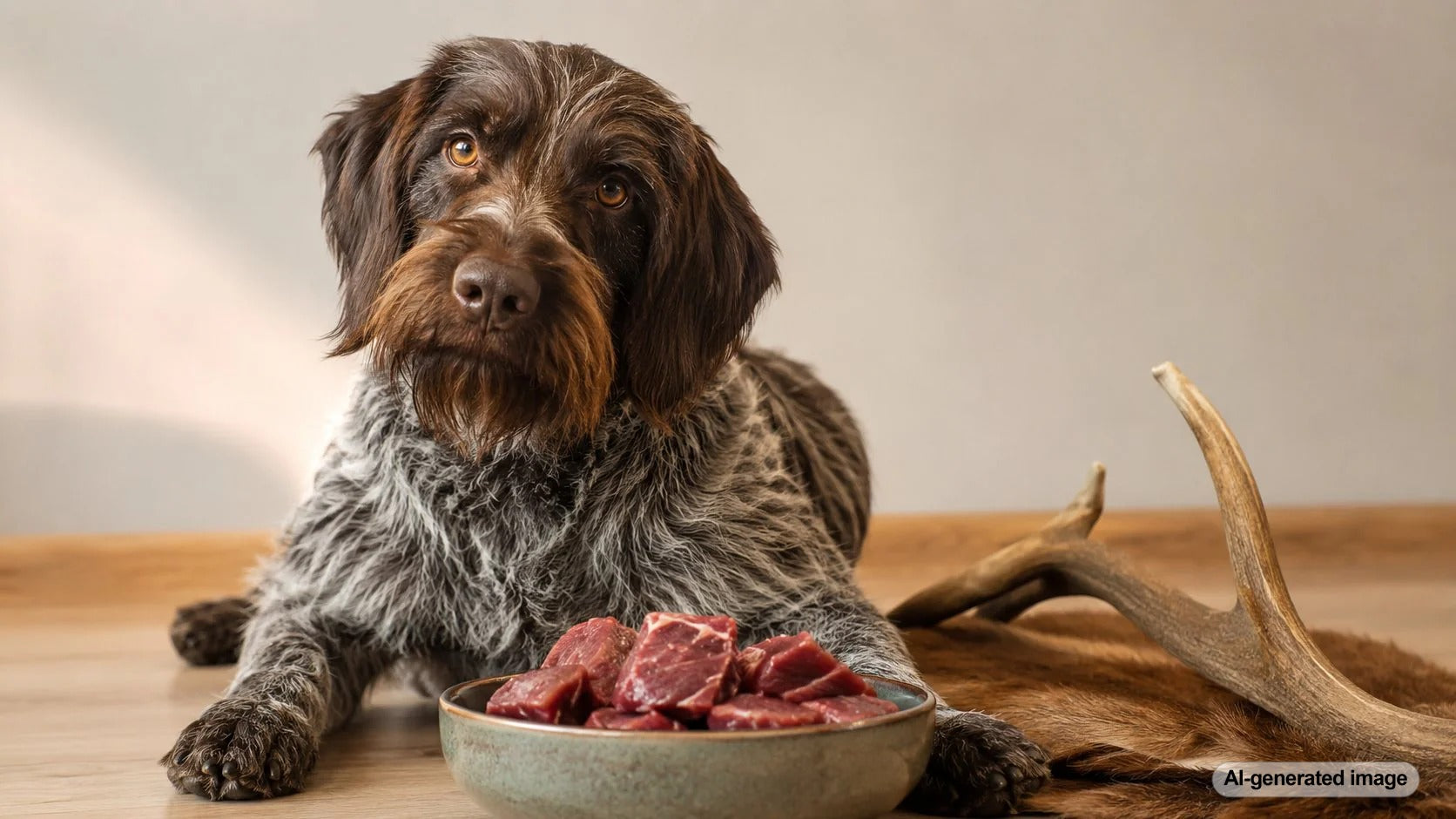
Yes, dogs can eat venison when it is fresh, thoroughly cooked, plain, boneless, and served in an appropriate portion. This lean red meat can provide protein, iron, zinc, phosphorus, and B vitamins, and many dogs enjoy its rich flavor. The important part is preparing it for a dog rather than sharing seasoned table scraps, fatty trimmings, raw meat, or cooked deer bones.
Venison may also appear in complete dog foods and treats, sometimes as an alternative protein for dogs that have eaten more common meats such as chicken or beef. However, a few bites of venison are not a complete meal, and switching proteins does not automatically solve itching, stomach trouble, or a suspected food allergy.
Quick answer: Most healthy dogs can have a small amount of plain, fully cooked, boneless venison. Remove visible fat, skip all seasonings and sauces, introduce it gradually, and contact your veterinarian if your dog develops vomiting, diarrhea, facial swelling, excessive itching, or another concerning reaction.
Is Venison Good for Dogs?
Venison can be a useful occasional treat or ingredient in a properly formulated dog food. It is generally leaner than many fatty cuts of beef or pork, although the exact fat content depends on the cut and preparation method.
Its protein supports normal muscle maintenance, while nutrients such as iron and B vitamins contribute to healthy body functions and energy metabolism. Those benefits do not mean dogs should eat unlimited servings. Even nutritious meat adds calories, and plain venison alone does not contain every nutrient a dog needs in the correct proportions.
Your dog's regular food should remain complete and balanced for their life stage. Venison offered from your kitchen is best treated as a small extra rather than the foundation of the diet.
How to Prepare Venison Safely for Your Dog
Cook venison thoroughly and serve it plain. Baking, boiling, or cooking it in a skillet without added oil are simple options. Remove bones, skin, gristle, and large pieces of visible fat, then cut the meat into pieces appropriate for your dog's size.
A Chihuahua needs tiny shreds, while a large dog can manage slightly bigger bites. Cutting the meat down still matters for large dogs, especially enthusiastic gulpers that swallow treats without much chewing.
Helpful tip: Set aside your dog's portion before seasoning the rest of the meal. This prevents accidental exposure to onion, garlic, excess salt, butter, spicy rubs, rich gravy, and other ingredients that do not belong in a dog's treat bowl.
For the first serving, offer only one or two small bites. Wait and watch for digestive changes before serving more on another day. A slow introduction makes it easier to tell whether venison agrees with your dog.
How Much Venison Can a Dog Eat?
The right amount depends on your dog's size, health, activity level, regular diet, and total daily calories. Treats and extras should stay a small part of the overall diet so they do not crowd out balanced nutrition.
For a first taste, think in bites rather than bowls. A small dog may only need a pea-sized piece or two. A medium or large dog can try a few small cubes. Dogs with pancreatitis, digestive disease, weight concerns, or a medically managed diet should not receive venison without veterinary guidance.
If you plan to feed venison regularly or use it as a major protein source, ask your veterinarian or a board-certified veterinary nutritionist to help you choose a complete commercial diet or formulate a balanced home-prepared recipe.
Can Venison Help Dogs With Food Allergies?
Venison is sometimes called a novel protein because some dogs have never eaten it before. A veterinarian may use an unfamiliar protein as part of a structured elimination diet for a dog with a suspected food allergy.
That does not make venison naturally hypoallergenic. A dog can react to any dietary protein, including venison. It is also difficult to evaluate an allergy if the dog receives flavored medications, mixed-protein treats, table scraps, or chews containing other animal ingredients during the trial.
Common concerns that deserve veterinary attention include persistent itching, recurring ear trouble, paw licking, chronic diarrhea, vomiting, or repeated skin infections. Do not attempt to diagnose a food allergy by randomly rotating proteins. A controlled veterinary food trial is much more reliable.
Venison Preparations Dogs Should Avoid
Do not give your dog: cooked deer bones, seasoned venison, fatty scraps, spoiled meat, sausage, jerky made for people, or dishes containing onion or garlic.
Cooked bones can crack or splinter, creating choking hazards and potentially injuring the mouth, throat, stomach, or intestines. Raw bones can also cause broken teeth, choking, digestive obstruction, and exposure to harmful bacteria. Antlers are not the same as venison meat and can be hard enough to fracture a dog's teeth.
Human venison jerky may contain large amounts of salt, smoke flavoring, sweeteners, onion powder, garlic powder, or spicy ingredients. Wild game that has not been handled and cooked safely can carry bacteria or parasites. Meat from hunted animals may also contain fragments from ammunition, so careful sourcing and inspection matter.
Easy Ways to Use Plain Venison
Small pieces of cooked venison can work as high-value training rewards because the aroma and flavor may hold a dog's attention in distracting situations. Keep each reward tiny so you can reinforce several behaviors without serving a full meal's worth of treats.
You can also tuck a few cooled pieces into a food puzzle with your dog's usual kibble. For dogs that prefer longer enrichment sessions, use an interactive toy with a familiar, dog-safe filling instead of packing it entirely with rich meat.
Woof's The Pupsicle is designed for longer-lasting treat play, while Woof Puzzle Treats provide conveniently sized rewards for compatible puzzle toys. These are practical options when you want a repeatable enrichment routine without preparing venison every day.
Signs Venison Does Not Agree With Your Dog
After introducing venison, monitor your dog for vomiting, diarrhea, unusual gas, appetite changes, excessive drooling, itching, hives, facial swelling, or unusual tiredness. Mild stomach upset may occur when a dog eats too much new food at once, but ongoing or severe symptoms need professional attention.
Facial swelling, breathing difficulty, collapse, repeated vomiting, severe abdominal pain, or suspected bone ingestion can be emergencies. Contact a veterinarian promptly rather than waiting to see whether the problem resolves on its own.
Dog Parent FAQs
Can puppies eat venison?
Healthy puppies can usually taste a tiny amount of plain, fully cooked, boneless venison. Their main food should still be a complete and balanced puppy diet that supports growth.
Can dogs eat raw venison?
Raw venison can expose dogs and people to bacteria or parasites. Cooking the meat thoroughly is the safer choice unless your veterinarian has created a specific feeding plan.
Can dogs eat venison every day?
Dogs can eat venison daily when it is part of a complete and balanced food. Plain meat by itself is not nutritionally complete enough to serve as the entire diet.
Can dogs eat venison bones?
Cooked venison bones should never be fed because they can splinter. Raw bones still carry risks, including choking, obstruction, broken teeth, and bacterial exposure, so ask your veterinarian before offering any bone.
Is venison better than beef for dogs?
Neither protein is universally better. The best choice depends on your dog's nutritional needs, medical history, tolerance, and the quality and balance of the complete diet.
The Bottom Line
Dogs can eat venison, but simple preparation makes all the difference. Choose fresh meat, cook it thoroughly, remove every bone, leave off the seasoning, and begin with a very small portion.
Used thoughtfully, venison can be an appealing occasional reward or part of a nutritionally complete food. If your dog has allergies, digestive problems, pancreatitis, or another health condition, check with your veterinarian before adding it to the routine.


