






































































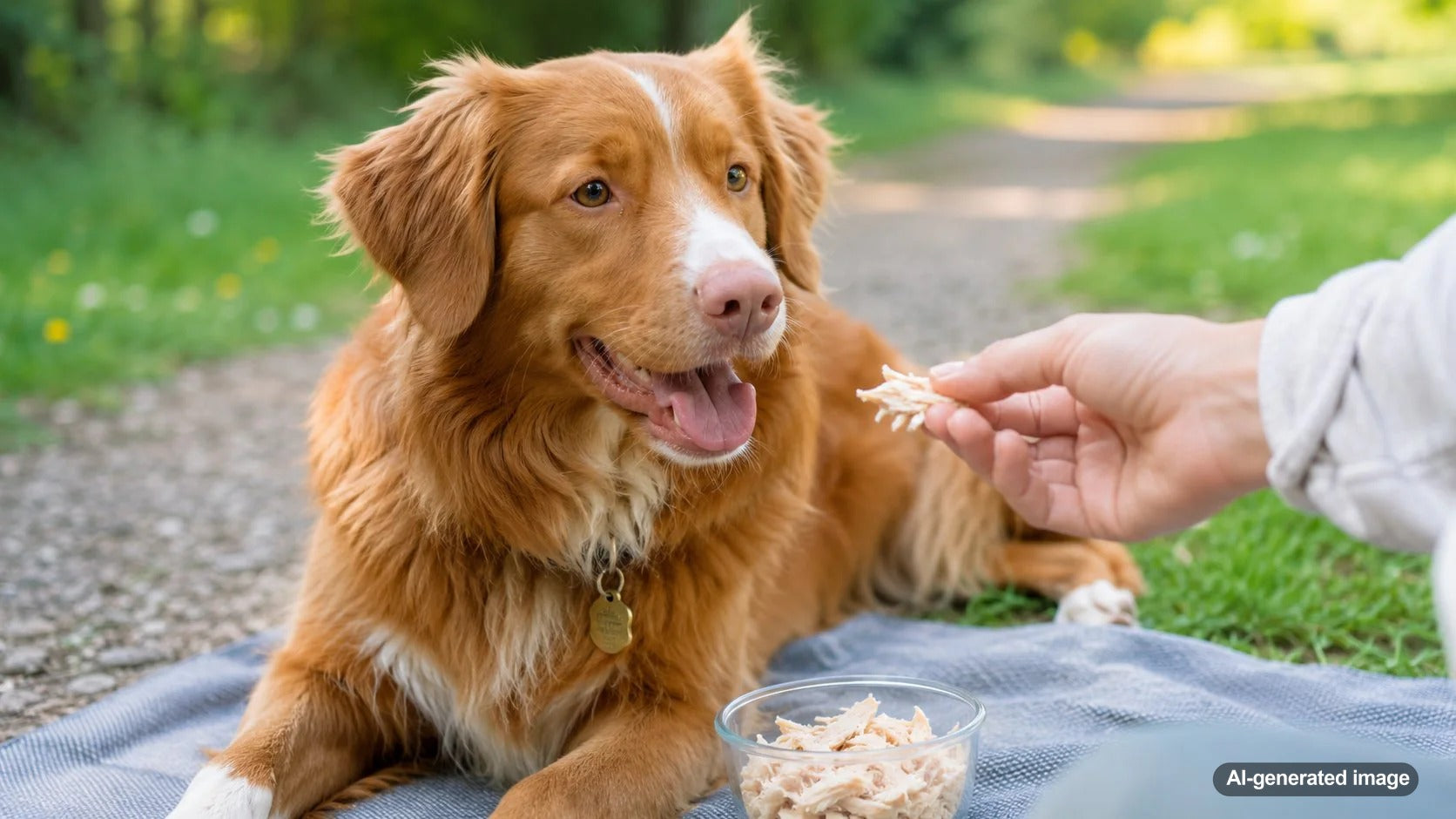
Can dogs eat plain shredded chicken? Yes, many dogs can safely eat plain shredded chicken when it is fully cooked, boneless, skinless, and served without seasoning. It is one of those simple kitchen foods that can be useful when you need a high-value topper, a gentle training reward, or a little extra motivation for a picky pup. The key is keeping it truly plain, portioned sensibly, and treated as an add-on instead of a complete diet.
Chicken may feel like an easy win because dogs usually love the smell and soft texture. Still, a dog-safe serving is not the same as a piece of chicken from your dinner plate. Sauces, garlic, onion, butter, excess salt, cooked bones, and fatty skin can turn a simple snack into a problem.
Quick Answer
Yes, dogs can eat plain shredded chicken as long as it is cooked all the way through, unseasoned, boneless, and skinless. Serve it in small amounts as a treat, meal topper, or enrichment ingredient. Do not feed raw chicken, cooked bones, fried chicken, heavily seasoned chicken, or chicken mixed with onion or garlic. If your dog has allergies, pancreatitis, kidney disease, a sensitive stomach, or a medical diet, ask your veterinarian before adding chicken.
What Counts As Plain Shredded Chicken?
Plain shredded chicken means chicken that has been cooked without seasoning, sauces, oils, marinades, butter, broth with added sodium, or spice blends. Boiled or baked chicken breast is usually the cleanest option because it is lean and easy to shred into soft pieces.
Before serving, remove all bones, cartilage, skin, and fatty bits. Cooked chicken bones are especially risky because they can splinter and may cause choking, mouth injuries, or digestive tract problems. If you are shredding leftovers, double-check every piece before it goes into your dog's bowl.
Why Dogs Like Shredded Chicken So Much
Shredded chicken is soft, aromatic, and easy to chew, which makes it appealing for many dogs. Puppies may find it easier to manage than hard treats during training. Senior dogs with missing teeth or tender gums may also prefer the softer texture.
For picky dogs, a tiny sprinkle of chicken over regular food can make the bowl more interesting. For dogs who need encouragement after a stressful vet visit, grooming appointment, or travel day, the familiar smell can make eating feel easier. That does not mean chicken should replace balanced dog food. It works best as a small helper, not the whole plan.
How Much Plain Shredded Chicken Can Dogs Have?
Portion size depends on your dog's size, activity level, health, and what else they ate that day. A small dog may only need a teaspoon or two. A medium dog may do well with a tablespoon or two. A large dog may be able to enjoy a bit more, but extra chicken still adds calories.
A helpful rule is to keep treats and extras to a small part of the day. If your dog gets chicken during training, in a puzzle toy, and on top of dinner, those little bites can add up fast. Too much chicken can crowd out the nutrients in a complete diet or upset a sensitive stomach.
Dog parent tip: If your dog has never had chicken before, start with a very small amount and watch for itching, vomiting, diarrhea, gas, or ear irritation. Chicken is common in dog food, but some dogs can still be sensitive to it.
Best Ways To Serve Plain Shredded Chicken
Plain shredded chicken can fit into several everyday routines. Try it as a tiny training reward when you need extra focus, especially in distracting places. Mix a small amount into your dog's regular food to encourage eating. Use it in a slow feeder or lick mat with dog-safe ingredients for a calmer, more engaging snack.
You can also freeze small portions for enrichment. For example, mix shredded chicken with a little water and freeze it in the Pupsicle Treat Tray to make simple homemade refills for The Pupsicle. This can turn a quick chicken snack into a longer-lasting licking activity, which may help keep your dog busy during quiet time.
Keep enrichment portions modest. The goal is not to pack the toy with a full meal of chicken. A little chicken aroma goes a long way, especially when paired with your dog's regular food or another dog-safe base your pup already tolerates.
What To Avoid When Feeding Chicken To Dogs
Skip these chicken mistakes:
- Do not feed chicken cooked with garlic, onion, shallots, chives, or heavy spices.
- Do not offer cooked bones, even if they look small or soft.
- Do not feed fried chicken, breaded chicken, or chicken with greasy skin.
- Do not use salty broths, sauces, gravies, or marinades.
- Do not make chicken the main diet unless your veterinarian has helped balance the recipe.
One common misunderstanding is that plain chicken and rice can be used anytime a dog has stomach trouble. While many vets may recommend a short-term bland-style meal in some situations, vomiting, diarrhea, appetite loss, blood in stool, repeated retching, or signs of pain should be taken seriously. Contact your veterinarian, especially for puppies, senior dogs, tiny dogs, or dogs with medical conditions.
Can Puppies And Senior Dogs Eat Plain Shredded Chicken?
Many puppies and senior dogs can eat small amounts of plain shredded chicken, but their needs are different. Puppies need complete nutrition for growth, so chicken should stay small and occasional unless your vet says otherwise. Use tiny shreds for training so they do not fill up before meals.
Senior dogs may enjoy the soft texture, especially if crunchy treats are less comfortable. However, older dogs are also more likely to have health conditions, prescription diets, or weight concerns. If your senior dog has suddenly become picky, do not just add chicken forever. Appetite changes can be a clue that something else is going on.
When Plain Chicken Is Not The Right Choice
Plain shredded chicken is not ideal for every dog. Dogs with known chicken allergies should avoid it. Dogs with pancreatitis or a history of fat-sensitive stomach trouble need extra caution, even if the chicken is lean. Dogs on veterinary diets should not receive extra proteins without approval because it may interfere with the purpose of the diet.
Also watch your dog's behavior around high-value foods. If chicken makes your dog guard the bowl, snatch food, or get too excited during training, use smaller pieces, slower delivery, or ask a qualified trainer for help. Food should make routines easier, not more chaotic.
Dog Parent FAQs
Can dogs eat plain shredded chicken every day?
Some dogs can have small amounts often, but plain chicken should not replace complete and balanced dog food. If you want to feed it daily, keep portions small and ask your veterinarian if your dog has health concerns.
Can dogs eat rotisserie chicken if I remove the skin?
It is better to avoid rotisserie chicken because it is often seasoned, salty, and cooked with ingredients that may not be dog-safe. Plain boiled or baked chicken is the safer choice.
Can shredded chicken help a picky dog eat?
A tiny amount may make regular food more appealing. If picky eating is new, severe, or paired with vomiting, diarrhea, weight loss, drooling, or low energy, contact your veterinarian.
Can I freeze shredded chicken for my dog?
Yes, you can freeze plain cooked shredded chicken in small portions. Thaw safely, serve modest amounts, and discard anything that smells off or has been stored too long.
Is chicken enough for a homemade dog meal?
No. Chicken alone is not a complete diet for dogs. Homemade meals need the right balance of protein, fat, minerals, vitamins, and calories, so work with a veterinarian or veterinary nutrition professional if you want to cook regularly for your dog.
The Bottom Line On Plain Shredded Chicken
Plain shredded chicken can be a safe, useful, dog-approved treat when it is fully cooked, boneless, skinless, and unseasoned. Use it as a small topper, a high-value reward, or an enrichment ingredient rather than a full meal. Keep portions sensible, watch how your dog responds, and check with your vet when health questions come up.
Simple foods can be helpful when they are used thoughtfully. A few soft shreds can turn training, mealtime, or quiet-time enrichment into something your dog looks forward to, without making snack time complicated.


