






































































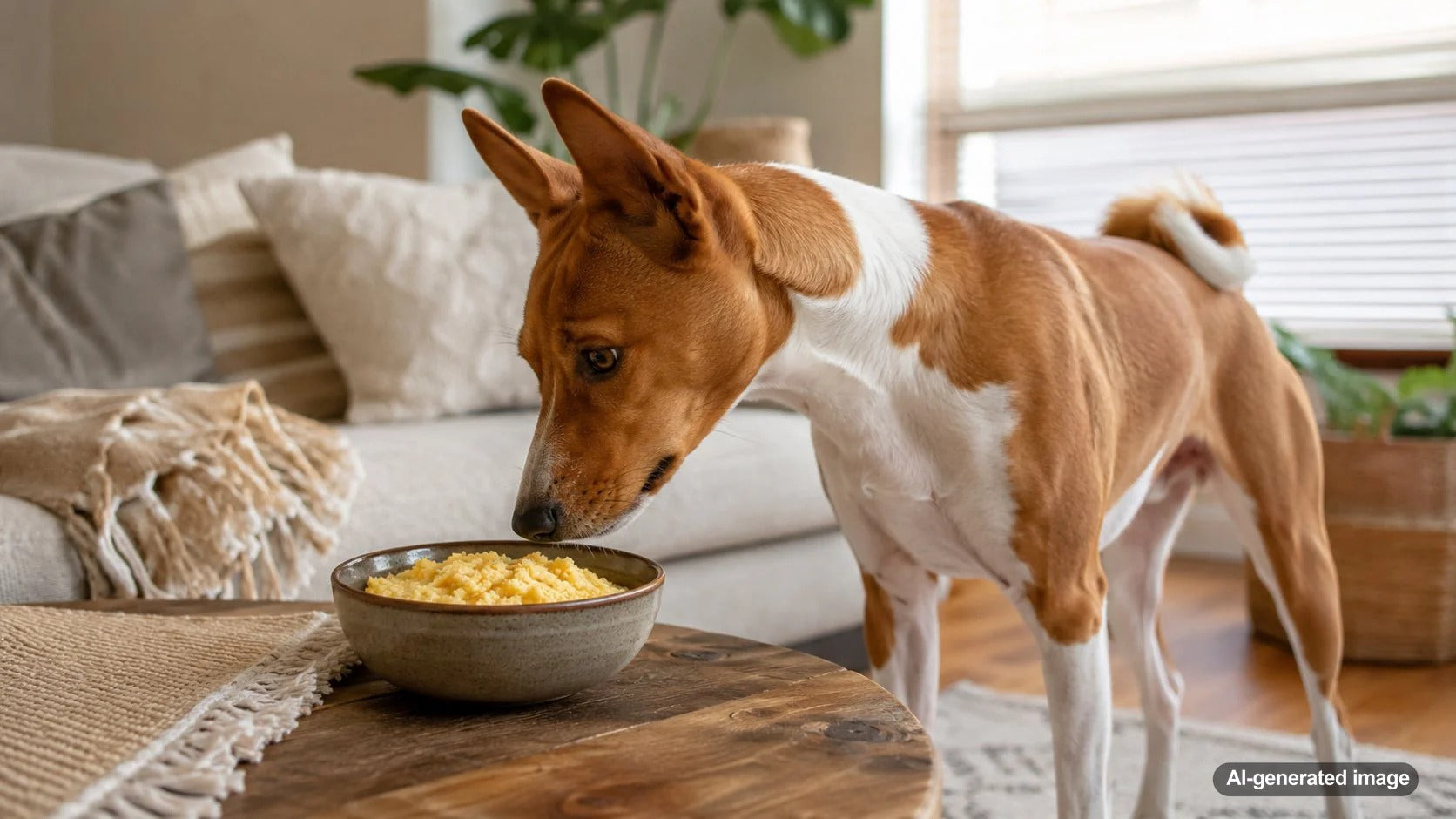
Can Dogs Eat Plain Polenta? Yes, many dogs can eat a small amount of plain cooked polenta as an occasional treat, as long as it is served without butter, garlic, onion, heavy cheese, excess salt, or rich toppings. Polenta is made from cornmeal, so the biggest question is usually not whether plain polenta is toxic, but whether it is prepared simply and portioned wisely. Like many human foods, it should be a tiny extra, not a regular replacement for your dog's complete and balanced meals.
Think of plain polenta as one of those foods that sits in the "okay in moderation" category. A spoonful may be fine for many healthy adult dogs, while a big bowl or a buttery restaurant-style version can quickly become too much. Dogs with food sensitivities, weight concerns, diabetes, pancreatitis history, or sensitive stomachs should only try new foods after a quick check with a veterinarian.
What Is Polenta, Really?
Polenta is a cooked cornmeal dish that can be soft and creamy or cooled until firm and sliced. On its own, cornmeal is not poisonous to dogs, and corn ingredients are commonly found in many dog foods. The issue is that people rarely eat polenta completely plain. We tend to dress it up with butter, cream, parmesan, sausage, gravy, mushrooms cooked in wine, onions, garlic, or salty broth.
For dogs, those extras matter. A simple scoop of cooked cornmeal and water is very different from a rich, seasoned side dish. If you are sharing from your plate, pause and ask what went into the pot before letting your dog have a taste.
When Plain Polenta May Be Okay for Dogs
A small bite of plain polenta may be reasonable for a healthy dog who already tolerates corn-based foods. It should be fully cooked, cooled to a safe temperature, and served without toppings. The texture can be soft, so some dogs gulp it quickly. For small dogs, start with less than a teaspoon. For medium or large dogs, a teaspoon or two is usually plenty for a first taste.
Polenta is mostly a carbohydrate food. That means it can add calories without adding much to your dog's regular nutrition. If your dog is already getting training treats, dental chews, lick mat snacks, or table scraps during the day, even a small bowl of polenta can push treat calories higher than you intended.
When Dogs Should Skip Polenta
Some dogs are better off avoiding polenta entirely. Skip it if your dog has a known corn allergy or if corn-based foods have caused itching, ear flare-ups, vomiting, gas, or diarrhea in the past. You should also avoid sharing polenta if your dog is on a prescription diet or has a medical condition that requires careful nutrition.
Dogs with a history of pancreatitis need special care around table foods. Plain polenta is not naturally fatty, but the way it is usually prepared can be. Butter, cream, bacon drippings, cheese, and oily sauces can make a simple cornmeal dish much harder on the digestive system.
Plain Polenta vs. Polenta With Add-Ins
| Type of polenta | Dog-friendly? | Why it matters |
|---|---|---|
| Plain cornmeal cooked with water | Usually okay in tiny amounts for many healthy dogs | Simple ingredients are easier to evaluate |
| Polenta with butter, cream, or lots of cheese | Best to avoid | Rich foods may trigger stomach upset and add unnecessary fat |
| Polenta with garlic, onion, scallions, or chives | No | These ingredients are unsafe for dogs |
| Fried polenta | Best to avoid | Extra oil, salt, and crispy edges can be rough on digestion |
| Polenta with spicy sauce or seasoned meat | No | Spices, salt, fat, and hidden ingredients can cause problems |
How Much Plain Polenta Can a Dog Eat?
Start smaller than you think. For a toy or small dog, a pea-sized taste to half a teaspoon is enough. For medium dogs, try about one teaspoon. For large dogs, one to two teaspoons is a sensible starting point. If your dog has never had cornmeal before, do not offer it before a car ride, bedtime, or a busy day when you cannot monitor them.
After sharing any new food, watch for vomiting, diarrhea, itching, excessive gas, lip licking, drooling, or acting uncomfortable. A one-time soft stool may simply mean the food did not agree with your dog, but repeated symptoms or anything severe deserves a call to your veterinarian.
Can Puppies Eat Plain Polenta?
Puppies have growing bodies and often sensitive stomachs, so plain polenta should not be a go-to snack. Their main nutrition should come from a puppy food designed for growth. If you do share a taste, keep it extremely small and plain. Puppies also learn habits fast, so frequent table tastes can turn into begging, counter surfing, or picky mealtime behavior later.
Can Senior Dogs Eat Plain Polenta?
Some senior dogs can handle a tiny taste of plain polenta, but many older pups have more dietary restrictions than they used to. Weight management, dental comfort, digestive sensitivity, kidney concerns, and medication routines can all affect what makes sense. If your senior dog is on a special diet, skip the guessing and ask your vet before adding new people foods.
Smarter Ways to Use Dog-Safe Treats
If your dog loves soft, lickable textures, enrichment toys can be a better routine than random bites from the dinner table. A lick or slow-feeding setup gives your dog something to do, helps stretch treat time, and can make small portions feel more satisfying. For homemade frozen treats, the Pupsicle Treat Tray can help you portion dog-friendly recipes into a shape made for longer-lasting enrichment with The Pupsicle.
If you want ready-made options instead of experimenting with leftovers, Woof's Treats Collection includes reward-friendly options made with dogs in mind. That can be especially helpful when you want a training treat, chew, or enrichment refill without wondering what seasonings or hidden ingredients are in a human dish.
Common Mistakes Dog Parents Make With Polenta
One common mistake is assuming that "plain" means "not spicy." For dogs, plain means no butter, no garlic, no onion, no salty broth, no cheese sauce, and no heavy toppings. Another mistake is using polenta as a filler when a dog seems hungry. If your dog is constantly acting hungry, begging, losing weight, gaining weight, or raiding the trash, it is better to look at the bigger routine instead of adding extra carbs.
It is also easy to forget that small dogs have small calorie budgets. A spoonful that seems tiny to you may be a meaningful treat for a ten-pound dog. When in doubt, keep portions small and infrequent.
Dog Parent FAQs
Can dogs eat plain polenta every day?
It is better not to make plain polenta a daily habit unless your veterinarian specifically says it fits your dog's diet. It should be an occasional small treat, not a meal staple.
Can dogs eat instant polenta?
Plain instant polenta may be okay in tiny amounts if the ingredient list is simple and it is cooked with water. Avoid flavored packets or mixes with salt, dairy, garlic, onion, or seasoning blends.
Can dogs eat fried polenta?
Fried polenta is best avoided. The added oil, salt, crisp texture, and possible seasonings make it more likely to upset your dog's stomach.
Can dogs eat polenta with cheese?
It is safest to skip cheesy polenta. Many dogs do not handle rich dairy well, and cheese can add unnecessary fat and salt.
What should I do if my dog ate seasoned polenta?
Check the ingredients first. If it included garlic, onion, chives, heavy fat, or your dog is vomiting, having diarrhea, acting weak, or seems painful, contact your veterinarian or a pet poison helpline right away.
The Bottom Line on Dogs and Plain Polenta
Can Dogs Eat Plain Polenta? For many healthy dogs, yes, a tiny amount of plain cooked polenta can be okay once in a while. The safest version is cooked with water, cooled, unseasoned, and served in a very small portion. The not-so-safe versions are the ones made for human comfort food: buttery, salty, cheesy, fried, spicy, or mixed with garlic and onion.
Your dog does not need polenta to be happy or healthy, but a careful taste is unlikely to be a problem for many pups. When you want treat time to feel more fun and intentional, choose dog-friendly enrichment routines that keep portions controlled and give your pup something satisfying to do.


